Designing a small living room can feel like solving a puzzle sometimes.
Not because the space is impossible — but because every little choice matters a bit more.
Over the years, I’ve realized that a compact living room doesn’t need more square footage to feel beautiful. It just needs thoughtful styling, smart layouts, and pieces that work with the space instead of against it.
The good news? A few simple changes can completely shift how the room looks and feels.
These 20 small living room ideas are the ones I keep coming back to again and again — practical, stylish, and surprisingly effective for making a space feel larger, lighter, and far more inviting ✨
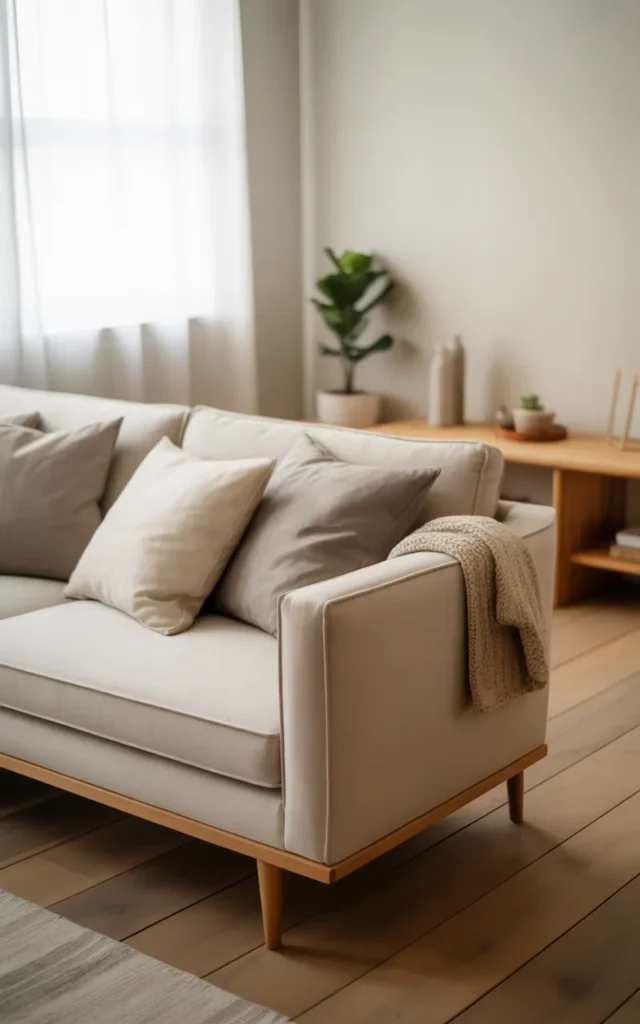
Choose a light-toned sofa as your anchor
I always start here. Always.
A sofa in soft beige, warm white, or light grey instantly opens up a small space. Dark sofas? They absorb light and visually shrink the room. Not what we want.
Keep the silhouette simple. Clean lines. Nothing bulky.
Once your sofa feels light, everything else becomes easier to layer.
Why it works?
Light tones reflect more light, making the room feel airy instead of boxed in. It’s a simple shift, but the impact is huge. 🤍
Use a rug that extends beyond your furniture
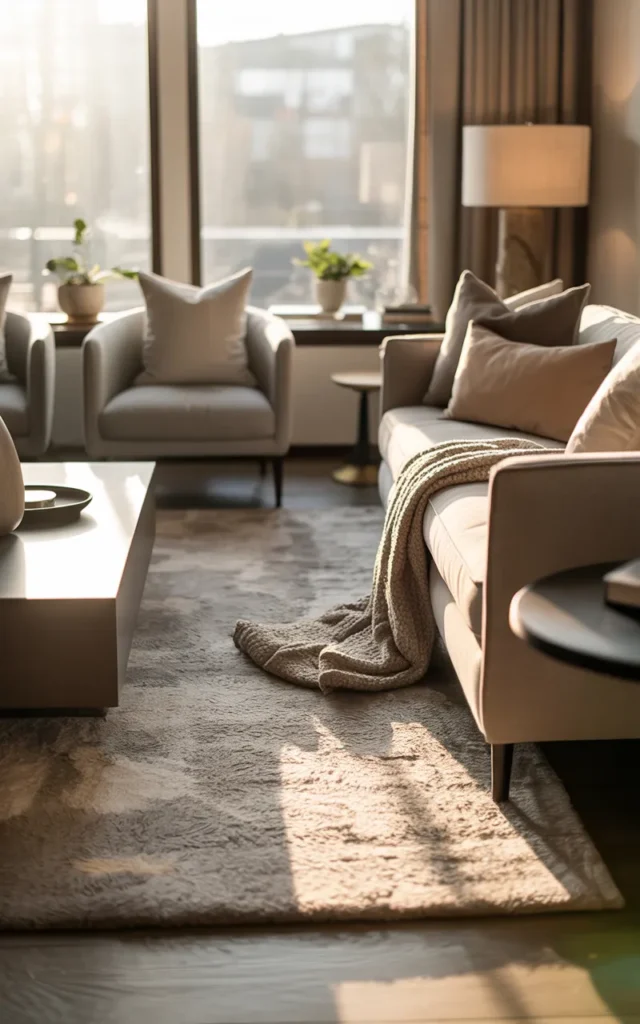
A small rug in a small room? Big mistake.
Instead, go larger. Let the rug extend under your sofa and chairs. It visually stretches the room outward.
It creates one cohesive zone instead of breaking things up.
Think of it like giving your furniture a stage to sit on.
Float your furniture slightly away from the walls
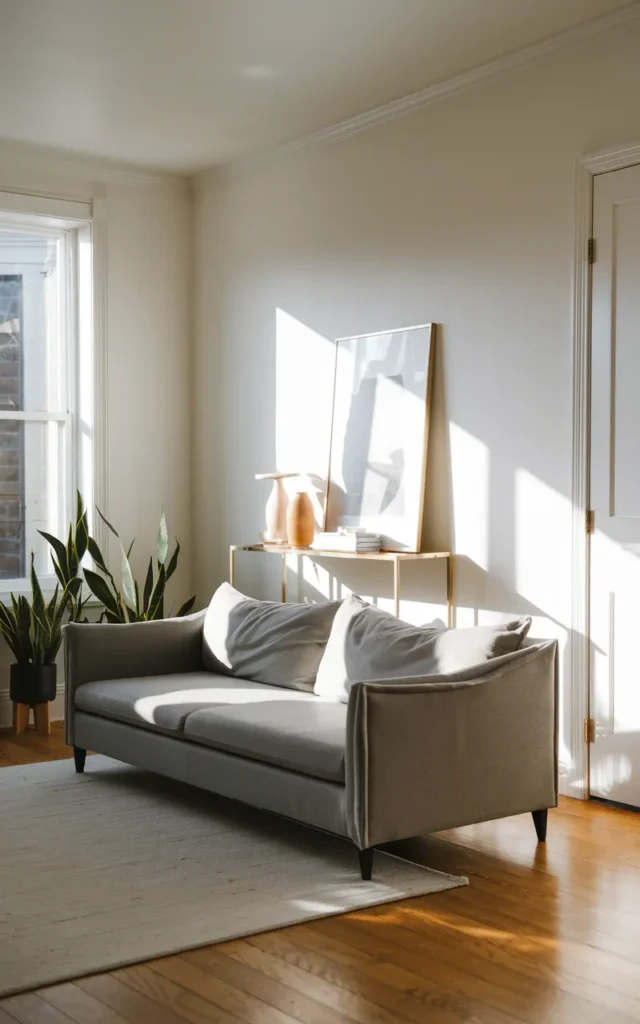
I know. It sounds counterintuitive.
But pushing everything against the walls can actually make the room feel tighter.
Pull your sofa just a few inches forward. Add a slim console or nothing at all behind it.
That breathing space? It changes everything.
Choose furniture with exposed legs
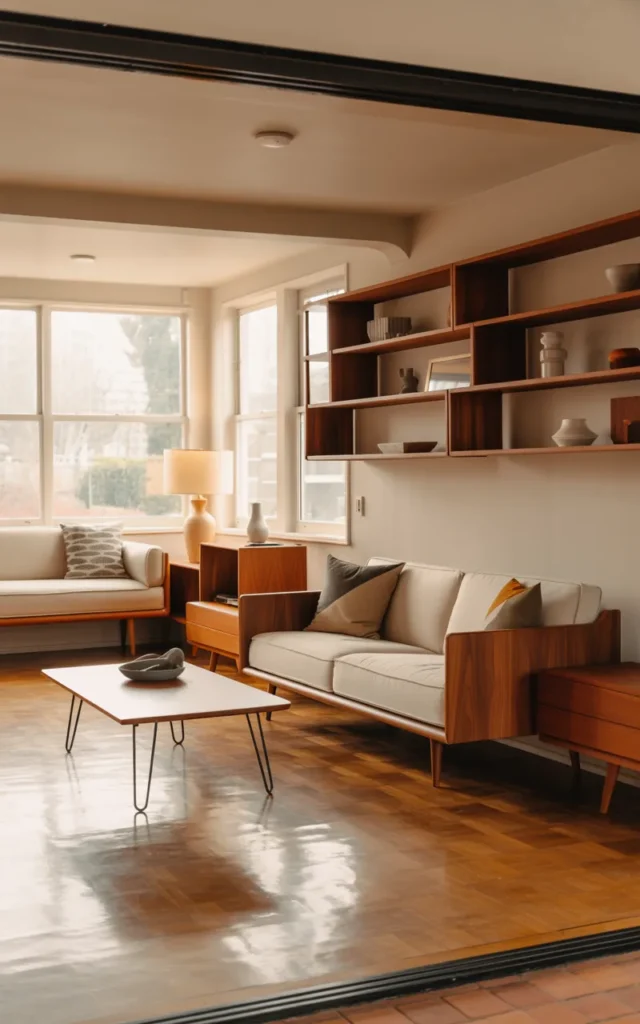
Heavy, boxy furniture sits like a block in a small room.
Instead, go for pieces with visible legs. Sofas, chairs, even cabinets.
You can see more floor. And that visual openness matters.
A Micro-tip:
Stick to slim, tapered legs in wood or metal. They feel lighter instantly.
Incorporate hidden storage wherever possible
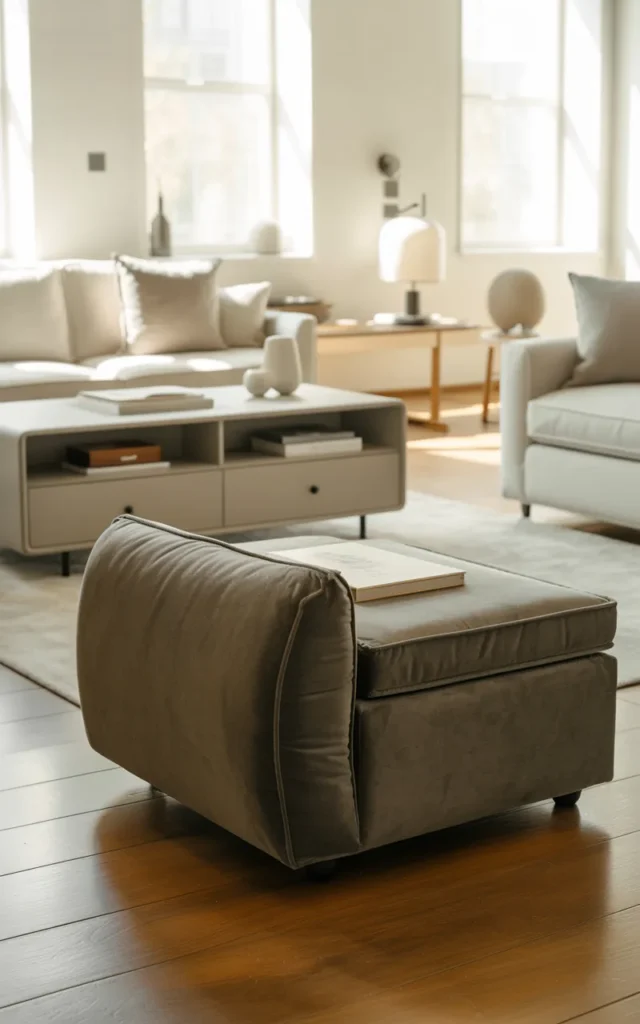
Clutter is the fastest way to shrink a room.
Think storage ottomans, benches with compartments, or coffee tables with drawers.
Everything should have a place. Even the random stuff.
Remember how we talked about floating furniture in idea #4? Pair that with hidden storage, and your space feels open and functional.
Small space hack:
Use storage that doesn’t look like storage. That’s the secret.
Stick to low-profile furniture for a spacious feel
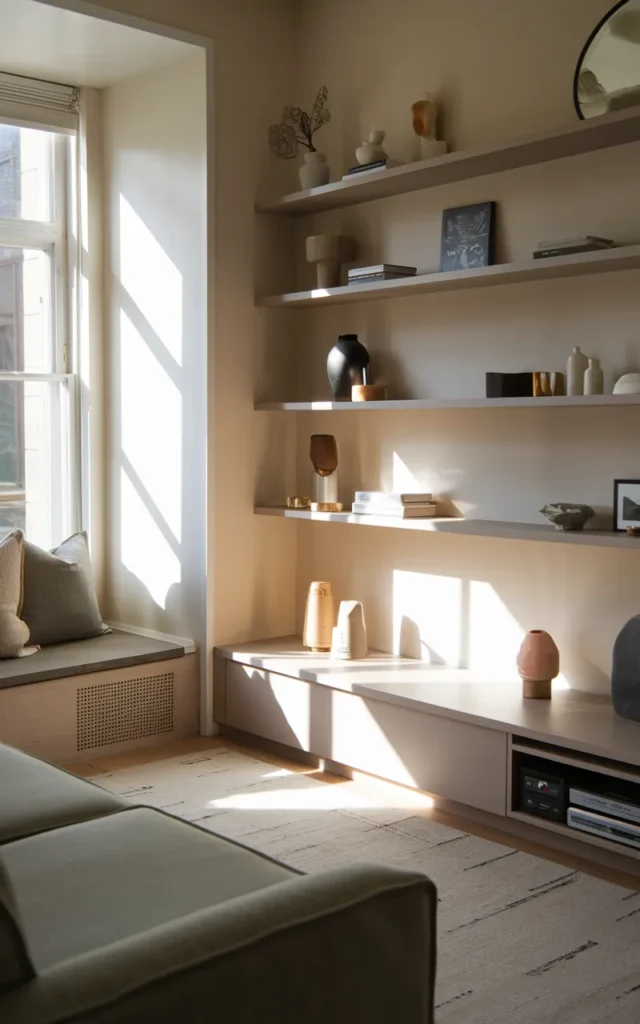
Tall, bulky furniture eats up visual space.
Low-profile pieces keep everything grounded and airy.
A low sofa, a slim coffee table, even a low media unit — it all helps.
Why designers do this:
It creates more negative space above furniture, making ceilings feel higher than they are.
Use glass or acrylic furniture to reduce visual weight
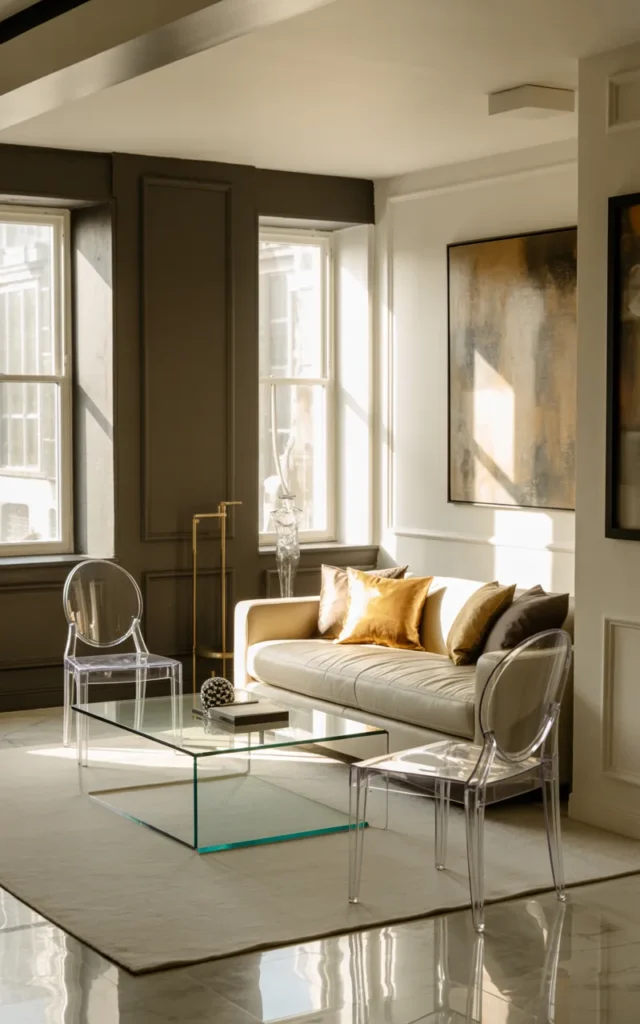
This is such a smart move.
Glass coffee tables or acrylic chairs almost disappear visually.
They don’t block sightlines. So your room feels more open.
Budget Alternatives:
- Glass-top table with wooden legs
- Acrylic side tables
- Slim metal frames with clear surfaces
Same effect, less cost. 👍
Create zones using subtle layering
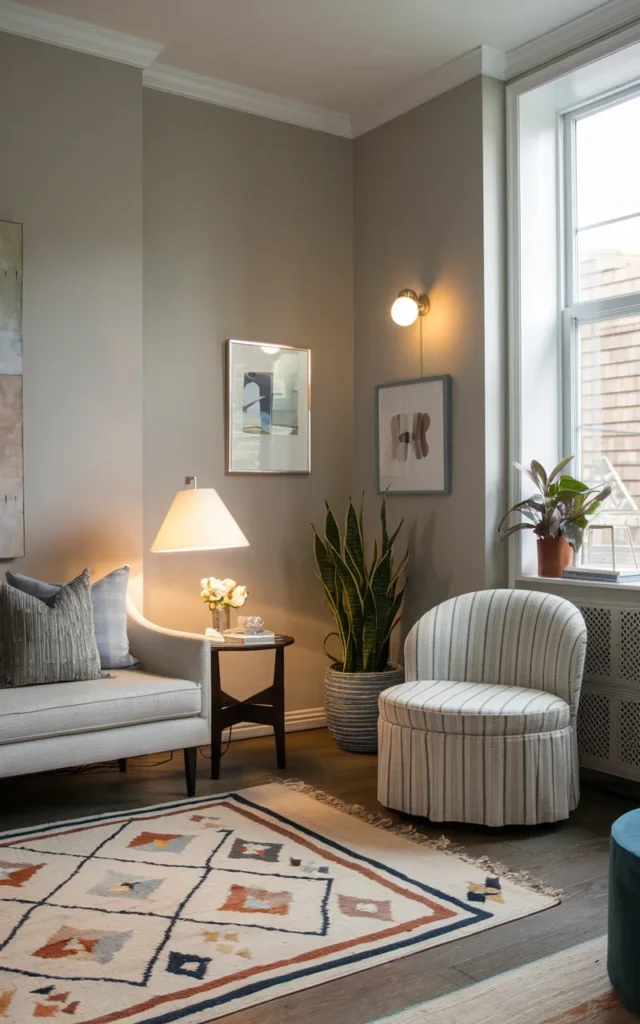
Even small rooms can have zones.
Use rugs, lighting, or furniture placement to define areas — like lounging vs reading.
But keep it subtle. No harsh divides.
Think of it as guiding the eye, not blocking it.
Keep wall decor minimal but intentional
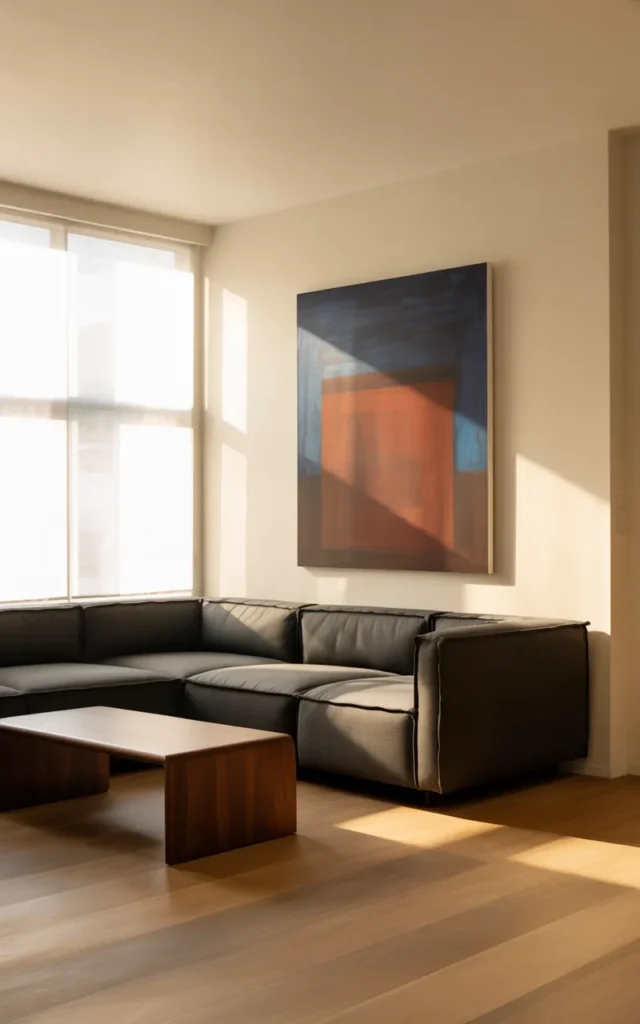
Too many frames can overwhelm a small space.
Instead, go for one large artwork or a tight gallery.
Let it breathe.
Common Mistakes to Avoid:
- Hanging art too high
- Using too many small frames
- Mixing too many styles
Less clutter = more impact.
Add plants for life without clutter
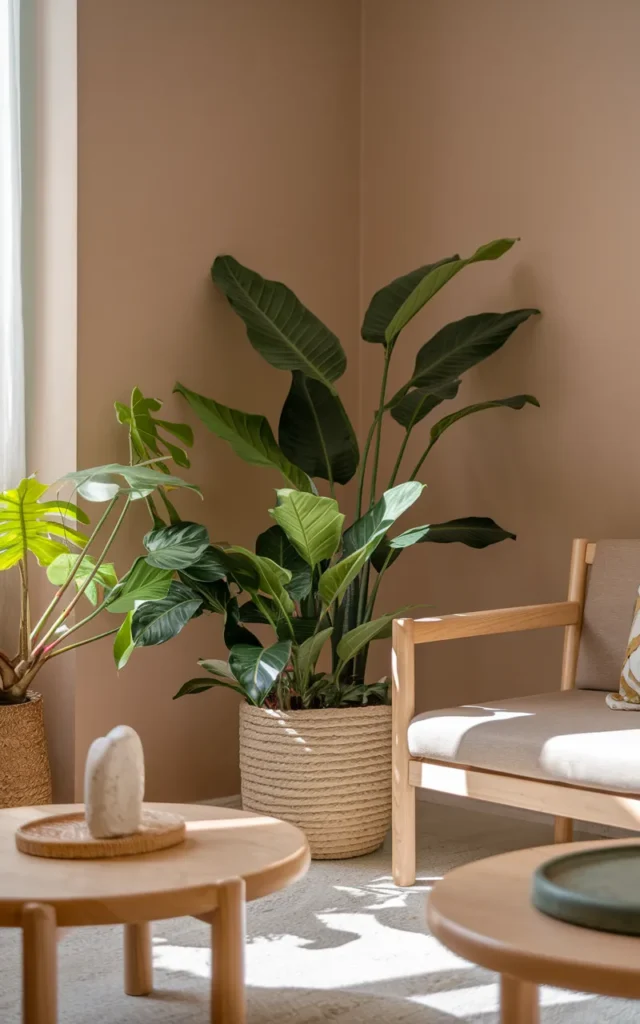
Plants bring energy into a room. Instantly.
But don’t overdo it.
One tall plant or two small ones are enough.
They soften edges and add freshness without crowding the space. 🌿
Choose a wall-mounted TV unit
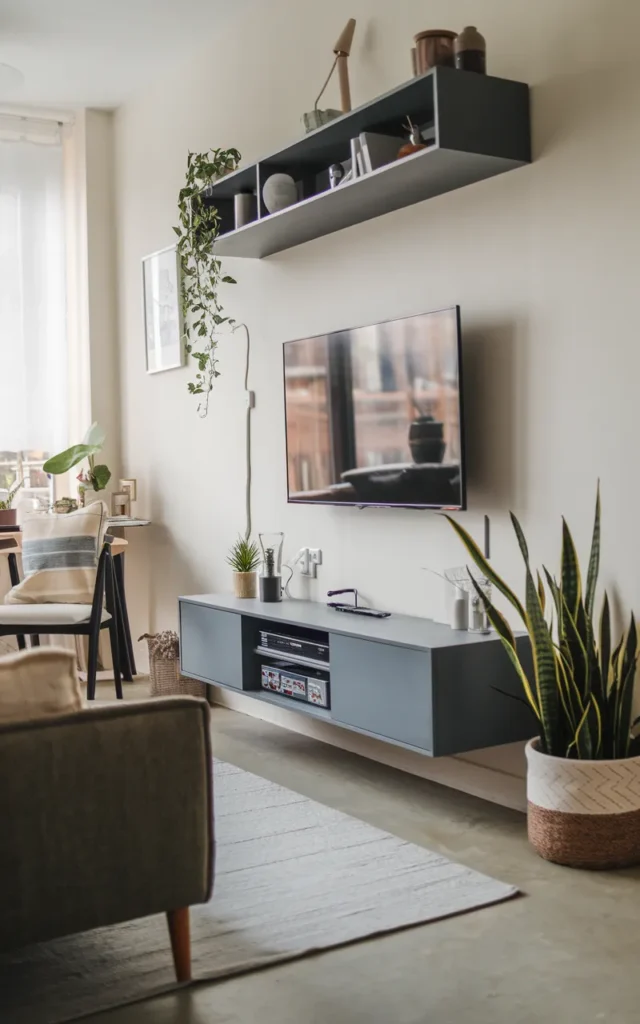
Floor units can feel heavy.
Mount your TV and keep the unit slim or floating.
More visible floor = more visual space.
Keep pathways clear and intentional
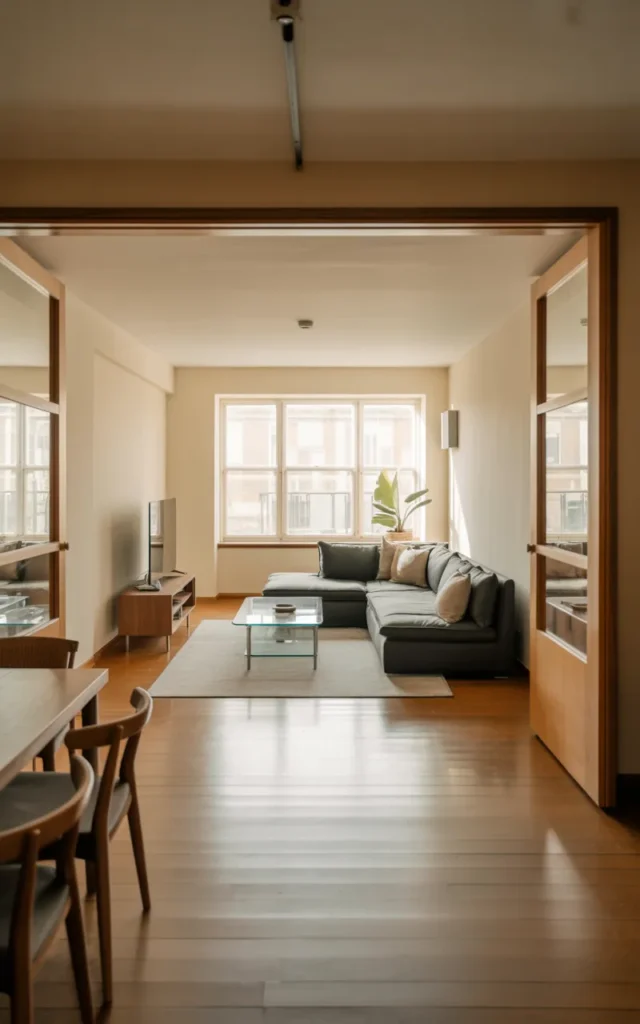
This one is underrated.
Make sure there’s a natural path through the room. No awkward squeezing.
Even a small space should feel easy to move through.
Add a statement piece — but just one
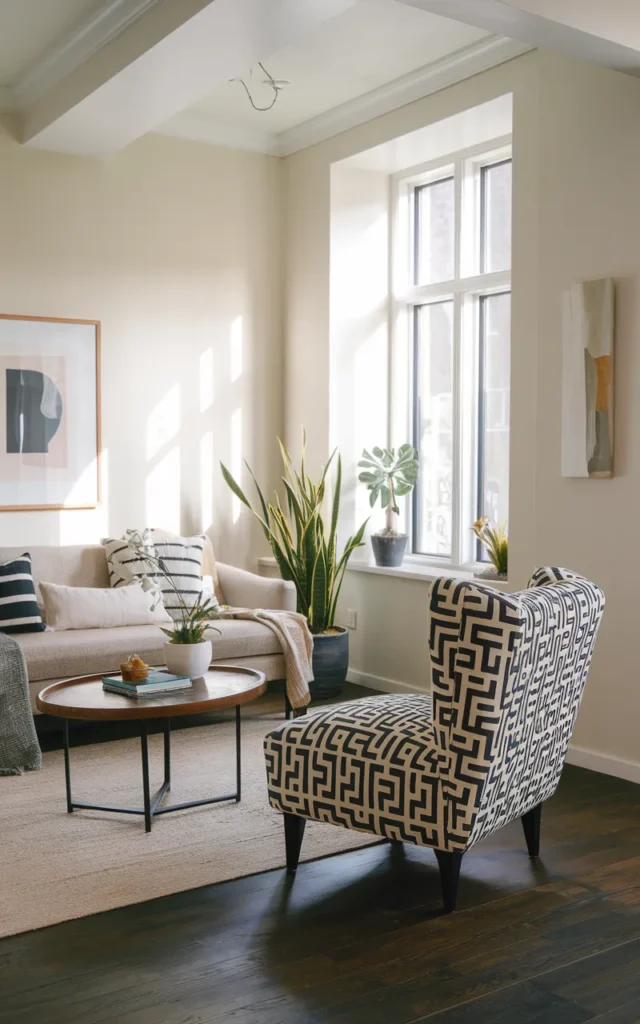
You still need personality.
Pick one standout piece. Maybe a bold chair or unique light fixture.
Then keep everything else calm.
One rule to remember:
In a small room, one statement is powerful. Ten is chaos.
Layer textures instead of adding more items
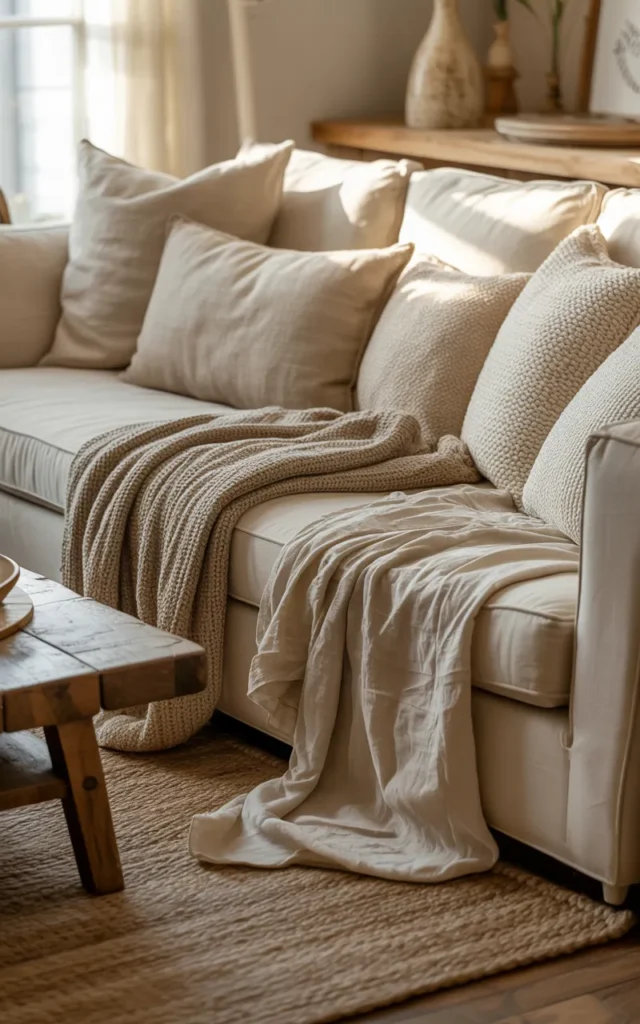
When space is tight, texture becomes your best styling tool.
Instead of adding more furniture or decor, layer what you already have. A soft throw. A woven rug. Linen cushions. Maybe a slightly rough wooden table.
It creates depth without adding clutter.
Think about idea #7 where we kept the color palette tight — texture is what keeps that from feeling boring.
Layer it like this:
- Base: neutral sofa
- Mid-layer: textured cushions
- Top layer: cozy throw
Suddenly, your room feels rich and styled… without being crowded. ✨
Use corner spaces more intentionally
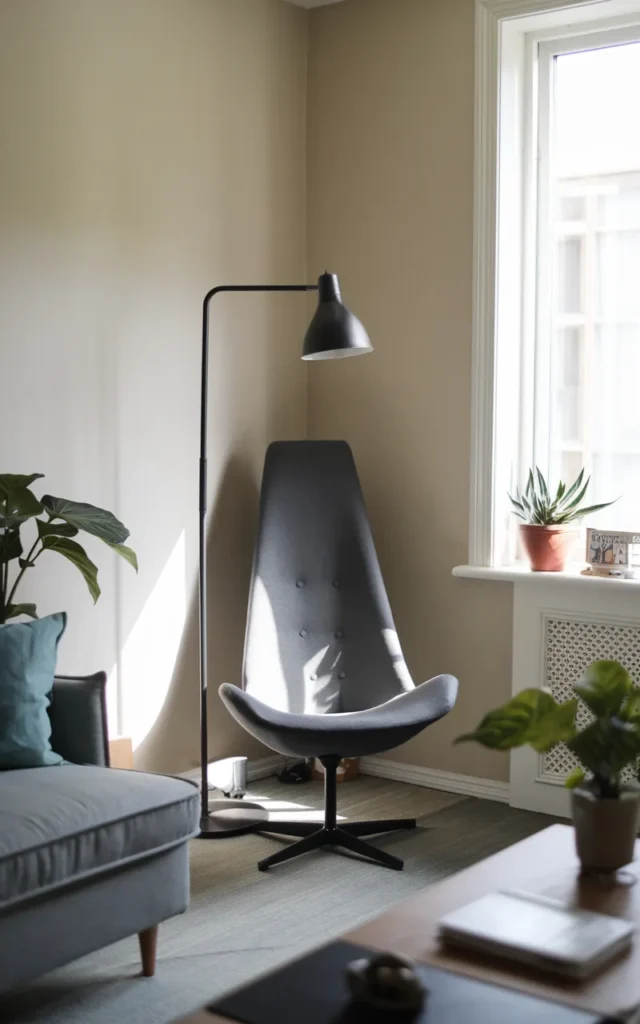
Corners are often wasted.
But in a small living room? They’re gold.
Add a slim chair, a floor lamp, or even a small shelf.
It turns an empty corner into a functional spot.
Works best in:
- Square rooms
- Studio apartments
- Awkward layouts
Corners can quietly carry a lot of visual weight when used right.
Keep your floor as visible as possible
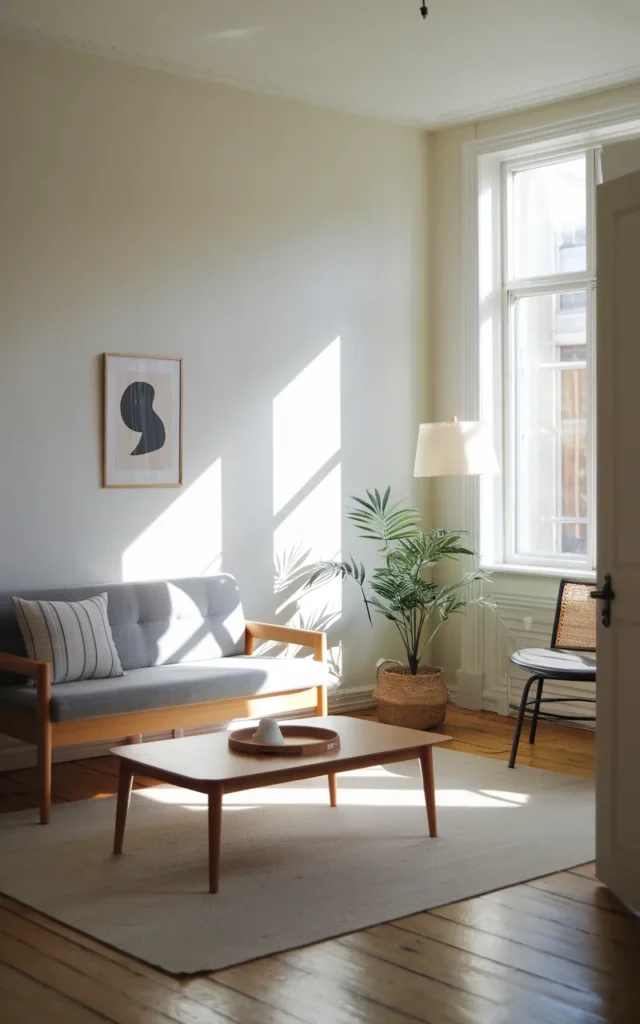
The more floor you see, the bigger your room feels.
Avoid too many rugs, bulky furniture, or low clutter piles.
Let the floor breathe.
The psychology behind it:
Open floor signals openness to your brain. Even if the room is small, it feels larger.
Use tonal contrast instead of harsh contrast
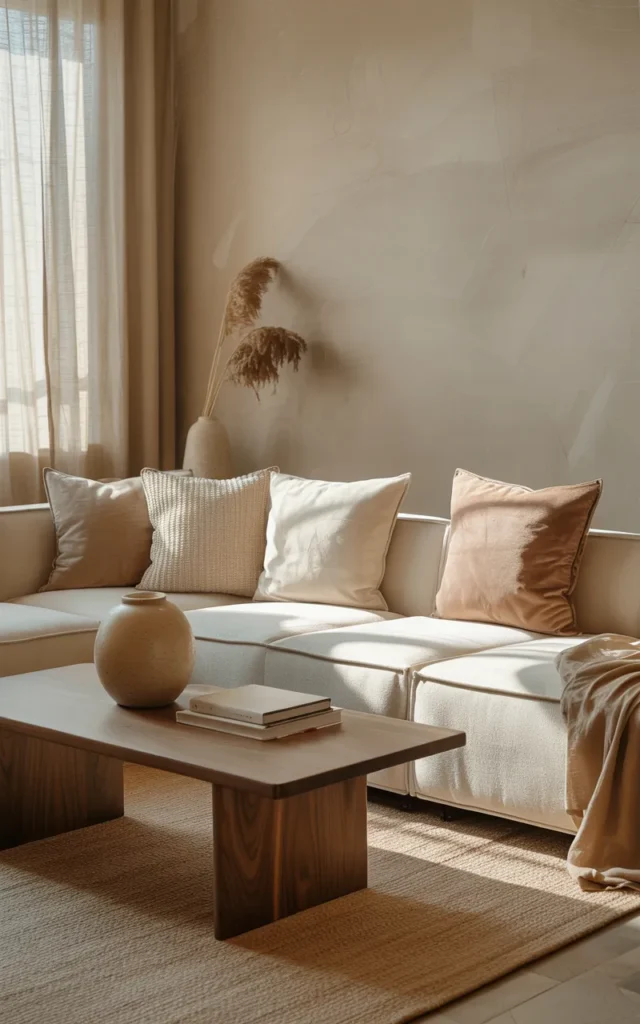
High contrast can visually chop up a small room.
Instead, use tonal differences. Light beige with warm taupe. Soft grey with charcoal accents.
It keeps things interesting without breaking the flow.
Colour swap suggestion:
Light grey → Warm beige
Black accents → Deep brown
Subtle shifts. Big difference.
Limit decor to a few meaningful pieces
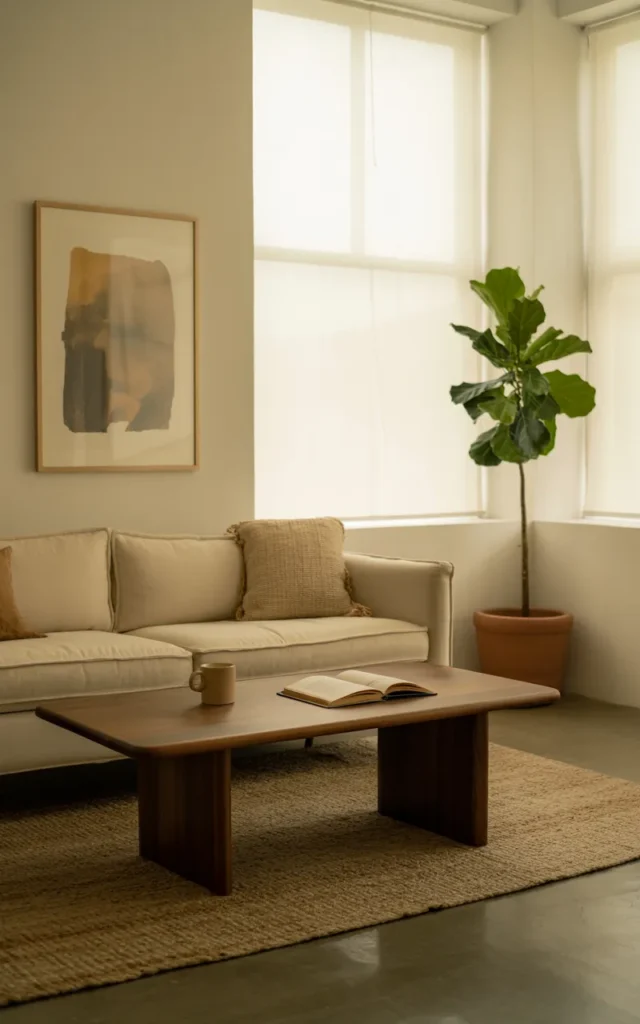
You don’t need 20 decorative items.
Pick a few that you actually love.
Style them with intention.
Vibe check:
- Calm, not crowded
- Personal, not staged
- Balanced, not busy
That’s the goal.
Keep furniture proportional to the room
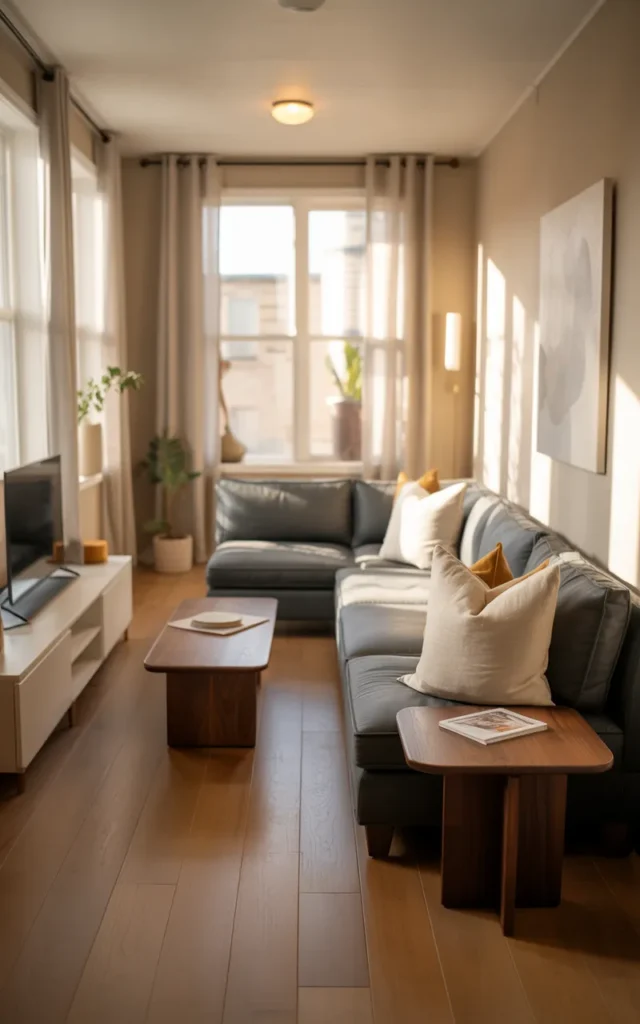
Oversized furniture in a small room? It never works.
Measure everything.
Be realistic about scale.
Remember the low-profile idea from #12? Combine that with proper sizing and your room will feel perfectly balanced.
Edit your space regularly to keep it fresh
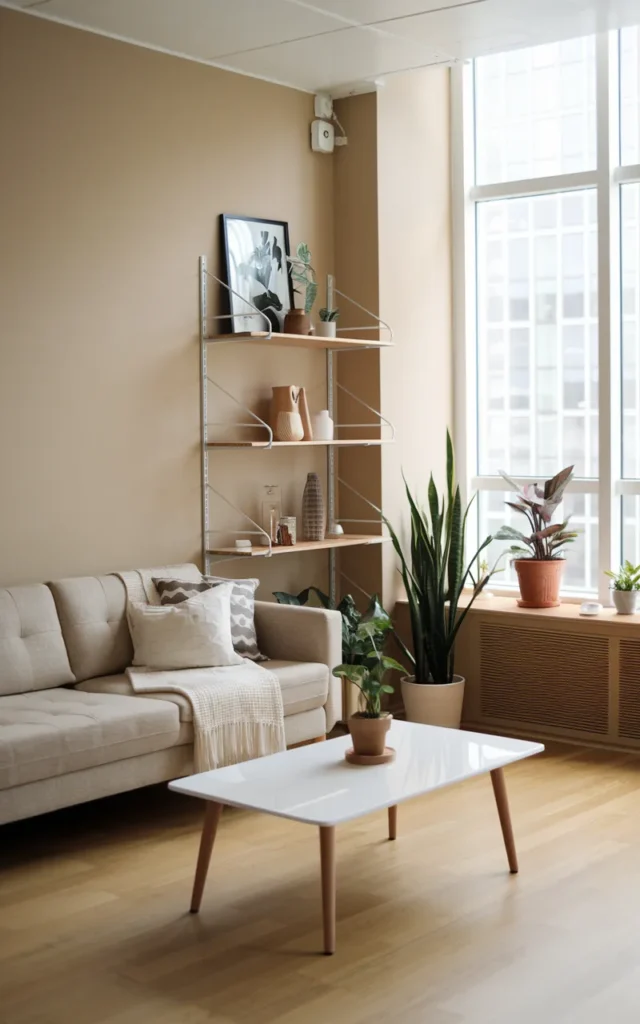
This is the final — and maybe most important — idea.
Small rooms don’t forgive clutter.
So edit often.
Remove what you don’t need. Rearrange occasionally.
Even swapping cushions or moving a chair can refresh the entire space.
What most people get wrong:
They decorate once… and never revisit it. But small spaces evolve. And your styling should too. ✨
Final Thoughts
A small living room can still have a huge impact.
The key is focusing on choices that make the space feel open, functional, and comfortable without overcrowding it.
And remember — you don’t need a full makeover to notice a difference. Sometimes moving furniture, adding better lighting, or choosing the right rug is enough to completely refresh the room.
Start with one idea that speaks to you and build from there.
Because the best living rooms aren’t measured by size — they’re measured by how good they make you feel when you walk in 💛