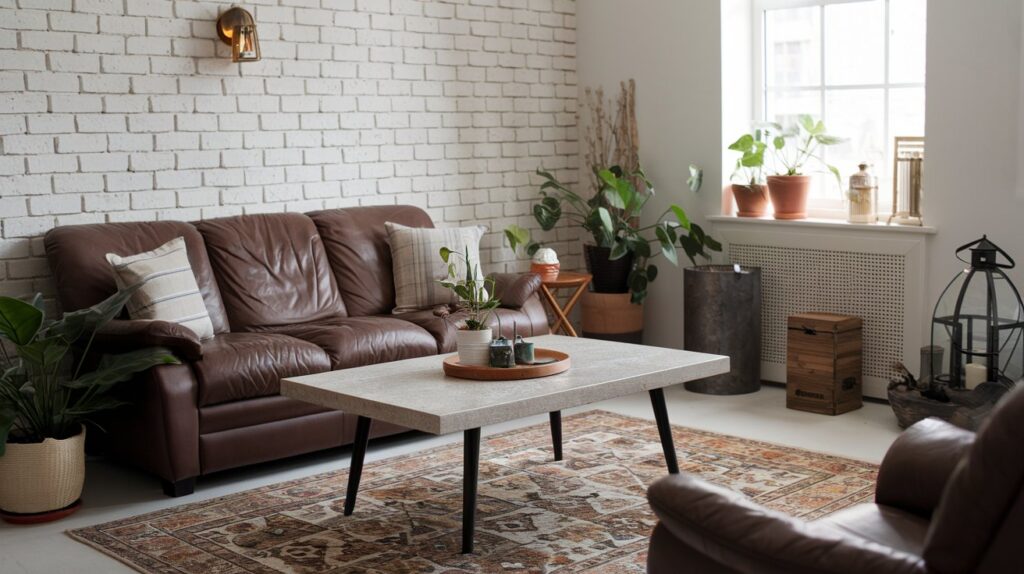
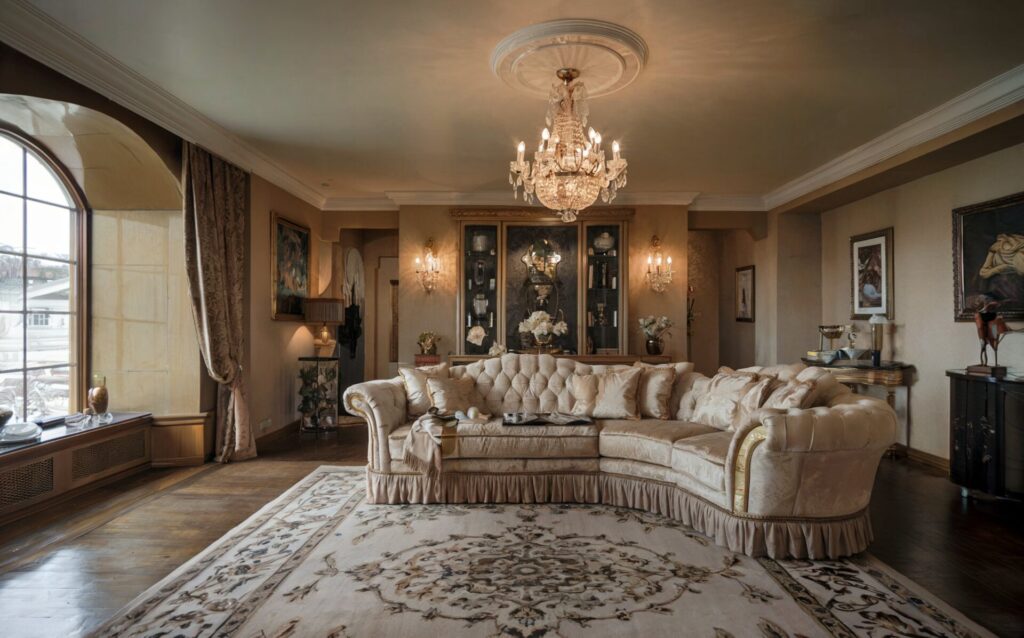
Every family has that one switch by the door. Flip it and the whole living room goes flat and bright, like a waiting room at the dentist. Shadows vanish. So does the mood. And somehow everyone drifts off to their bedrooms by eight o’clock.
Good news: you don’t need a renovation to fix it. These living room lighting ideas are all about layers. A glow up high, a lamp where you actually read, a little sparkle on the things you love, and dimmers on everything. Give each corner its own light and its own job, and the room starts pulling people back in after dinner. 💡
Below you’ll find 19 ideas, from statement chandeliers to plug-in sconces for renters, with plenty of quick tips along the way. Pick two or three to start. You’ll feel the difference the very first evening.
Hang a Statement Chandelier Over the Seating Area
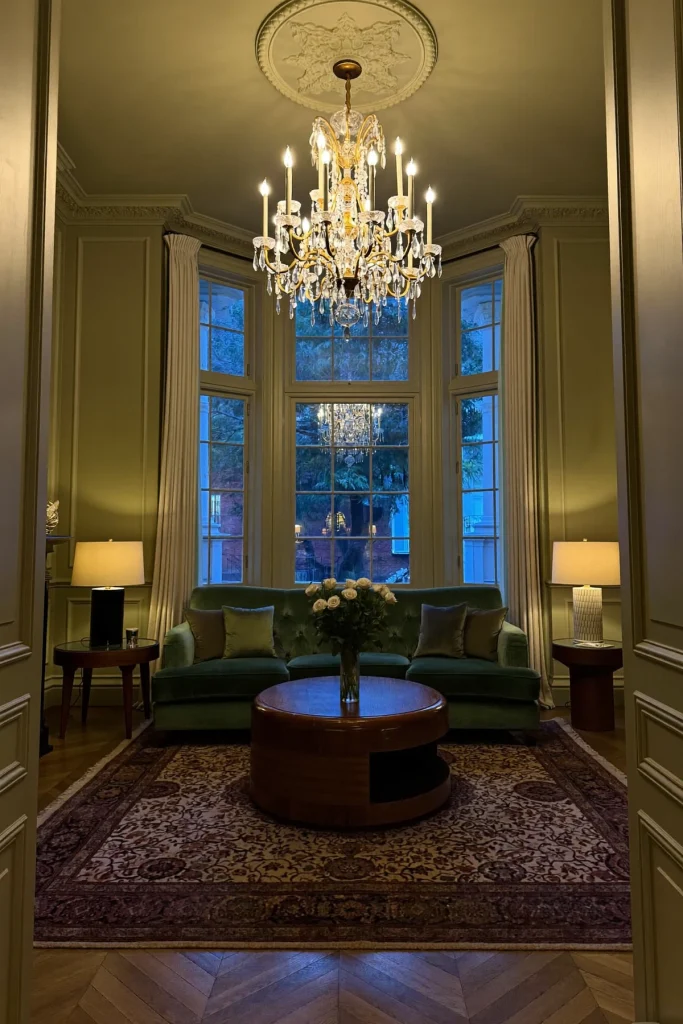
A chandelier tells the room where the heart is. Center it over the coffee table or the main seating group rather than the exact middle of the ceiling, and suddenly the whole layout makes sense.
Go a little bigger than feels safe. Most people buy one size too small, and it ends up looking like an earring on a giant. Look for a fixture with candle-style arms or a soft glass shade so the light spreads out instead of glaring down.
Hang it so the bottom sits around 7 feet above the floor in a walkway, and put it on a dimmer (more on that next). ✨
Put Every Overhead Fixture on a Dimmer
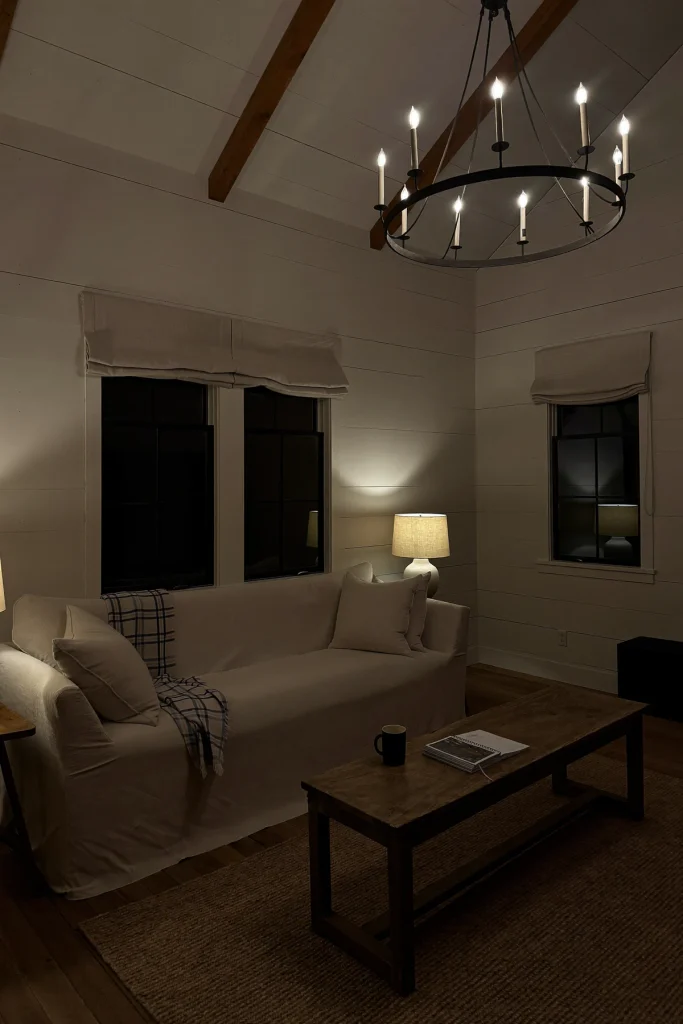
If you only do one thing from this list, make it this one. A dimmer turns your harsh ceiling light into a gentle background glow you can actually live with.
Full brightness for Saturday cleaning. Half for homework at the coffee table. A low simmer for movie night. Same fixture, three different rooms.
Step-by-Step
- Check that your bulbs say “dimmable” on the box.
- Pick a dimmer made for LED bulbs so they don’t flicker or buzz.
- Turn off the breaker, swap the switch and follow the wiring diagram.
- Not comfortable with wiring? An electrician can usually do it in under an hour.
Swap Cool Bulbs for Warm White Ones
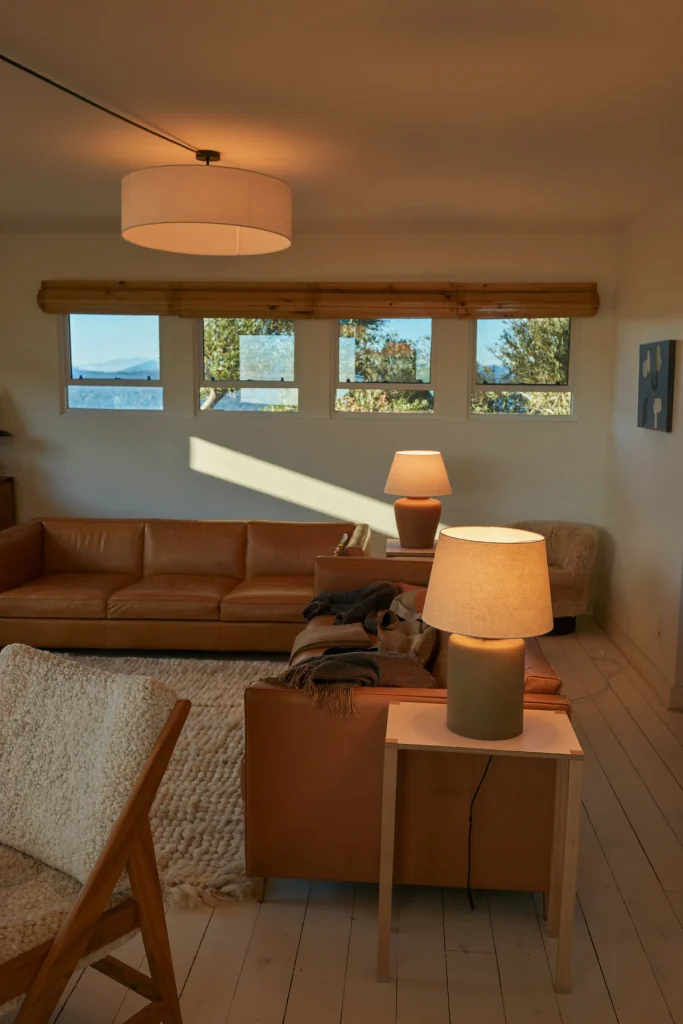
Here’s the sneaky reason your living room feels cold even with beautiful furniture: the bulbs. Anything labeled “daylight” or 5000K casts a blue, clinical light that makes cozy fabrics look tired.
Look for 2700K on the box. It glows like old-fashioned incandescent light, flatters skin tones and makes wood floors look rich. For lamps right next to the sofa, you can go even warmer.
It’s the cheapest upgrade on this list, and it takes five minutes. 🕯️
Bulb Cheat Sheet
| Where it goes | What to look for |
|---|---|
| Table and floor lamps | 2700K, soft white, dimmable |
| Overhead fixtures | 2700K to 3000K, dimmable |
| Reading lamps | 3000K for a little extra clarity |
| Accent and shelf lights | 2700K or warmer |
Add Picture Lights Above Your Favorite Art

A picture light makes even a thrift-store painting look like it belongs in a gallery. It washes the canvas in a soft pool of light and quietly says, “Look here.”
Battery-powered versions with remote controls mean you don’t need to cut into the wall. Choose a brass or bronze finish to match your other metals.
At night, with the overheads off, that one lit painting becomes the most beautiful thing in the room. 🖼️
Tuck Cove Lighting Into a Tray Ceiling
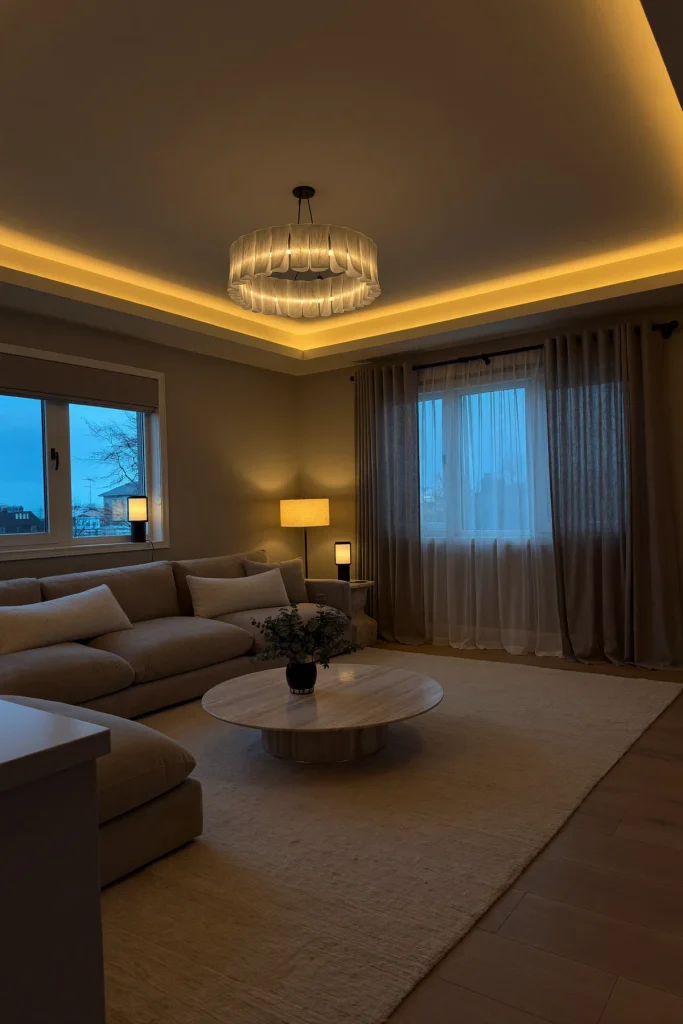
If your living room has a tray ceiling, you’re sitting on a lighting secret. A strip of LED tape hidden along the ledge bounces light up onto the ceiling, so the whole room glows without a single visible bulb.
It reads as calm and expensive. Paired with lamps lower down, it gives you that soft, wraparound glow in a room that still feels like home.
No tray ceiling? A simple crown molding with a small gap above can do the same trick.
Pair Matching Table Lamps on a Console Behind the Sofa
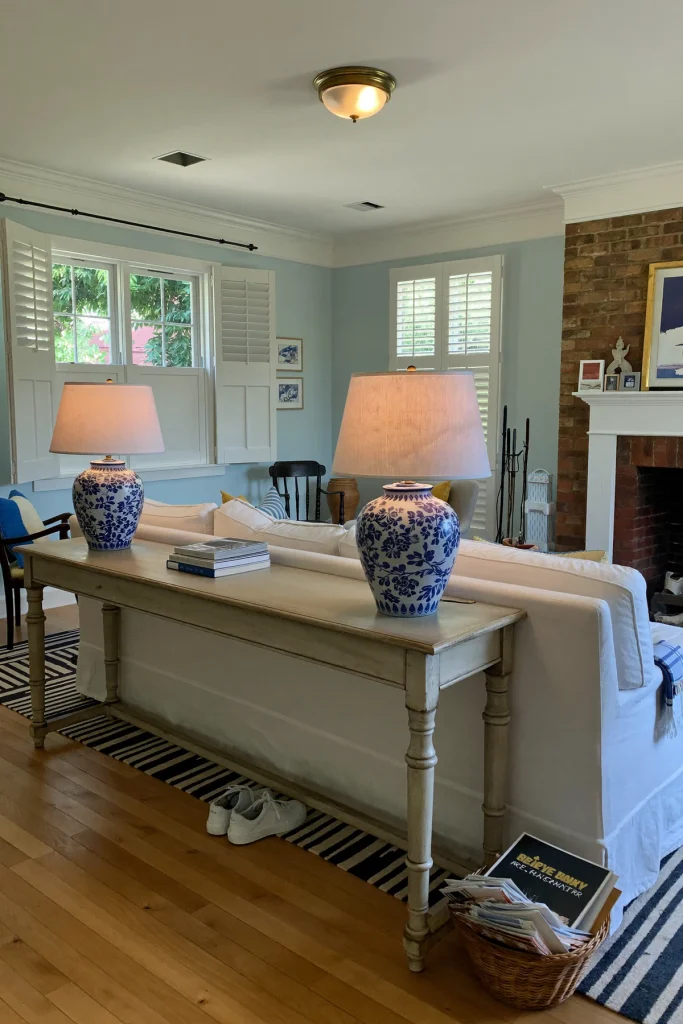
Floating your sofa in the middle of the room? A console table behind it is the perfect home for two matching lamps. They light the back of the room, frame the sofa and give the space a pulled-together, symmetrical look.
Choose lamps tall enough that the bottom of the shade sits near shoulder height when you’re seated. Linen shades keep the glow soft.
Rule of Thumb
Aim for light at three different heights in every room: up high, at eye level, and low. Lamp pairs like these cover eye level beautifully.
Glow the TV Wall With Bias Lighting
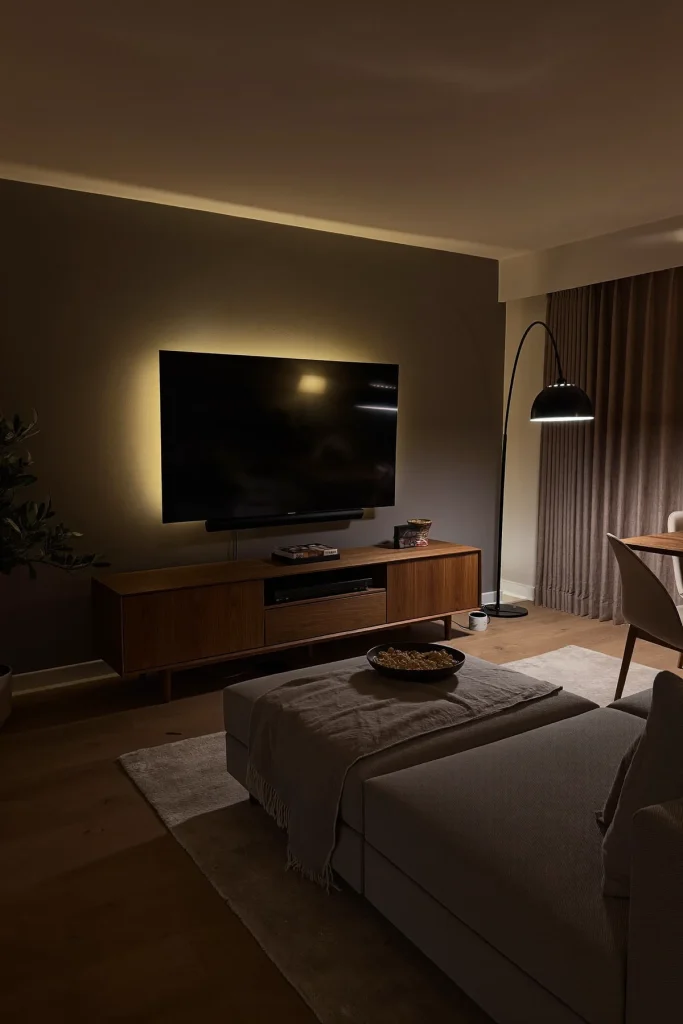
Watching a bright screen in a pitch-dark room is hard on the eyes. Watching it under the full overhead light washes out the picture. The happy middle is bias lighting: a soft LED strip on the back of the TV that glows onto the wall behind it.
It makes the picture look richer, eases eye strain and gives the TV wall a cool floating effect. Add a low lamp somewhere off to the side so the room isn’t totally dark during movie night.
Why It Works
Your eyes adjust to the brightest thing in the room. A gentle glow around the screen means they don’t have to work so hard switching between a bright picture and a dark wall. 🍿
Drop a Low Pendant Over the Games Table
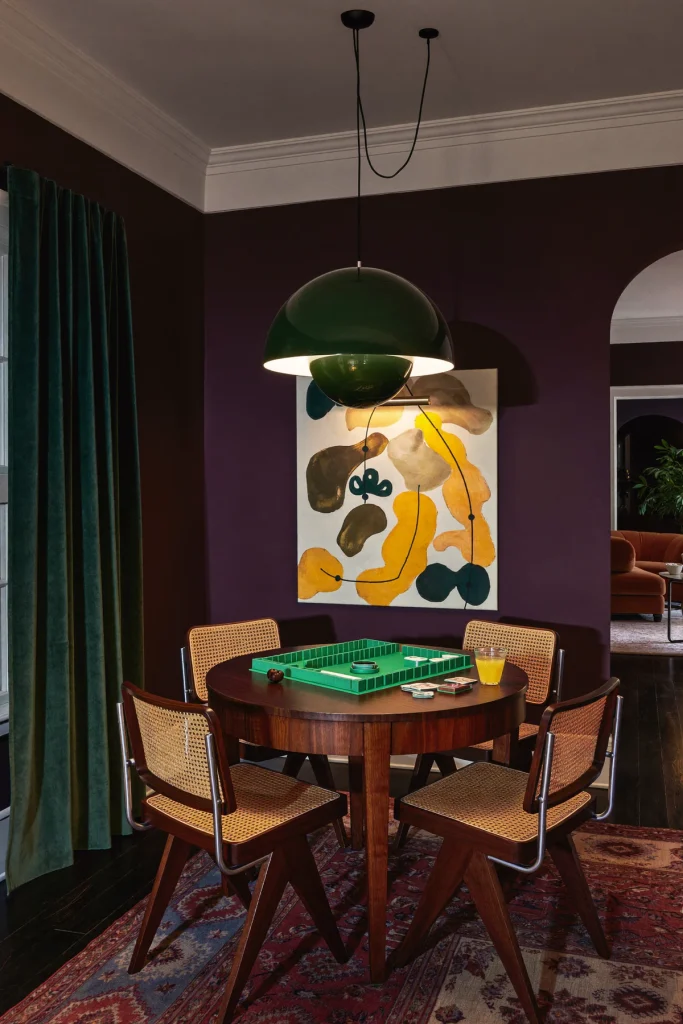
If your living room has a corner where puzzles, card games and board game marathons happen, give it its own light. A pendant hung low over a small round table turns that corner into a proper zone.
Hang it about 30 to 36 inches above the tabletop so it lights the cards without blinding anyone. A shade that’s solid on the outside keeps the glow focused downward, which feels intimate and helps everyone see.
It’s also a great way to break a big open room into smaller, friendlier pieces. 🎲
Uplight a Big Indoor Plant

A tall fiddle leaf fig or olive tree looks gorgeous in daylight and turns into a dark blob at night. A small uplight on the floor behind the pot changes everything.
The light shines up through the leaves and throws leafy shadows across the wall and ceiling. It’s dramatic, it’s cheap and it makes the room feel layered and alive.
Use a small can uplight or a clip-on spotlight with a warm bulb. Keep the cord tucked behind the pot. This is one of my favorite little tricks for a mid-century room with a big blank wall. 🪴
Choose a Tiered Art Deco Chandelier for Glamour
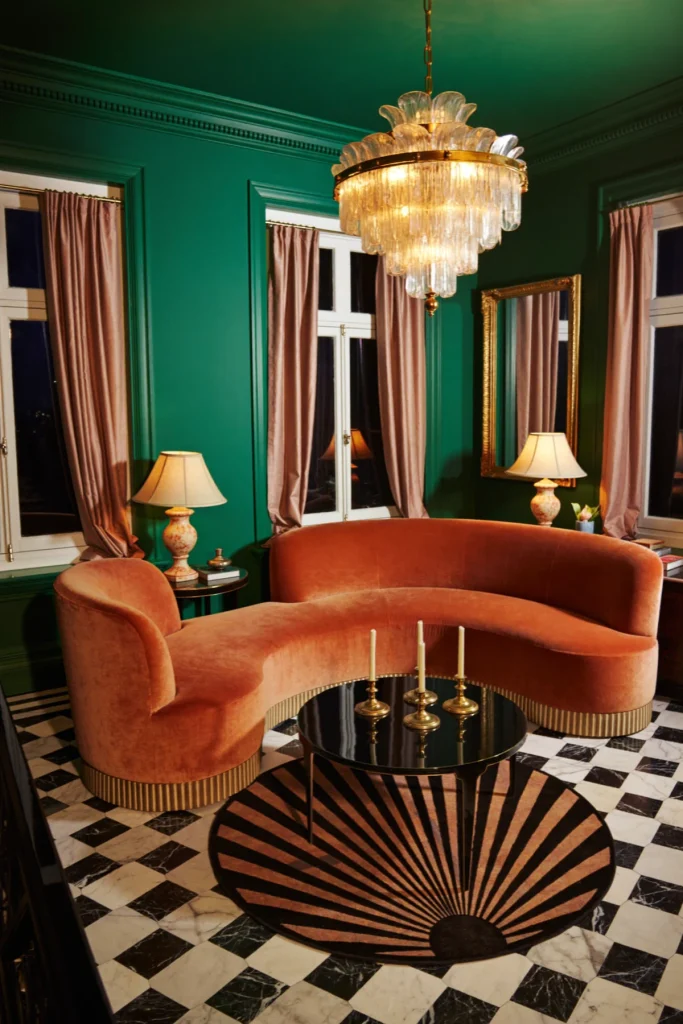
Want a living room that feels like a party even on a Tuesday? A tiered glass or brass Art Deco chandelier does it. Think stepped shapes, fluted glass and a bit of gold.
These fixtures work best in rooms that can handle some drama: deep wall colors, velvet seating, lacquered finishes. Keep the rest of the lighting warm and low so the chandelier stays the main event.
It’s a bold choice, but a room like this doesn’t do quiet anyway.
Style Match Guide
| Room style | Fixture that fits |
|---|---|
| Art Deco | Tiered glass or brass chandelier |
| Mid-century | Sputnik or globe pendant |
| Farmhouse | Iron candle-style chandelier |
| Coastal | Woven rattan pendant |
| Japandi | Paper lantern or wood-and-linen pendant |
| Traditional | Crystal or brass arm chandelier |
Wash an Exposed-Brick Wall With Track Lighting

Loft living rooms often have tall ceilings and big brick walls that soak up light. Track lighting is the perfect fit here. It looks industrial, it’s flexible and you can aim each head exactly where you want it.
Point a few heads at the brick to bring out the texture, a couple at your art and one at the seating area. Because each head swivels, you can rearrange the light every time you rearrange the furniture.
Choose black or brass tracks to match the steel windows and old beams. And yes, put the whole track on a dimmer, just like in idea2.
Go Big With an Oversized Pendant in a Tall Room

Vaulted and double-height living rooms swallow small fixtures whole. What looks huge in the store looks like a tiny ornament once it’s hanging 20 feet up.
Scale up. A giant drum pendant, an oversized wood-bead chandelier or a big iron ring fixture fills that vertical space and brings the ceiling down to human scale. Hang it so the bottom sits roughly at the top of the windows, not up in the rafters where nobody sees it.
In a mountain-style room with timber beams, a chunky wrought-iron or carved wood fixture feels just right. Pair it with a couple of big floor lamps near the seating, because a single high fixture can’t light faces at sofa level. ⛰️
And since changing a bulb up there is a whole event, choose long-life LED bulbs from the start.
Light Built-In Niches Around the Fireplace

Arched niches and built-in alcoves flanking a fireplace are lovely by day, but at night they turn into dark holes. A tiny light inside each one turns them into glowing little displays.
Small puck lights or a short LED strip tucked into the top of each niche will do it. Style them with a few things you love: a pair of pottery vases, a stack of books, a small sculpture. Don’t overfill them, because light needs space to show off.
This looks especially beautiful in Spanish-style homes with thick plaster walls and arched openings. The niches glow like candlelit chapels, warm and textured.
Cost Breakdown
| Item | Rough cost |
|---|---|
| Battery puck lights, set of 6 | around $20 to 40 |
| Plug-in LED strip kit | around $25 to 60 |
| Hardwired niche lights, installed | around $150 to 400 |
Cluster Candles on the Coffee Table
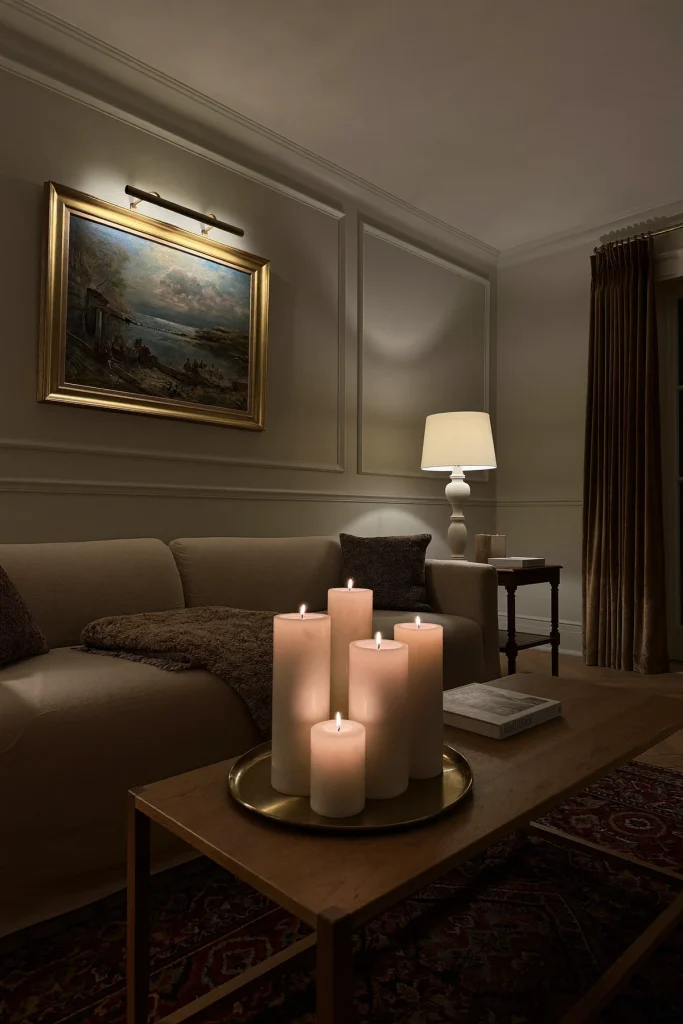
Sometimes the best light in the room isn’t electric at all. A grouping of pillar candles on a tray in the middle of the coffee table adds a flicker and warmth that no bulb can copy.
Group three to five candles of different heights on a wooden or brass tray. Use unscented or lightly scented ones so they don’t overpower dinner. If you have little ones or pets, flameless LED pillars give you almost the same effect with zero worry.
Light them as soon as the overheads go off. It’s a tiny ritual that tells everyone it’s time to slow down. 🌙
On weeknights, keep it simple. On weekends, add a few votives on the mantel too.
Hide LED Strips Under Floating Shelves and Consoles

Floating furniture looks even more magical when it actually seems to hover. A strip of warm LED light tucked under a wall-mounted media console or a run of floating shelves creates a soft glow that spills onto the floor or wall below.
It’s a favorite trick in modern and concrete-heavy rooms, where it softens all those hard surfaces. Run the strip toward the back edge so you see the glow, not the dots of the LEDs themselves.
Set it on a timer or a smart plug, and it becomes a built-in nightlight for late-night trips to the kitchen.
Kid- and Pet-Proof It
- Use low-voltage LED strips that stay cool to the touch.
- Secure cords inside cable raceways so little hands and paws can’t pull them.
- Pick strips with a protective silicone coating if they sit close to the floor.
Filter Daylight With Sheer Linen Curtains
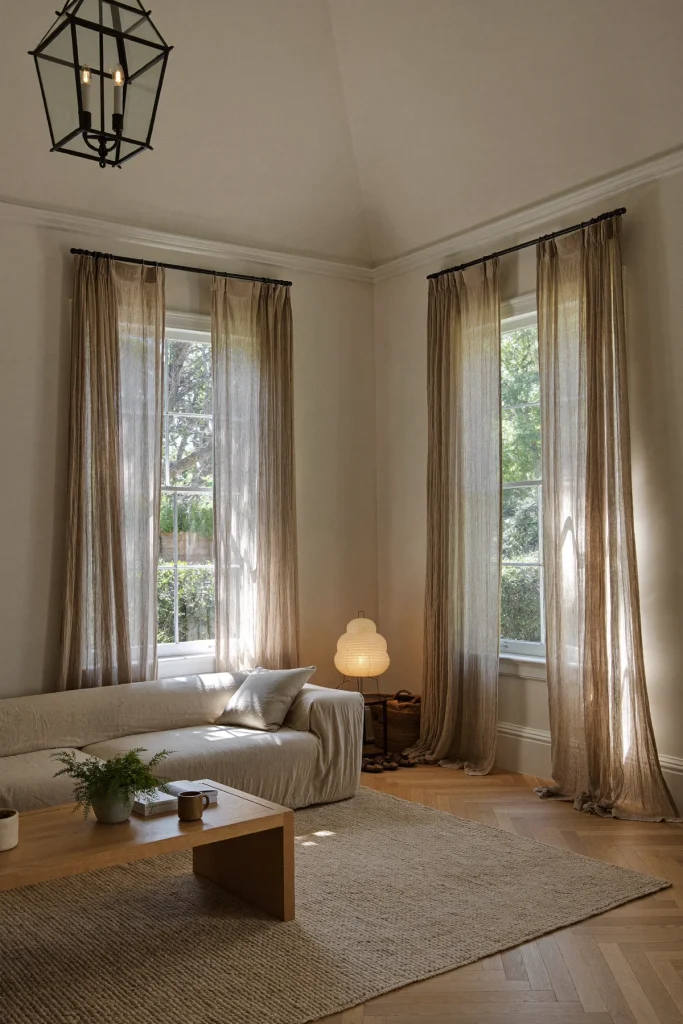
Daylight is the first layer of living room lighting, and it needs a little managing too. Bright midday sun can feel just as harsh as a bare bulb. Sheer linen curtains soften it into a diffused, all-over glow.
Hang them high and wide, just under the ceiling and a few inches past the window frame on each side, so they don’t block any glass when open. White, oat or pale flax all keep the light warm.
Pair them with blackout shades behind if the room doubles as a movie spot. That way you control the light from bright morning coffee to a fully dark film night, much like the TV glow in idea 14. ☀️
Set Evening Scenes With Smart Bulbs
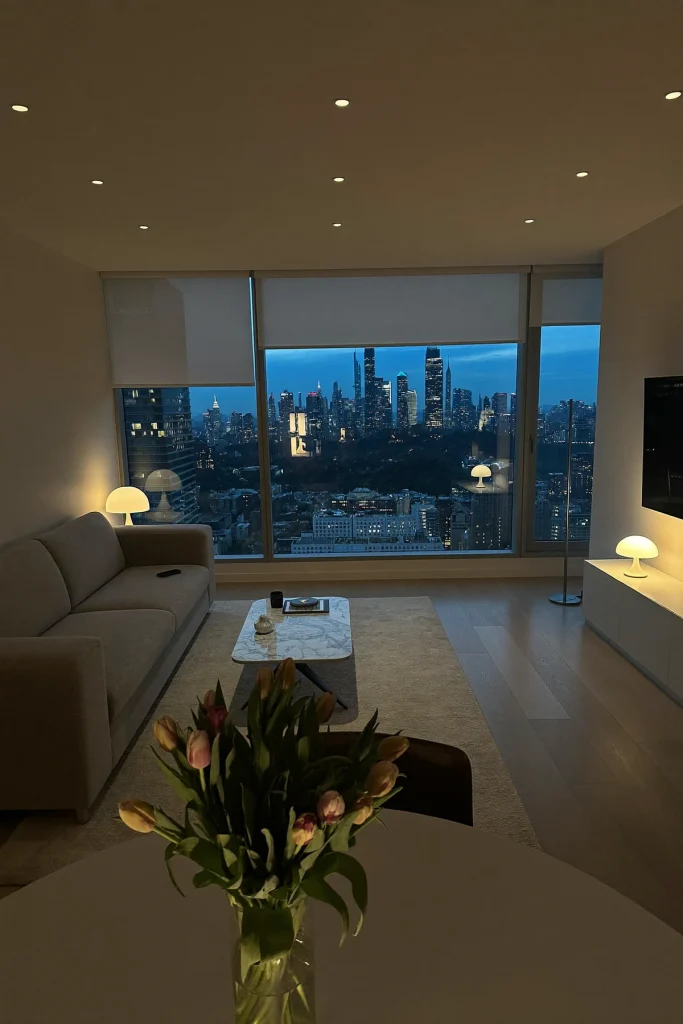
Smart bulbs and smart plugs let you change the whole mood of your living room with one tap, or no tap at all. Set a “dinner” scene that dims the overheads and brings up the lamps, a “movie” scene that leaves only the bias lighting on, and a “goodnight” scene that turns everything off.
Schedules are where it really shines. Lamps that switch on by themselves at sunset mean you never come home to a dark house again.
Start small with a few smart plugs on your favorite lamps. They usually cost around $10 to 20 each and work with whatever bulbs you already have.
Myth-Buster
Smart lighting isn’t just for tech lovers. Once the scenes are set up, it’s actually simpler than a wall of switches. Even grandparents tend to figure out “Movie” on the first try. 📱
Set a Lamp in the Window for a Welcome-Home Glow

There’s something so old-fashioned and lovely about a lamp glowing in the front window. It makes the house look lived-in from the street, welcomes everyone home and adds a warm layer inside too.
Choose a small table lamp with a pleated or linen shade and set it on a little table or deep windowsill. Put it on a timer so it clicks on at dusk every day. From the sidewalk, the house looks like a storybook illustration.
Inside, that lamp lights the far side of the room, which is often the darkest spot. Pair it with café curtains or a soft Roman shade for privacy after dark.
Ask yourself: if you walked past this window at night, would you want to be inside? If the answer is yes, your lighting is doing its job. 🏡
Turn On All Four Layers at Once
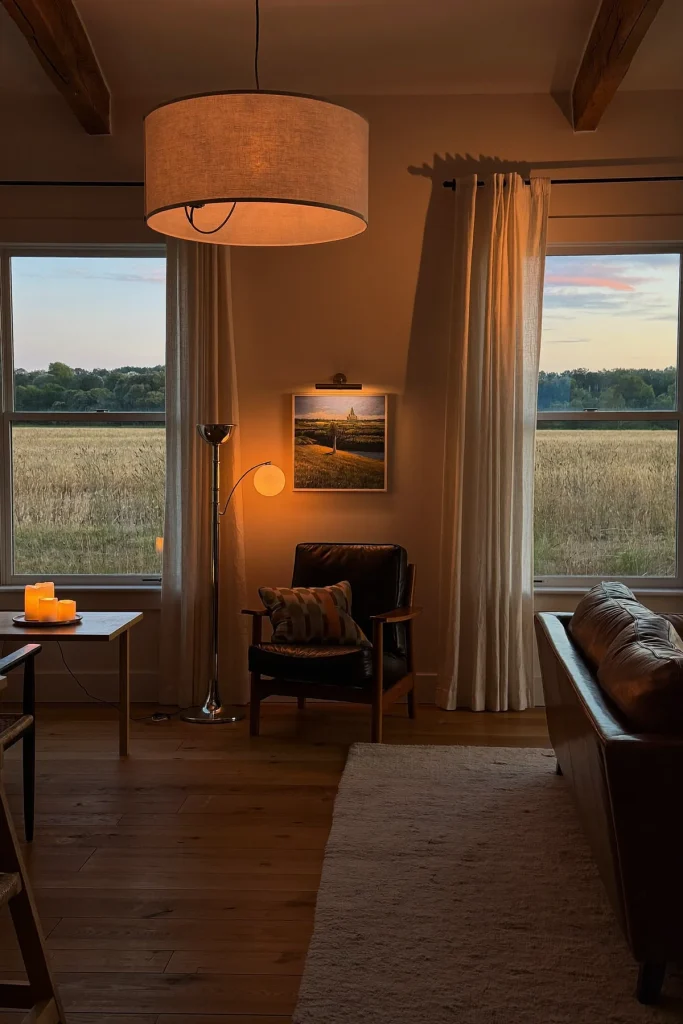
This is where it all comes together. Ambient light up high from a chandelier, pendant or cove. Task light where people read or play. Accent light on art, shelves and plants. And mood light from lamps and candles to make it all feel warm.
Walk your living room at night and check each layer. Is there a soft glow overhead on a dimmer? Can you read in every seat? Is at least one thing you love lit up? Are there lamps low enough to make the room feel cozy? If you can tick all four, you’ve built a room that works for every job: family movie night, Sunday puzzles, a quiet glass of wine.
The best part is that layered light is forgiving. Turn on one or two layers for a quiet evening, all four when friends come over. The room changes with you.
The Switch-On Order
At dusk, try this: lamps first, accents second, overheads last and only if you need them. You’ll be surprised how often you never reach for the big light at all. 🌅
Let the Glow Do the Work
Lighting is the one thing in a living room that changes everything else. The same sofa, the same rug, the same paint color can feel cold and flat or warm and inviting, all depending on where the light comes from.
Start with the easy wins: warm bulbs, a dimmer and one good reading lamp. Then add a layer at a time, a lit shelf here, a picture light there, until every corner has a glow and a purpose.
Before long, that big switch by the door will gather dust. And your family will start lingering in the living room long after dinner. That’s the whole point. 💛