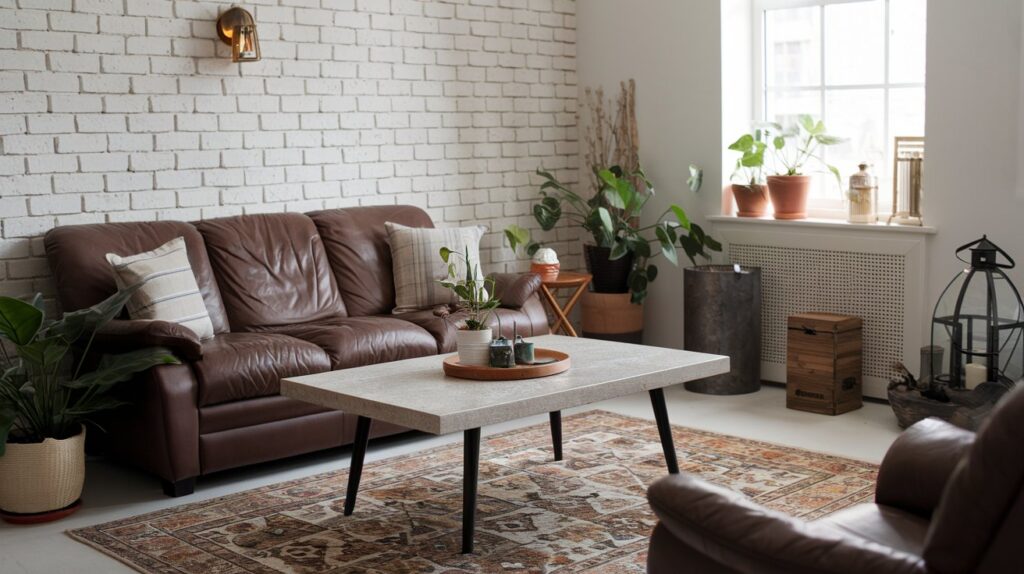
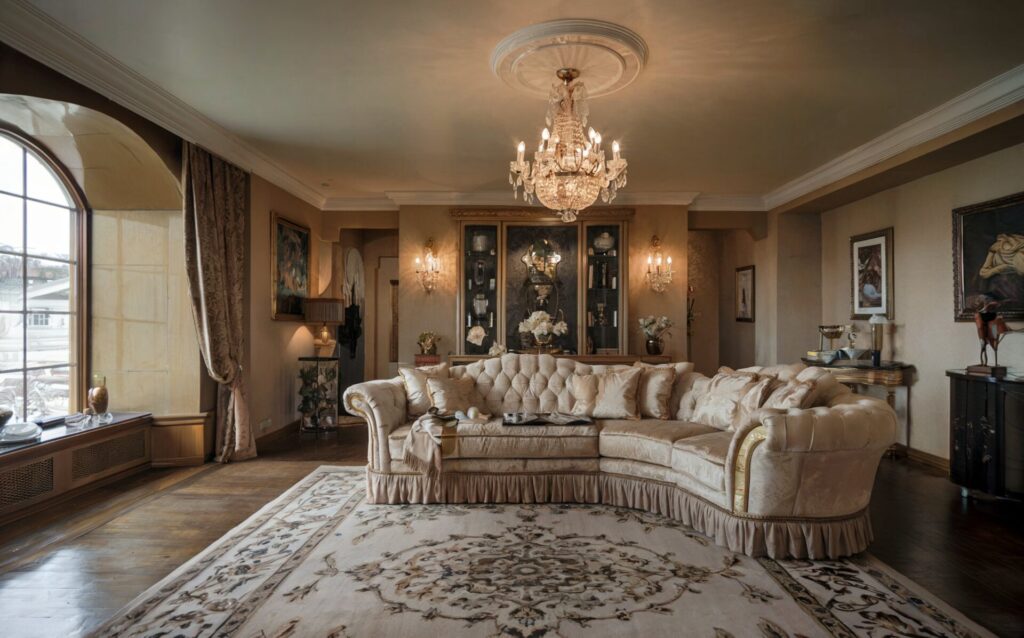
There’s a particular kind of living room I fall for every single time. The rug is a little worn where everyone walks. The sofa has a dent in the cushion where somebody’s dad always sat. There’s a stack of old books with cracked spines and a brass lamp that’s been rewired twice. Nothing matches, and somehow all of it belongs together.
That’s what vintage really means to me. It isn’t a theme or a showroom set. It’s a room that looks like it grew slowly, piece by piece, from estate sales, thrift stores, Grandma’s attic and that flea market you almost skipped.
Below are 24 vintage living room ideas pulled from the 1920s through the 1960s, with patina, old wood, chintz, brass and worn leather doing the heavy lifting. You can borrow one or ten. Either way, your living room will start telling a story that’s yours. 🕰️
Anchor the Room With a Faded Antique Persian Rug
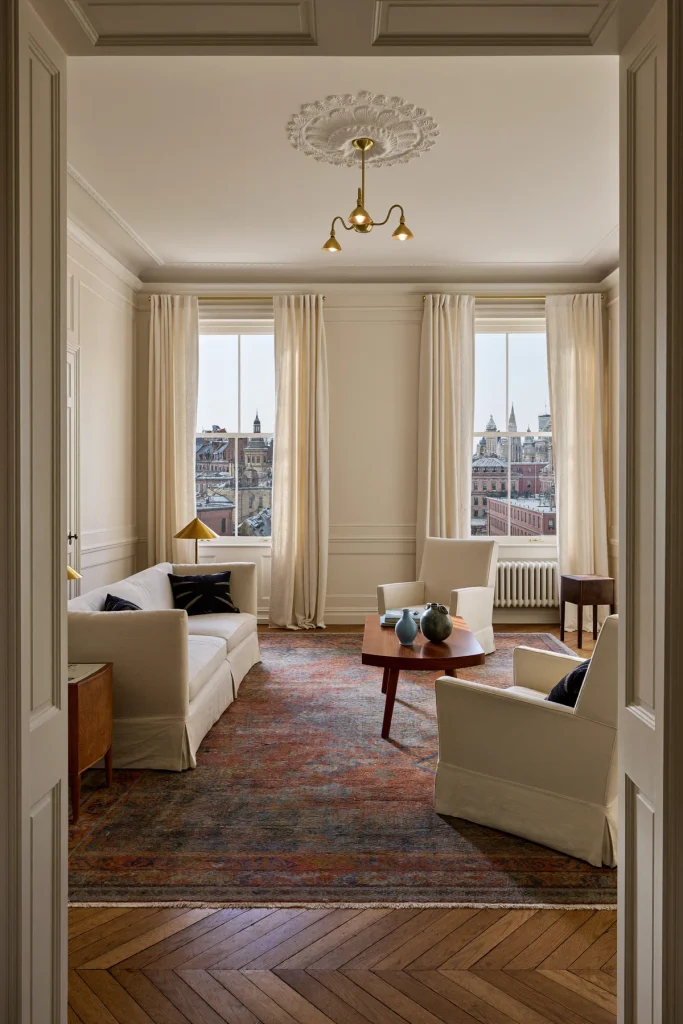
If you buy only one old thing, make it the rug. A faded Persian or Oriental rug gives a room instant history, and its soft wear pattern does what no new rug can.
Look for one with mellow reds, rusts and indigos that have softened over decades. A little fraying on the fringe is fine. It’s character, not damage.
Lay it so the front legs of your sofa and chairs sit on it. That ties the whole seating area together and gives everything else in this list a home base.
Where to Find It
Estate sales, local auction houses and online auction sites are your best bet. Rugs from smaller estates often sell for far less than you’d guess.
Hunt Down a Camelback Sofa With Real Patina
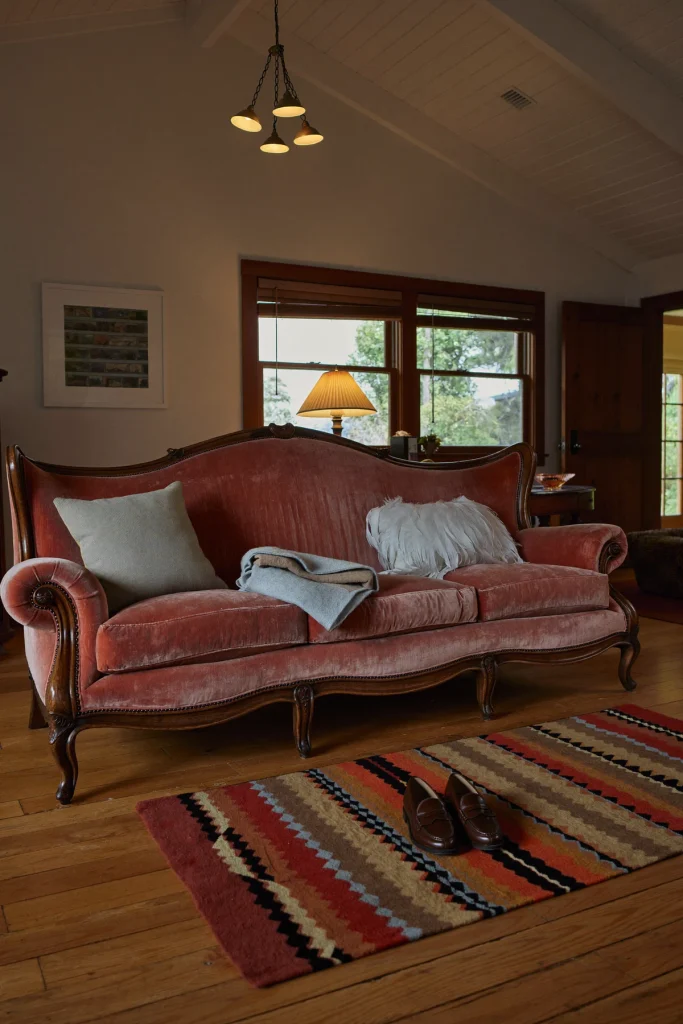
A camelback sofa, with that gentle hump along the back, is pure old-school charm. It shows up in 1920s parlors and 1950s living rooms alike, which makes it a perfect bridge piece.
Don’t panic over faded velvet or a few worn spots on the arms. That softness is exactly what you’re after. If the frame is solid hardwood and the springs still hold, you’ve found a keeper.
Plump it with a couple of feather cushions and a folded wool throw. Suddenly it looks like it’s been in the family forever. 🛋️
Hang a Wall of Thrifted Oil Paintings in Mismatched Gilt Frames
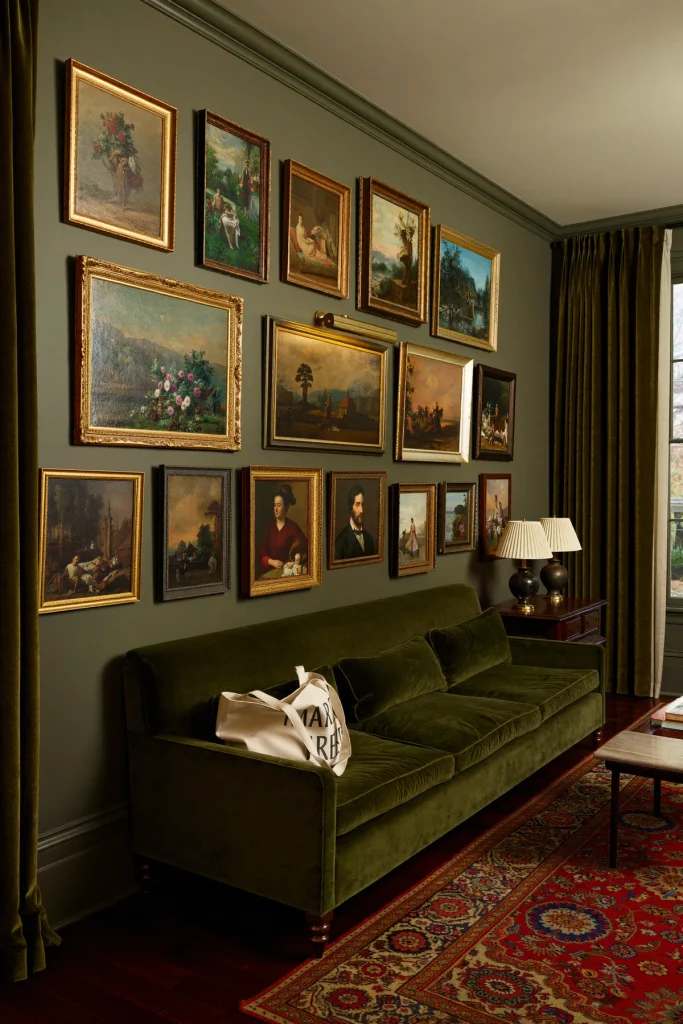
Thrift stores are full of forgotten oil paintings. Moody landscapes, little still lifes, a cow in a field. On their own they look a bit sad. Grouped together, they look like a collection.
Mix sizes and frame styles, but keep a loose thread running through them, like gold frames or a lot of green in the scenes. Hang them close, about two to three inches apart, so they read as one big piece.
How to Steal This Look
- Start with the largest painting slightly off center.
- Lay everything on the floor before you hammer a single nail.
- Add one small mirror or a brass plate to break up the canvases.
- Leave a gap at the edge so the wall can grow later.
Stack Clothbound Books on Every Surface
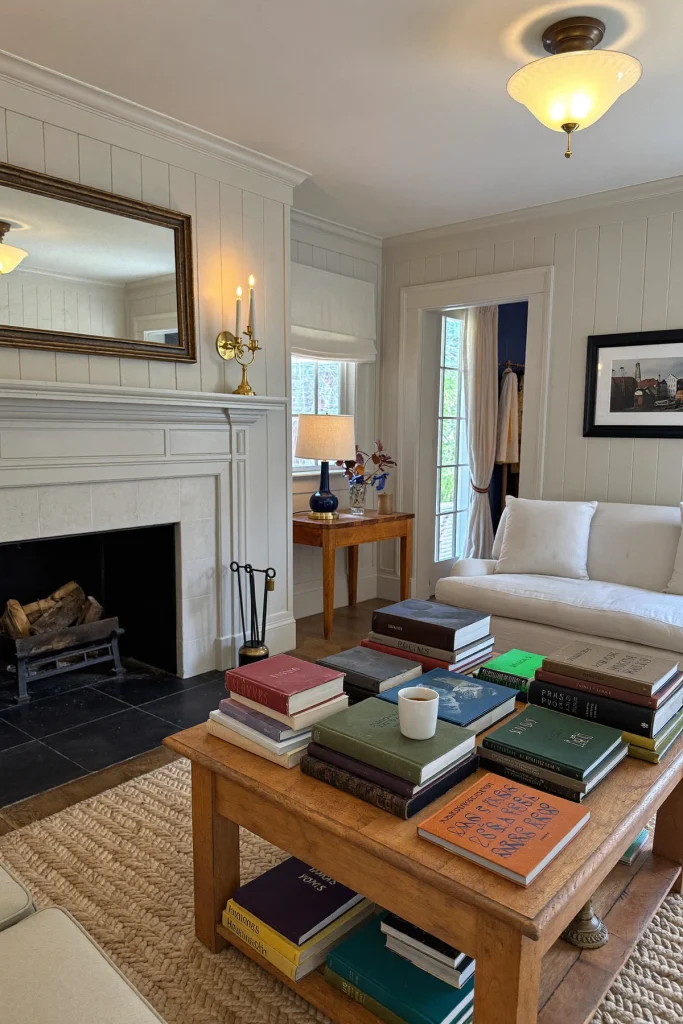
Old books are the cheapest way to make a room feel lived-in. Clothbound covers in faded green, oxblood and mustard look gorgeous in a stack, even if you never open them. (You will, though.)
Pile three or four on the coffee table under a brass dish. Tuck a stack beside the sofa as a mini side table for your mug. Line a few along the mantel with a heavy bookend.
Library sales and thrift stores often sell them by the bag. Peel off any modern dust jackets to show the cloth underneath. 📚
Mix Chintz Florals Into Pillows and Slipcovers
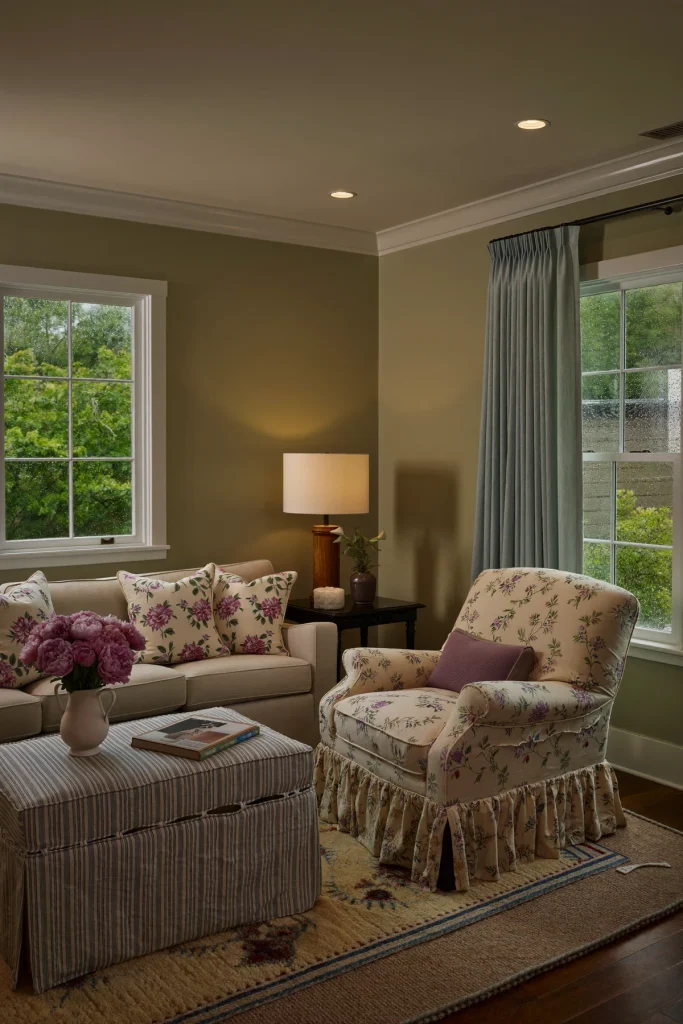
Chintz had a big moment in grandmother’s day, and it’s back for good reason. Those glazed, cabbage-rose florals bring color and a sense of comfort that plain fabrics can’t.
You don’t need a chintz-covered everything. Start with two pillows on a solid sofa, or a loose slipcover on an armchair. Pair it with a simple ticking stripe or a plaid to keep it from feeling too sweet.
Pro Tip
Vintage curtain panels and old tablecloths are a treasure trove of chintz. Have them sewn into pillow covers for a fraction of the cost of new designer fabric.
Light the Room With Brass Lamps and Pleated Shades
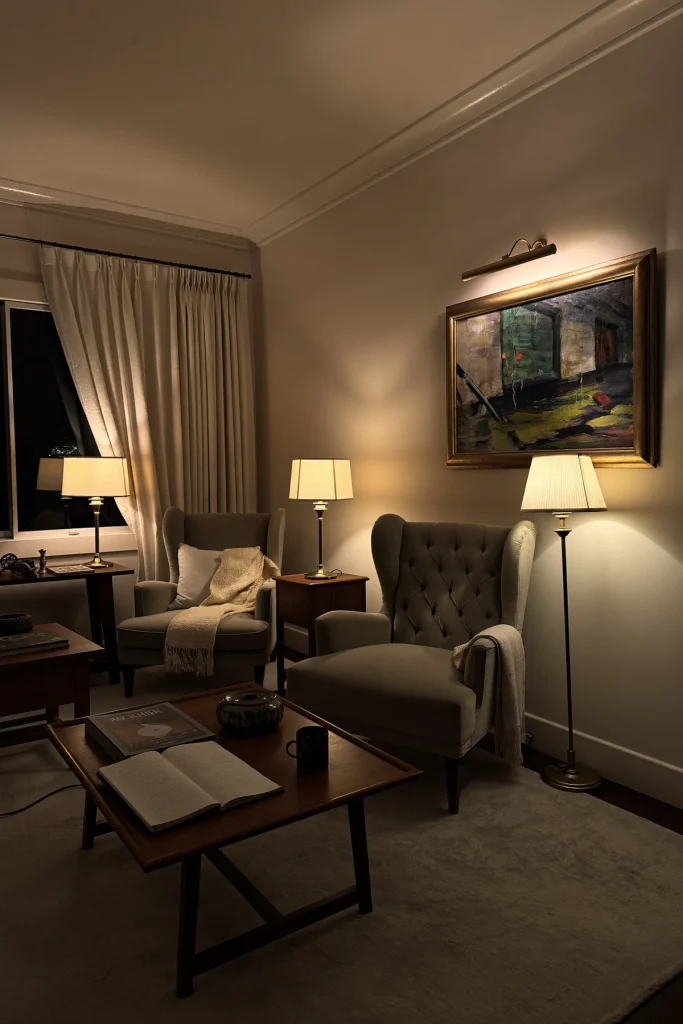
Overhead light flattens everything. Vintage rooms glow because they rely on lamps, lots of them, at different heights.
Old brass table lamps with pleated fabric shades are easy to find secondhand. A candlestick lamp on a side table, a tall brass floor lamp by a chair and a little picture light over a painting give you that warm, layered glow.
Always have old lamps rewired before using them. It’s quick and inexpensive at most lamp repair shops.
Rule of Thumb
Aim for at least three lamps in a living room, placed in a loose triangle so no corner is left in the dark.
Bring Home a Glass-Front Barrister Bookcase
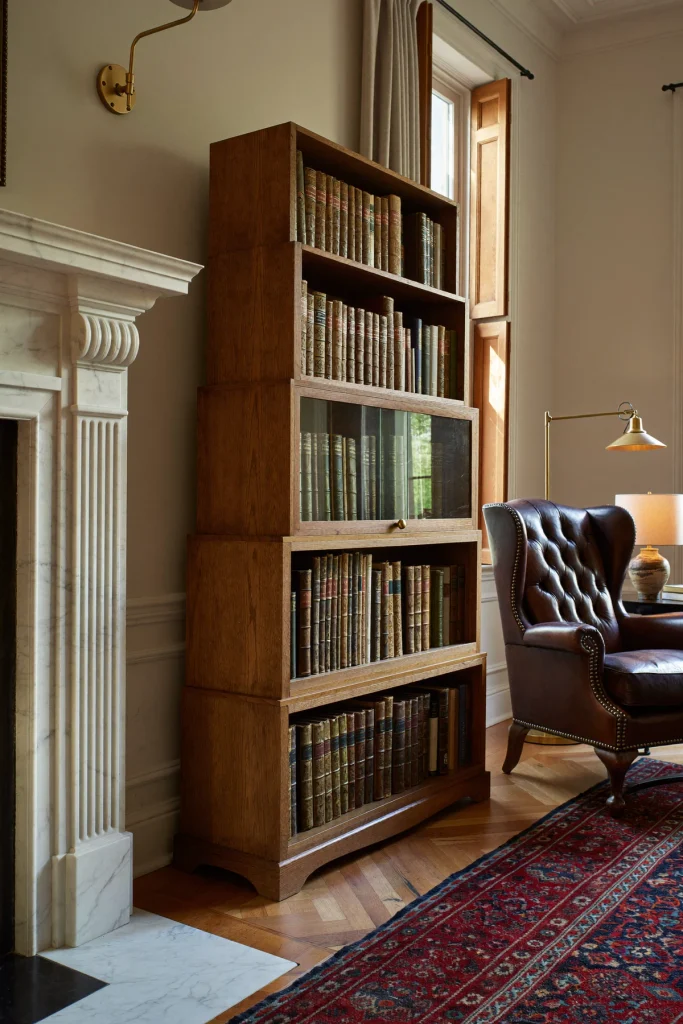
Barrister bookcases have stacking sections with glass doors that lift and slide back. They were made for lawyers’ offices in the early 1900s, and they’ve aged into one of the most charming pieces of furniture around.
The glass keeps dust off your nicest old books, and the dark oak brings warmth to any wall. Even a two-section version makes a big impact beside a window or a fireplace.
Cost Breakdown
| Option | Typical Price |
|---|---|
| Antique oak, original | around $600 to 1,500 |
| Vintage reproduction | around $250 to 600 |
| Thrift or yard sale find | around $80 to 250 |
Reupholster a Wingback Chair in Old Tapestry Fabric
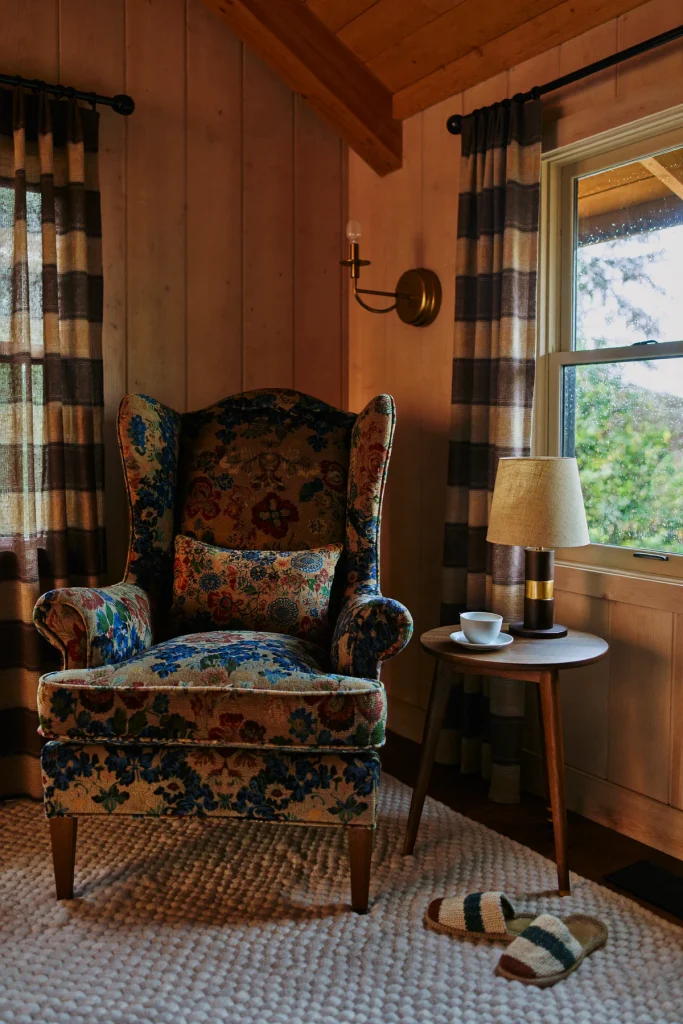
A wingback chair is the coziest seat in any old house. Those high sides block drafts and practically ask you to curl up with a book.
Secondhand wingbacks are everywhere, often in dated fabric. Recover one in a tapestry, a needlepoint pattern or a faded floral and it instantly looks like a family heirloom.
Put it by the window with a small round side table and a lamp, and you’ve made a reading spot in an afternoon.
Frame Antique Botanical Prints in a Neat Grid
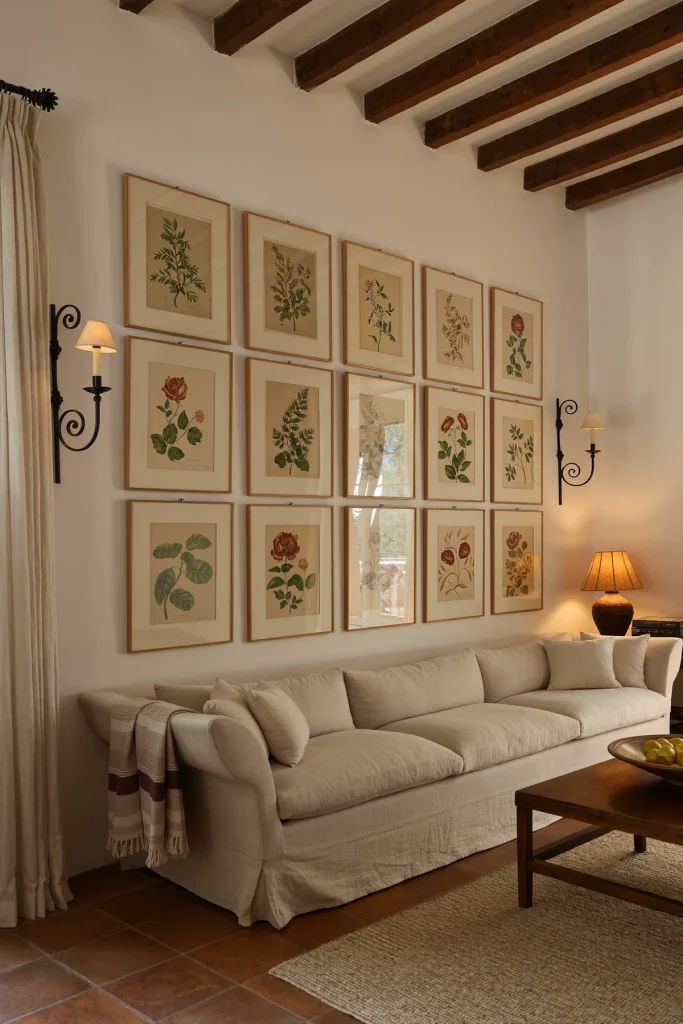
Where the paintings in idea 3 are relaxed and a little chaotic, botanical prints love order. Six or nine of them in matching frames, hung in a tight grid, look calm and scholarly. 🌿
Look for old book plates of ferns, roses, mushrooms or herbs. Many are sold loose at antique shops and paper fairs because the original books fell apart long ago.
Simple thin wood or brass frames with wide cream mats let the drawings breathe. Hang the grid above a sofa or a long sideboard, centered and about eight to ten inches above the furniture.
The soft greens and browns of old paper play nicely with almost any room, which makes this one of the easiest vintage ideas to pull off.
Style the Mantel With Brass Candlesticks and a Foxed Mirror
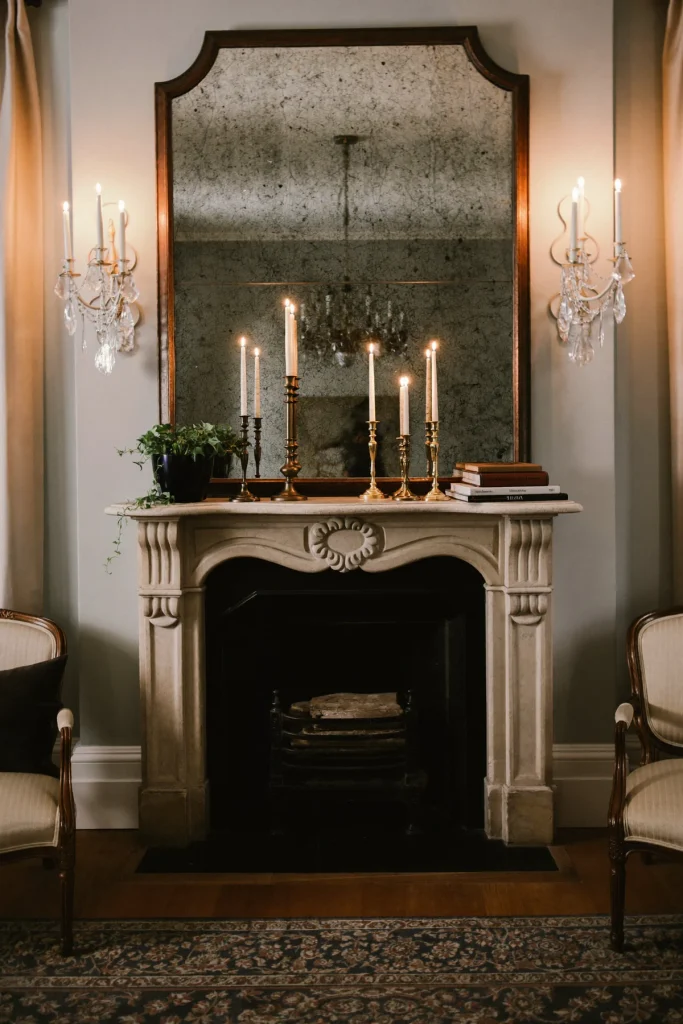
An old mirror with foxing, those cloudy, speckled spots where the silver backing has worn away, has a softness that new glass can’t fake. It reflects lamplight like a gentle haze.
Lean or hang one over the fireplace and line the mantel with brass candlesticks in different heights. Odd numbers look best, so try three or five.
Add a small stack of books and one living thing, like a little ivy plant in a terracotta pot. Light the candles in the evening and watch the whole wall glow.
Micro-Tip
Mismatched candlesticks look more collected than a matched set. Keep them all in one metal, though, so the mantel feels pulled together.
Paper One Wall in a Faded Floral Wallpaper
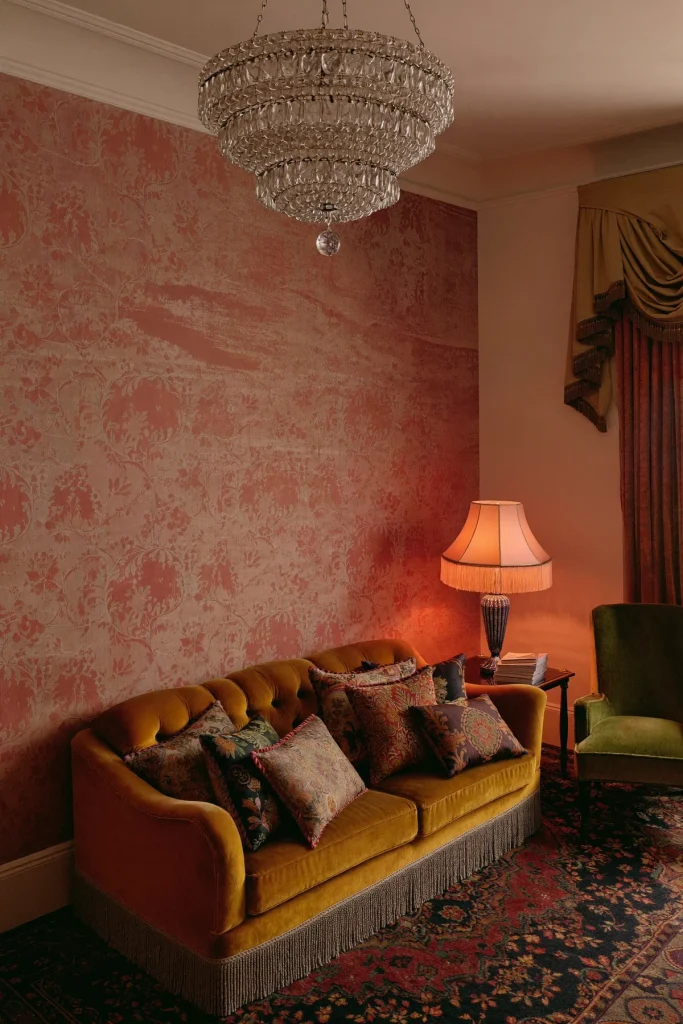
Patterned wallpaper was everywhere in old homes, and nothing makes a room feel like it has a past faster.
Choose a print with a softened, slightly faded look: trailing roses, a toile, a small Victorian-style floral. Plenty of modern papers are printed to look aged, so you get the charm without peeling layers of history off the plaster.
If a whole room feels like too much, paper just the wall behind the sofa or the inside of a bookcase. Then go bold with mismatched patterned pillows and a fringed lamp if you love a more-is-more look.
Peel-and-stick versions work well for renters and come down cleanly when you move. 🌸
Tuck a Velvet Fainting Couch Under the Window
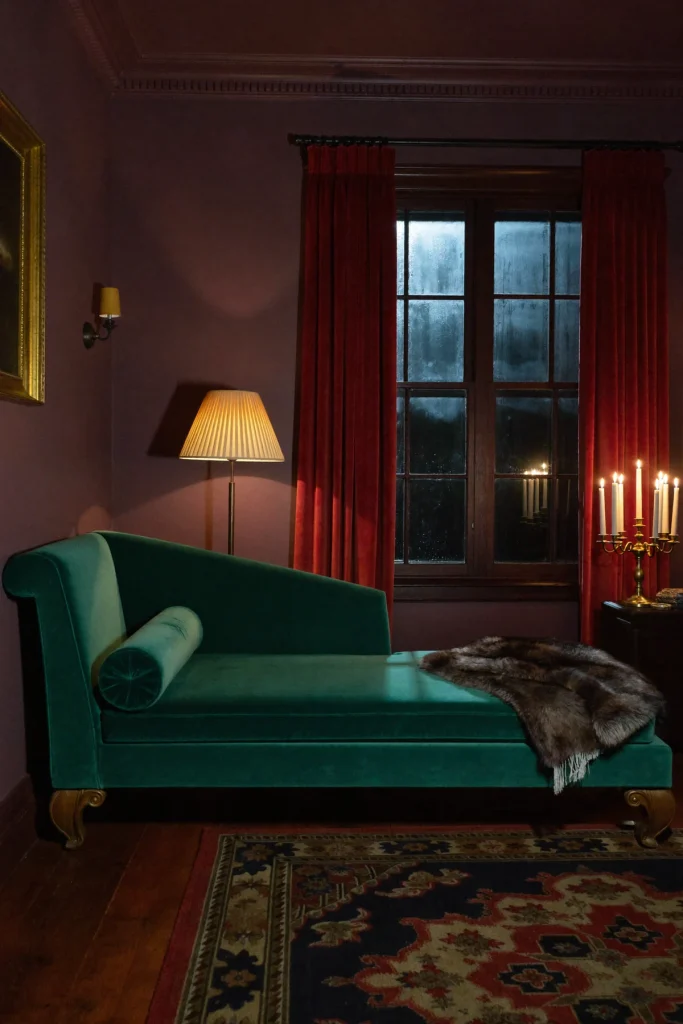
A fainting couch, sometimes called a chaise or recamier, has one raised end and a gently sloped back. It’s dramatic in the nicest way, and it’s the best napping spot in the house.
Under a window is its natural home. Add a pleated lampshade glowing nearby, a bolster pillow and a soft throw, and you’ve got a spot nobody wants to leave.
Deep jewel-toned velvet suits these pieces. A little crushing or wear on the velvet only makes it look more authentic, especially in a darker, moodier room.
If you find one with carved wooden legs, keep them. They’re half the charm.
Tuck a Slant-Front Secretary Desk Into a Quiet Corner
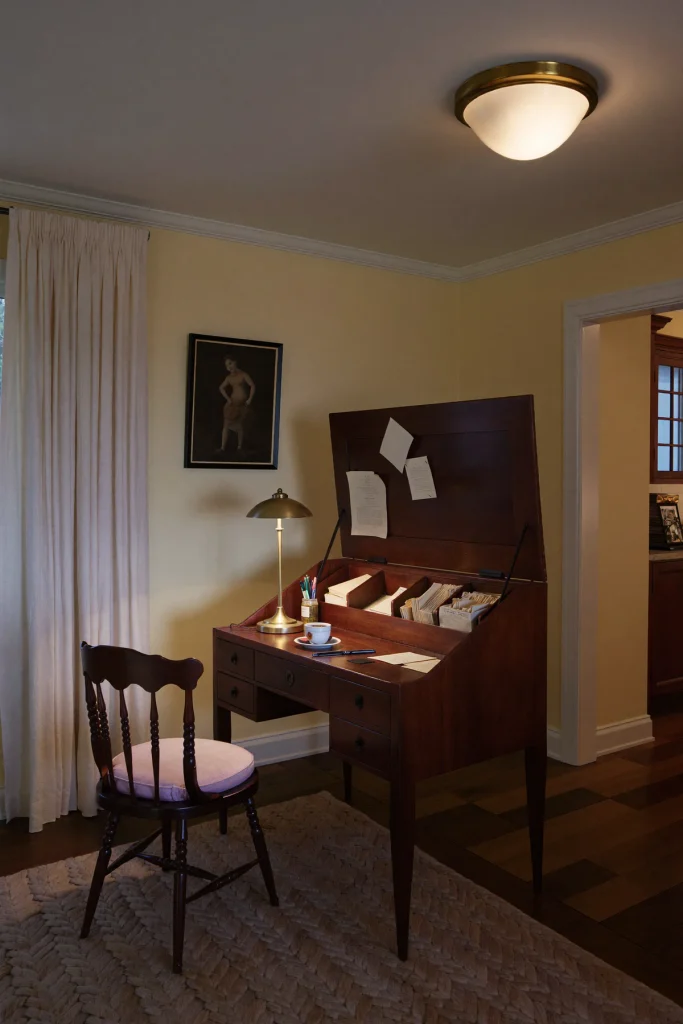
A secretary desk has a drop-down writing surface and a nest of tiny cubbies inside. Closed, it looks like a handsome cabinet. Open, it’s a little office.
It’s perfect for a living room because it hides the mess. Bills, stamps, chargers and the kids’ permission slips all disappear with one flip of the lid. ✉️
Pull up a simple spindle chair and set a small brass desk lamp on top. Put a jar of pens and a cup of tea on the writing surface and it already feels like you’ve been using it for years.
Kid- and Pet-Proof It
Old drop-fronts can be heavy, so open them gently and teach little ones to leave the lid alone. Anchor tall secretaries to the wall with a furniture strap, just like you would a modern bookcase.
Layer Lace Panels Under Heavy Velvet Drapes
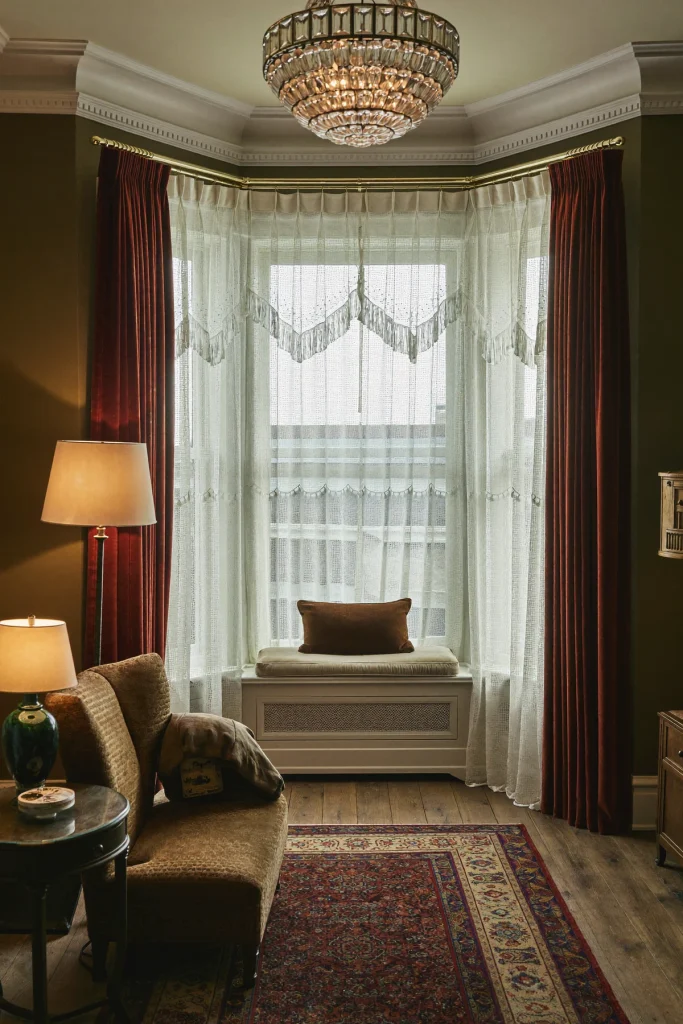
Old-fashioned windows were dressed in layers, and it’s a habit worth bringing back. Sheer lace panels soften daylight during the day, while heavier velvet or brocade drapes close over them at night.
The lace gives you privacy without blocking the light. The velvet adds warmth, quiet and that rich, enveloping feeling.
Hang everything from a wood or brass rod mounted high, close to the ceiling, with rings so the drapes slide easily. Let the velvet just kiss the floor or puddle very slightly.
Vintage lace turns up at estate sales and thrift stores all the time. Just soak it in a gentle wash to brighten it before hanging.
Roll In an Art Deco Bar Cart With Etched Glassware
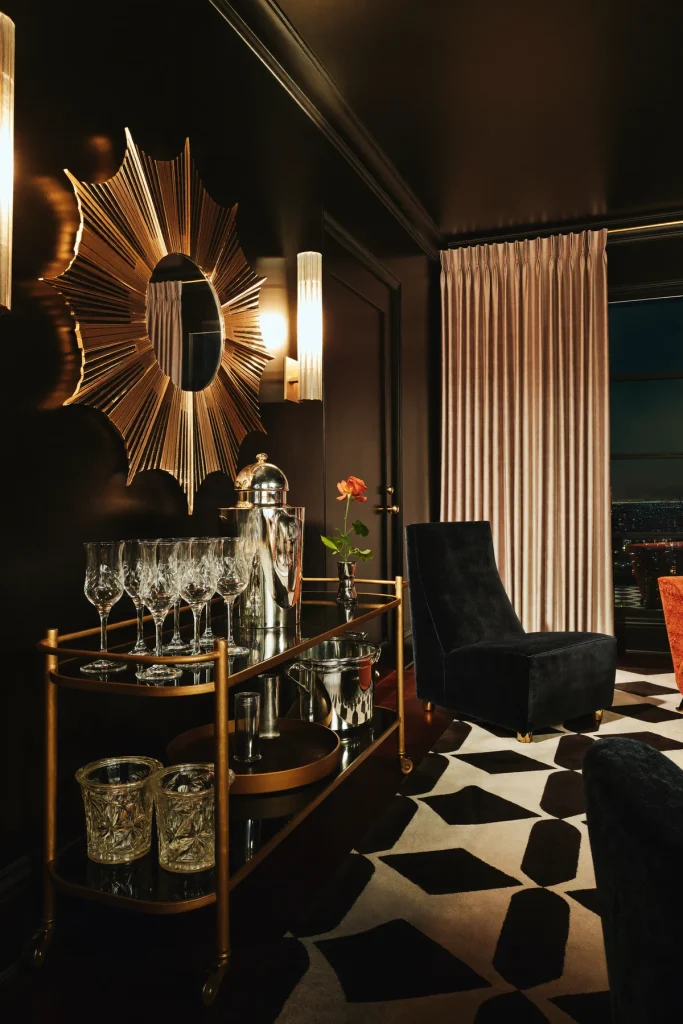
Nothing says 1920s and 1930s glamour like a mirrored or brass bar cart. Picture curved edges, glass shelves and a set of etched cocktail glasses waiting for Friday night. 🍸
Stock it with a vintage ice bucket, a cocktail shaker, a small tray and a few pretty decanters. A bud vase with one flower finishes it off.
Park it in a corner near the seating area so it’s easy to reach when friends come over. In a bolder room, it can be the start of a whole glam moment with black lacquer, gold and mirrored accents.
Trend Alert
Designers are pairing Deco pieces with plain, simple rooms lately, so one great bar cart can carry the whole era without turning your house into a theme party.
Turn a Weathered Workbench Into a Sofa Table
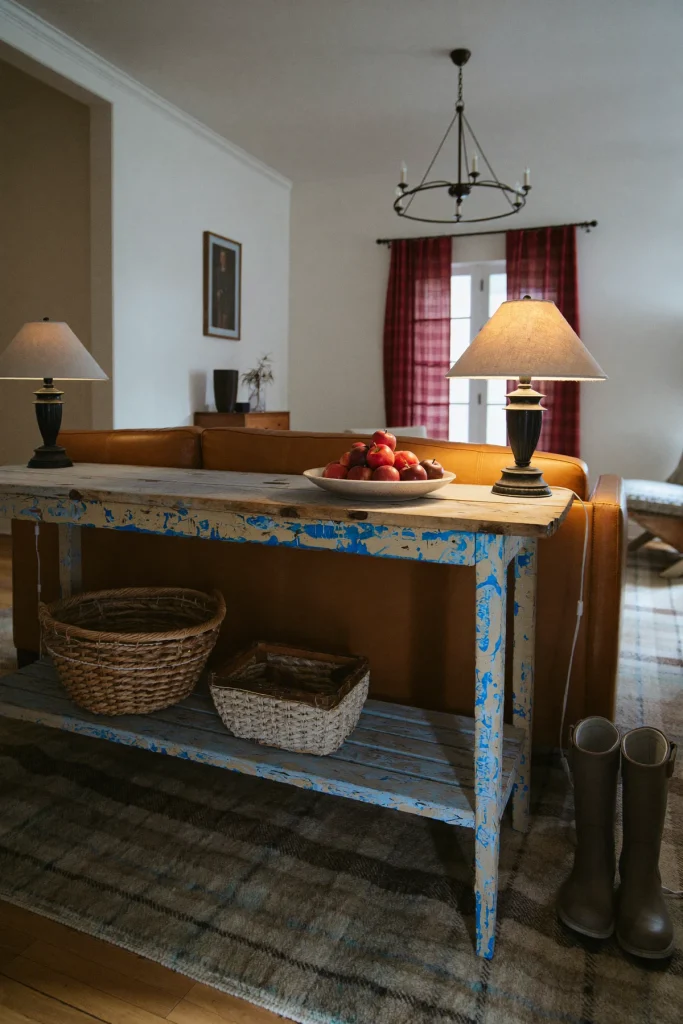
An old carpenter’s workbench, scarred and paint-splattered, makes a surprisingly lovely sofa table. The worn top and chunky legs bring some rustic texture to a room full of softer fabrics.
Push it behind the sofa and use it to hold a pair of lamps, a big bowl of apples and a stack of magazines. The lower shelf is great for baskets.
Weekend Project
- Scrub it with warm water and a little dish soap, then let it dry for a day.
- Sand only the rough spots, keeping the old marks.
- Rub in a coat of paste wax for a soft, touchable finish.
- Add felt pads to the legs to protect your floors.
Light Up a Cabinet Full of Depression Glass
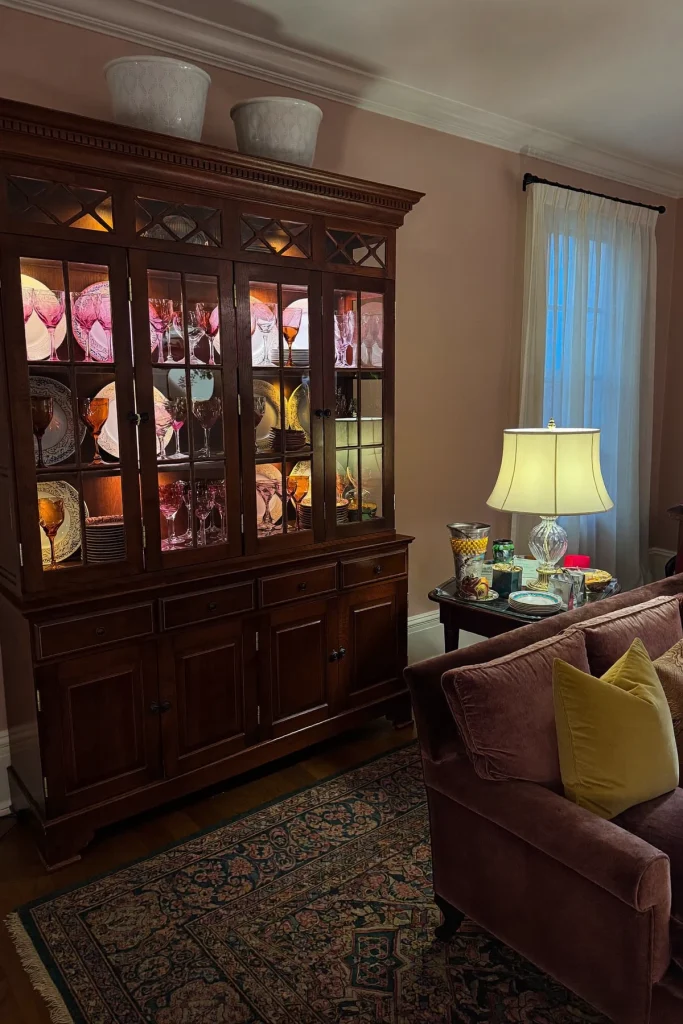
Depression glass is the pretty, pressed glassware made in the 1920s and 1930s, often in soft pink, green, amber and clear. It was cheap back then, sometimes given away free in boxes of oats. Today it’s a joy to collect.
Gather pieces in one or two tones and display them in a glass-front china cabinet. Then add a small battery-powered puck light at the top of each shelf. When the light hits that colored glass in the evening, the whole cabinet glows like a jewelry box. ✨
Group pieces by height and shape: tall goblets at the back, stacked plates against the wall and little candy dishes in front.
The fun is in the hunt. You’ll find odd pieces for a few dollars at thrift stores and antique malls, so your collection can grow slowly. Like the ironstone in idea 8, a few related pieces look far better than a random jumble.
Stand a Tall Case Clock in a Quiet Corner
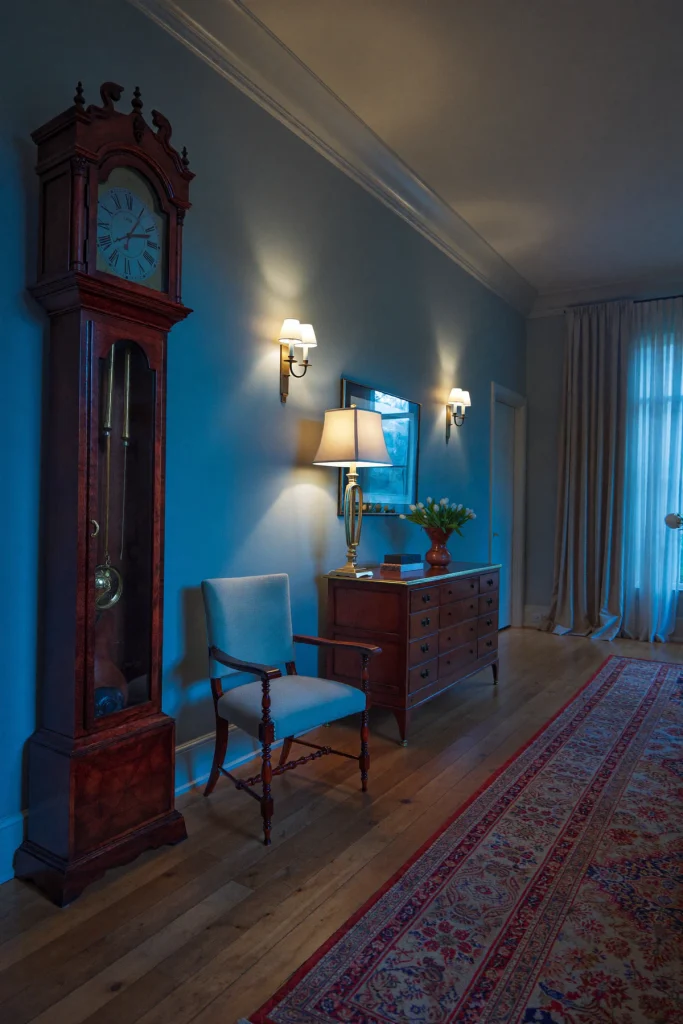
A tall case clock, what most of us call a grandfather clock, brings a sense of time and permanence like no other piece of furniture. The slow tick and the hourly chime make a house feel settled.
Put it in a corner where it won’t get bumped, ideally against a sturdy inside wall. Its height also draws the eye up, which is handy in a room with tall ceilings.
If you’d rather not deal with weights and pendulums, plenty of old clocks are sold as decorative pieces, or you can have one converted to a quiet battery movement.
Balance it with something wide and low on the other side of the room, like a sofa or a long chest, so the room doesn’t feel lopsided.
Myth-Buster
A tall clock doesn’t need a giant room. A slim one from the early 1900s can fit beautifully in a modest living room, even a city apartment. It just needs its own corner.
Surround the Fireplace With Antique-Style Painted Tile
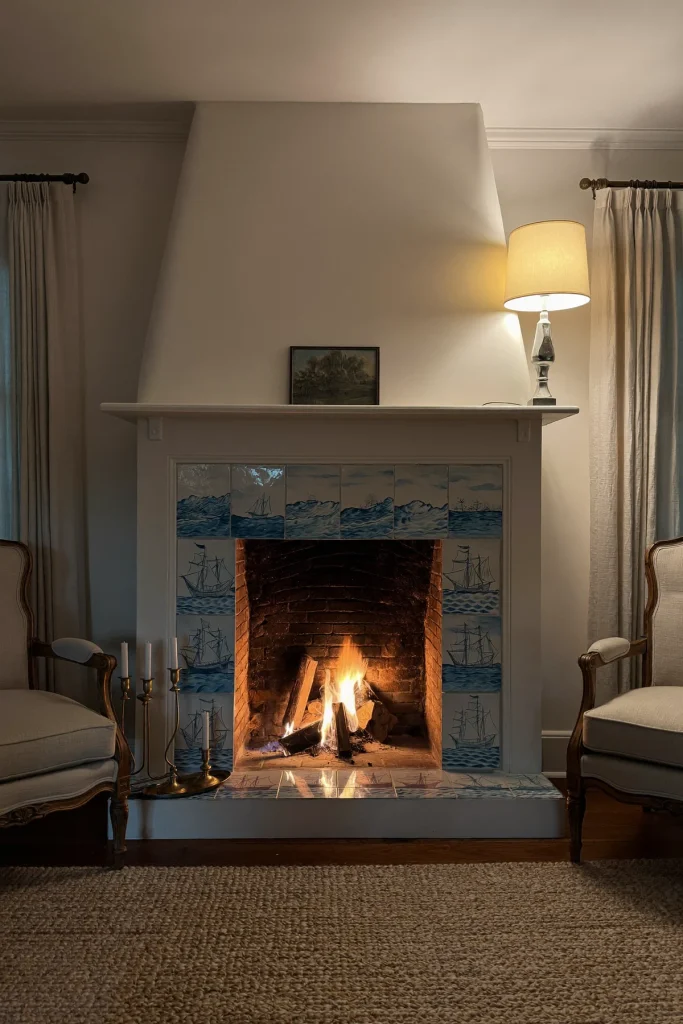
Many old fireplaces had decorative tile around the opening, and adding some back is one of the most charming upgrades you can make. Hand-painted blue-and-white tiles, little windmills, flowers or ships give the hearth a story.
If your fireplace has plain brick or a dull surround, you can add tile around the firebox without touching the mantel itself. Real antique tiles are rare and pricey, but plenty of makers produce versions with an aged, slightly uneven glaze that look the part.
Keep the mantel above simple so the tile stays the star. A pair of brass candlesticks and a small painting are enough.
Light a fire on a cold evening and watch how the tiles catch the glow. It’s my favorite spot in any room to sit with a cup of cocoa. 🔥
Sneak In One Groovy 1970s Statement Piece
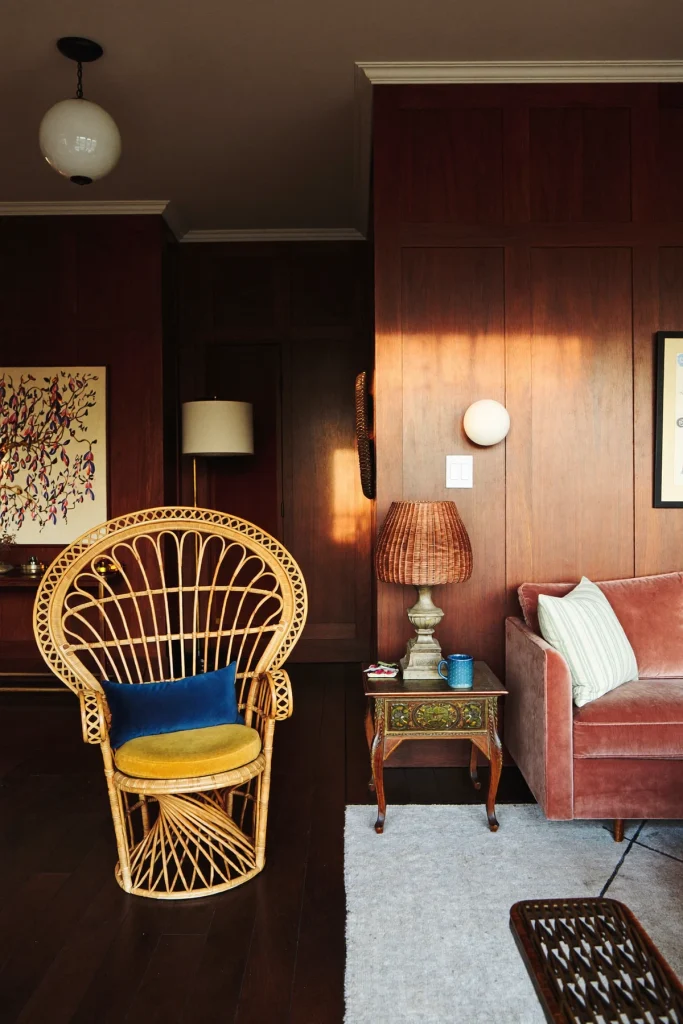
Vintage doesn’t have to stop in 1960. One playful piece from the 1970s keeps a collected room from feeling too serious.
Think a rattan peacock chair, a smoked glass side table or a big macramé hanging. Just one, though. The point is a happy little surprise, not a full era.
Put it next to something much older, like a carved Victorian side table or the camelback sofa from idea 2. That contrast is what makes the whole room feel genuinely collected rather than staged.
A rattan chair also softens a heavy room full of dark wood and velvet. Add a mustard or rust cushion to tie it into the rest of the space.
One Rule to Remember
Mix eras, not moods. A 1970s piece fits right in as long as it shares something with the room, like warm wood, a natural texture or a similar color.
Hang an Estate-Sale Crystal Chandelier
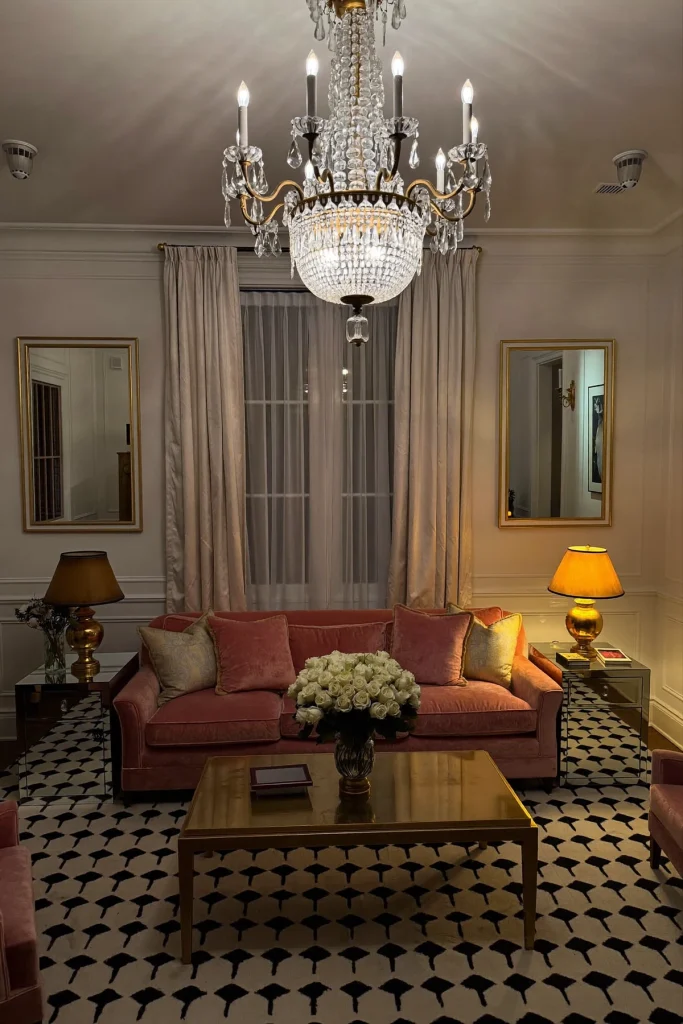
A crystal chandelier in a living room feels unexpected and a little bit glamorous. Old ones, with drops that have softened over time, give off the prettiest sparkle.
Estate sales and salvage yards are full of them, often for much less than a new fixture. Even if a few crystals are missing, you can buy loose replacement drops online.
Hang it so the bottom sits about seven feet above the floor, or lower over a coffee table if the ceiling is high. Always put it on a dimmer. At low light it glows; at full light it can feel like a ballroom.
If your room leans glam, pair it with velvet, mirrored side tables and a touch of gold. In a simpler room it brings romance to plain walls.
What to Check Before You Buy
- The wiring and the canopy that mounts to the ceiling.
- Any cracked or chipped arms.
- Whether the weight works with your ceiling box.
- That an electrician can rewire it for modern bulbs.
Pair a Walnut Mid-Century Credenza With Older Treasures
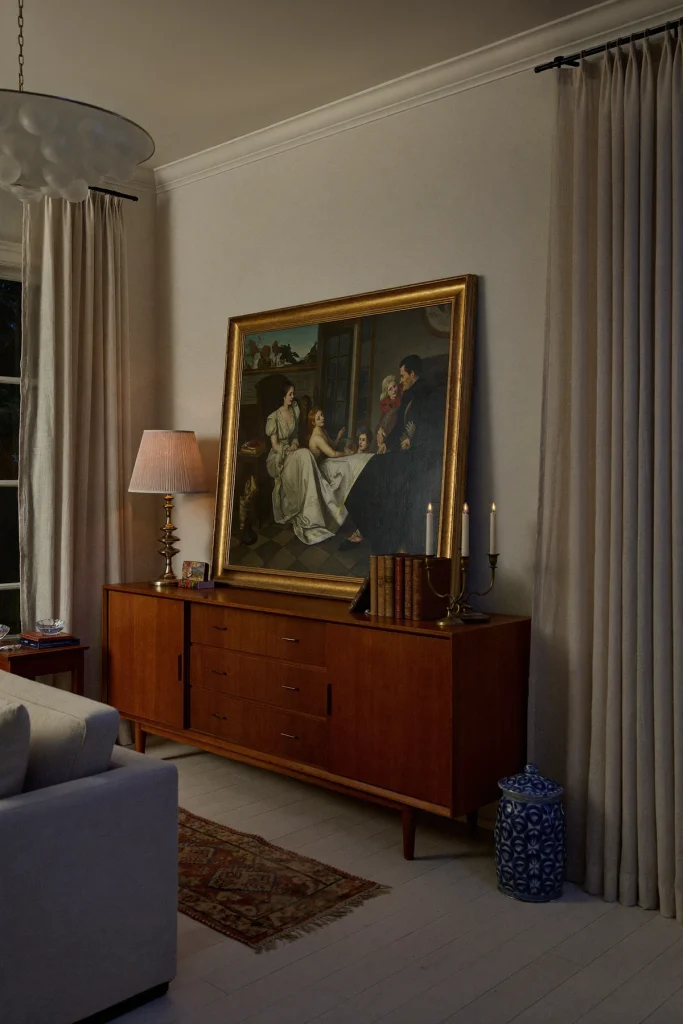
A long walnut credenza from the 1950s is one of the most useful pieces you can own. It’s low, it’s handsome and its sliding doors hide a surprising amount.
The trick is to style it with things that are older than it is. Prop a gilt-framed oil painting on top, add a brass lamp with a pleated shade and a stack of clothbound books. Suddenly that crisp mid-century shape feels warm and collected instead of sleek.
Look for original veneers in good condition and solid drawer joints. A little wear on the top is fine and gives it life.
Style Match Guide
| Pair the Credenza With | Why It Works |
|---|---|
| Victorian oil painting | Old art warms up clean lines |
| Brass candlestick lamp | Gold tones echo the walnut |
| Chinoiserie ginger jar | Adds curve and pattern |
| Small antique rug in front | Grounds it in the room |
Make Room for an Old Upright Piano
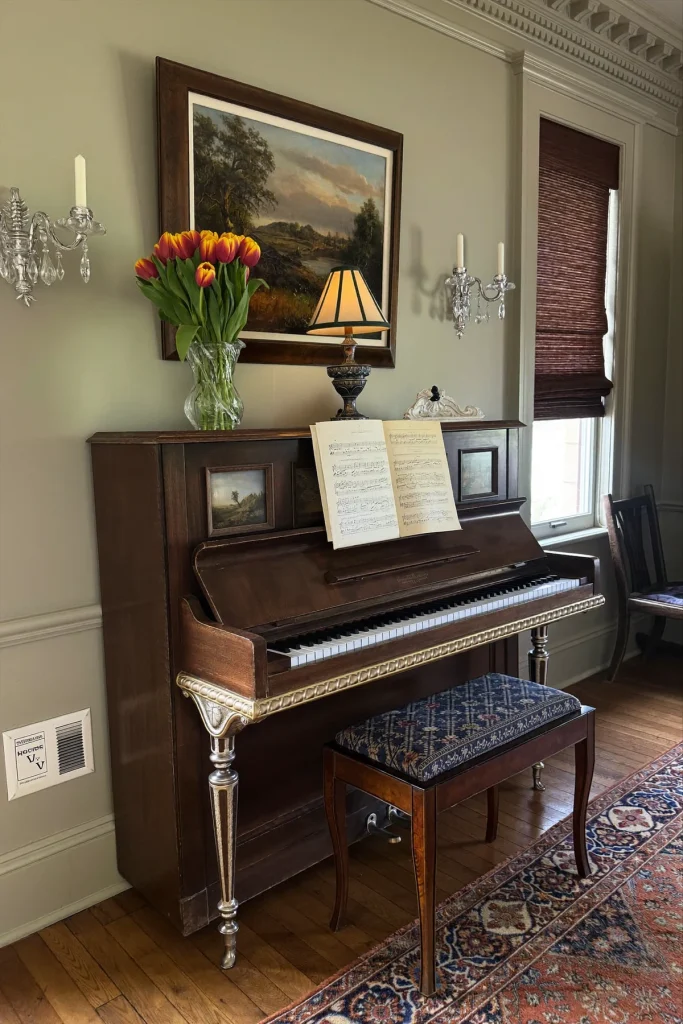
An upright piano is part furniture, part memory. Even if nobody plays well, it changes the feeling of a room. Old ones from the early 1900s often have carved legs, inlaid panels and candle holders that fold out from the front. 🎹
Many people give them away for free if you can arrange the move. Just know that moving one takes a professional crew, and tuning is a must once it’s settled in.
Place it against an inside wall, away from radiators and sunny windows, to protect it. Top it with a framed painting, a lamp and a little vase of flowers, and leave a few pieces of old sheet music on the stand.
Then let the kids bang out “Chopsticks”. A living room with music in it is a happy one.
Pull Two Worn Leather Club Chairs Up to the Fire
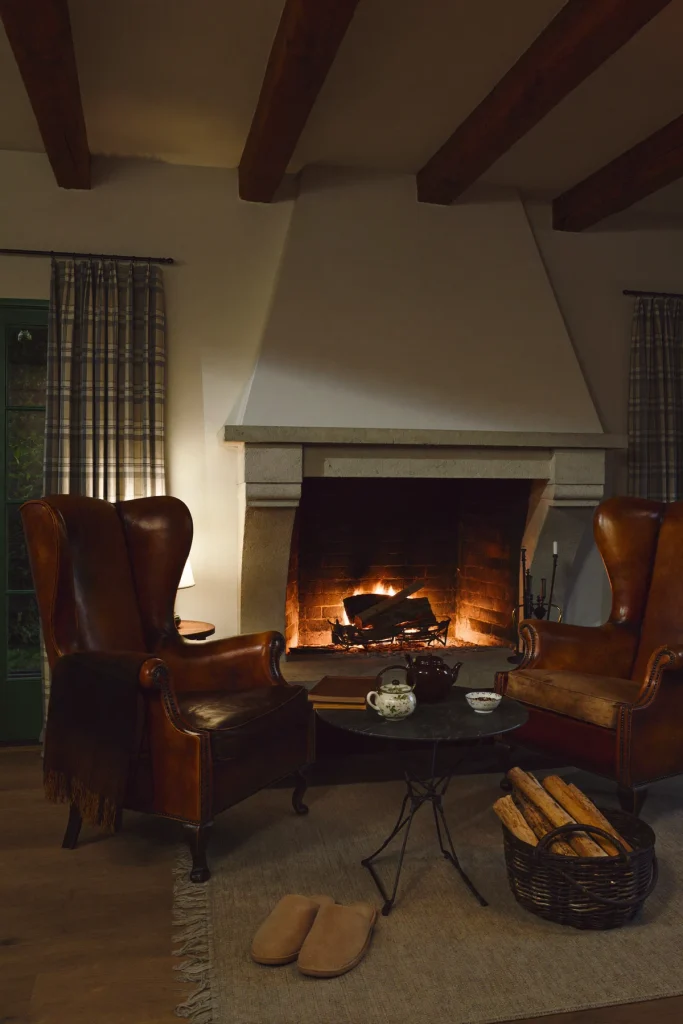
Two old leather club chairs, cracked and soft from decades of use, are the coziest pair you can put in a living room. Turn them toward the fireplace with a little table between them and you’ve made the spot where everyone ends up.
Don’t rush to restore the leather. Those creases and lighter patches where hands have rested are the whole point. A good leather conditioner will keep it supple without making it look new.
Add a wool throw over one arm, a lamp on the side table and a basket of logs nearby. This is the corner from idea 23 at its best: fire going, tea in hand, nobody in a hurry.
The Sniff Test
Before buying old leather, give it a sniff. A rich leathery smell is good. Mildew or smoke is very hard to remove, so walk away unless the price is too good to pass up.
Let Your Room Keep Growing
The best vintage living rooms are never really finished. They change as you find new treasures, trade out old ones and add the things that mean something to you. That’s half the fun. 💛
So start small. Pick up a stack of old books this weekend, or hang that thrifted painting you’ve had in the closet. Next month it might be a rug, and next year a piano.
Give it time and your living room will look like it was gathered over generations, because in a way, it was.