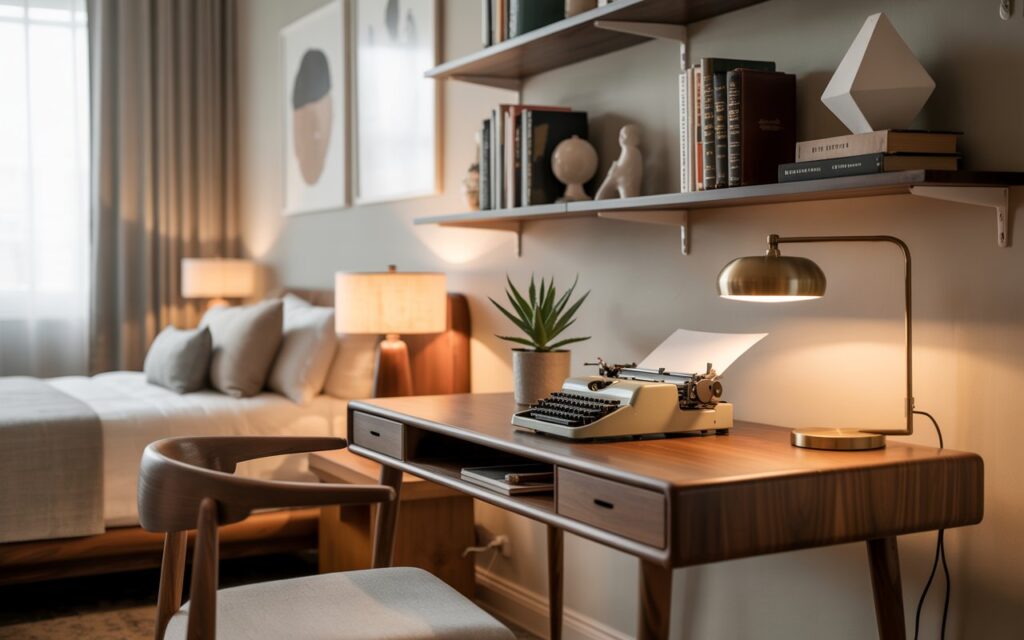
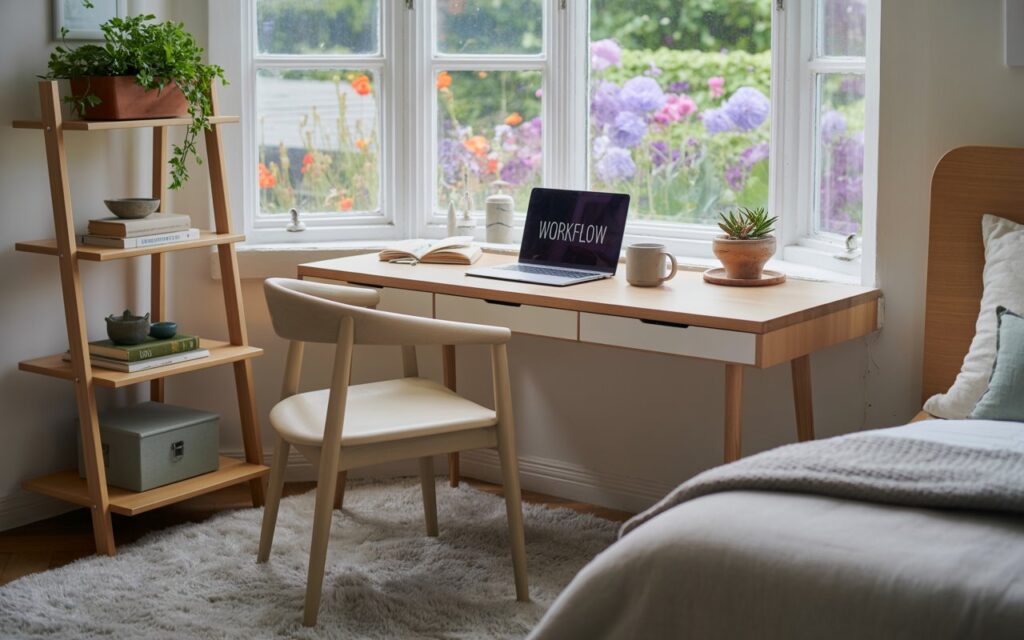
AA home office should be more than just a place to work—it should feel intentional, comfortable, and completely suited to your style. A well-designed workspace can make even the busiest workday feel a little more organized and enjoyable.
The secret to creating a masculine home office is finding the right balance between character and comfort. Think rich, deeper colors, natural wood, leather accents, clean-lined furniture, warm lighting, and a few personal touches that give the room personality without making it feel too formal or cold.
Whether you have an entire room to work with or you’re carving out a workspace in a smaller area, you don’t need a complicated makeover to create something impressive. A few thoughtful changes can turn an ordinary corner into a workspace that feels polished, practical, and distinctly yours. 🖤
So, if you’re searching for 19 masculine home office ideas, these inspiring looks will help you create a space that feels sophisticated, functional, and motivating from morning to evening.
Choose a leather office chair.
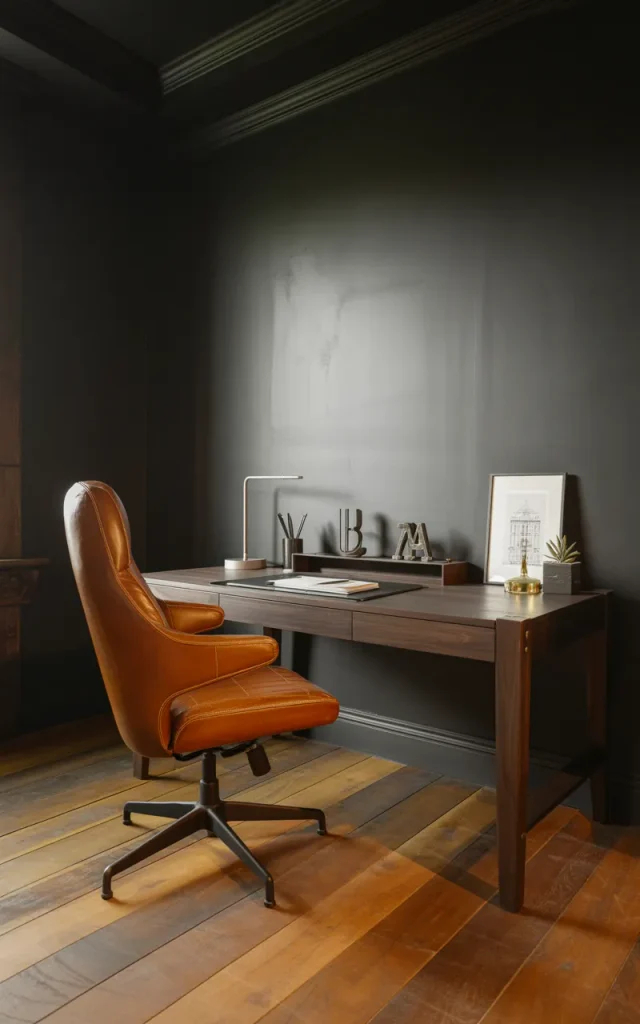
Bring in a comfortable leather chair to add warmth and texture. Cognac, saddle brown, espresso, and black leather are all excellent choices for a masculine home office.
A cognac chair is particularly useful if the room contains dark wood because the warmer tone creates contrast. Black leather, meanwhile, gives you a sharper and more modern appearance.
Don’t choose the chair based on looks alone. You’re going to spend hours sitting there, so ergonomic support matters just as much.
Instant Gratification Tip: Even if you aren't replacing your entire office, upgrading the chair can change the personality of the room immediately. 🪑
Create a sophisticated desk backdrop.
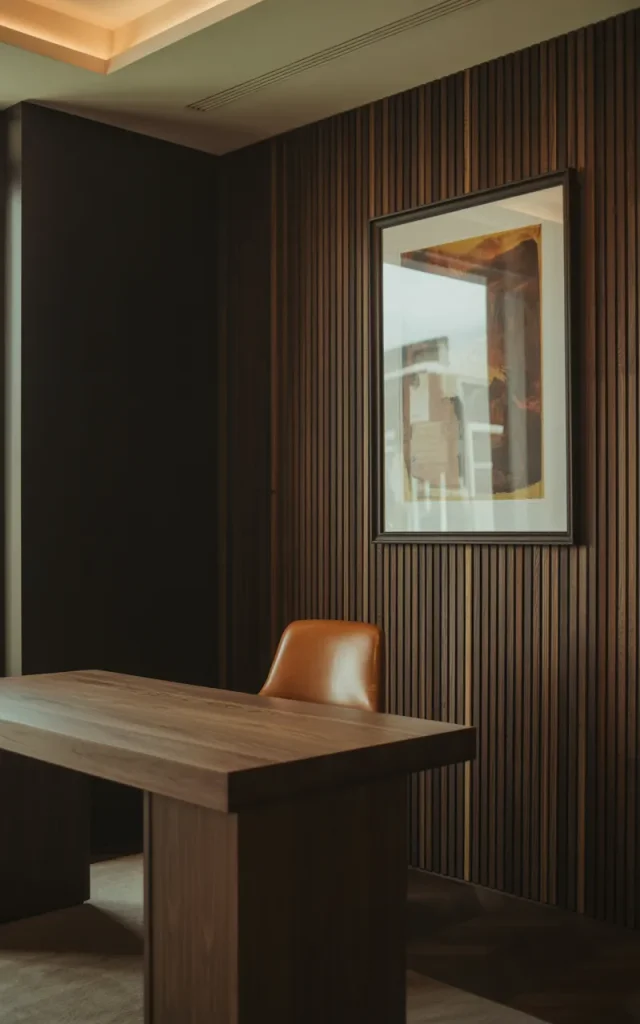
Give the wall behind your desk some deliberate attention. You could use wood paneling, textured wallpaper, vertical slats, painted molding, or a deep accent color.
This is particularly useful if your desk is simple. The wall becomes the feature while the furniture stays understated.
I like vertical paneling for a tailored look. It adds architectural interest without requiring lots of accessories.
Step-by-step instructions:
- Choose one dominant wall.
- Select a texture or color that complements your desk.
- Keep surrounding furniture relatively simple.
- Add one piece of artwork or lighting as a finishing touch.
The result feels custom, even when the underlying furniture is fairly basic.
Add a vintage-inspired desk lamp.
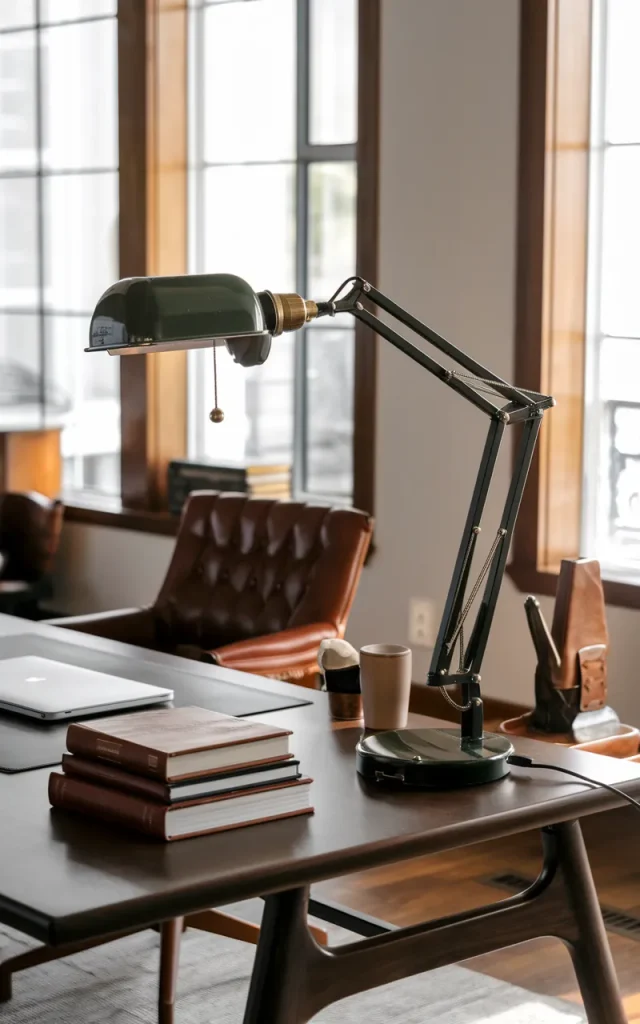
Bring some character to your workspace with a desk lamp inspired by classic libraries, workshops, or mid-century offices.
Look for adjustable arms, aged brass, black metal, or dark green shades. The lamp should be useful first and decorative second.
A vintage-inspired lamp works particularly well beside a modern computer because the contrast makes the desk feel more layered.
Surprise Fact: One small vintage piece can often make a newer room feel more established. You don’t need an entire collection of antiques to achieve that collected feeling.
Display books as part of the decor.
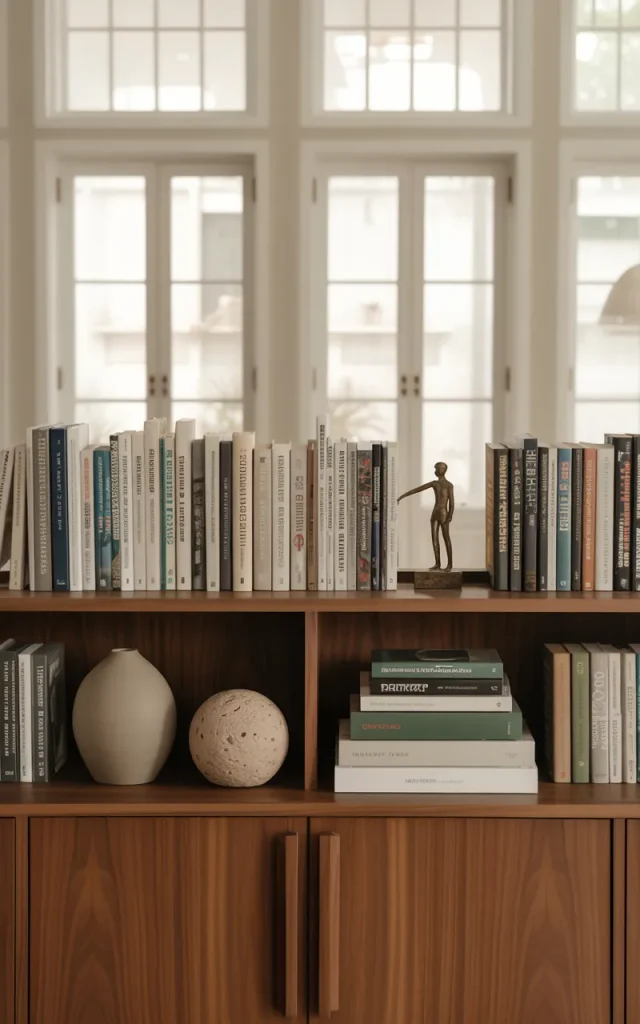
Use your book collection to add personality and color. Arrange books horizontally and vertically on shelves, a credenza, or even one corner of your desk.
I like mixing professional books with design books, biographies, travel books, and subjects you genuinely enjoy. Your office should tell people something about the person who works there.
Don’t worry about arranging everything perfectly by color. A little variation feels more natural.
A Pro-tip: Leave a little breathing room between groups. Packed shelves can quickly make an otherwise sophisticated office feel cluttered.Frame a large window with tailored curtains.
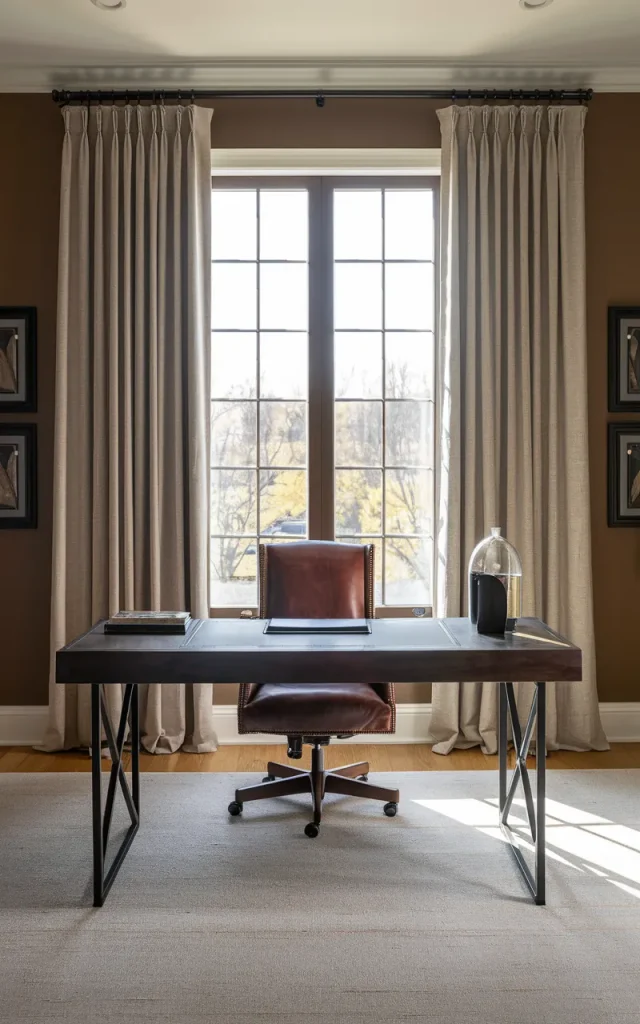
Make the windows feel more architectural by adding full-length curtains. Choose linen, cotton, wool-look fabric, or a substantial textured material in a neutral shade.
Hang the curtain rod higher and wider than the window whenever possible. It creates the impression of a larger opening and gives the room a more finished appearance.
I particularly like warm gray, oatmeal, taupe, and charcoal curtains in masculine offices.
Why it works? Soft fabric balances the harder surfaces of desks, screens, shelves, and metal fixtures.
Add a compact bar cabinet.
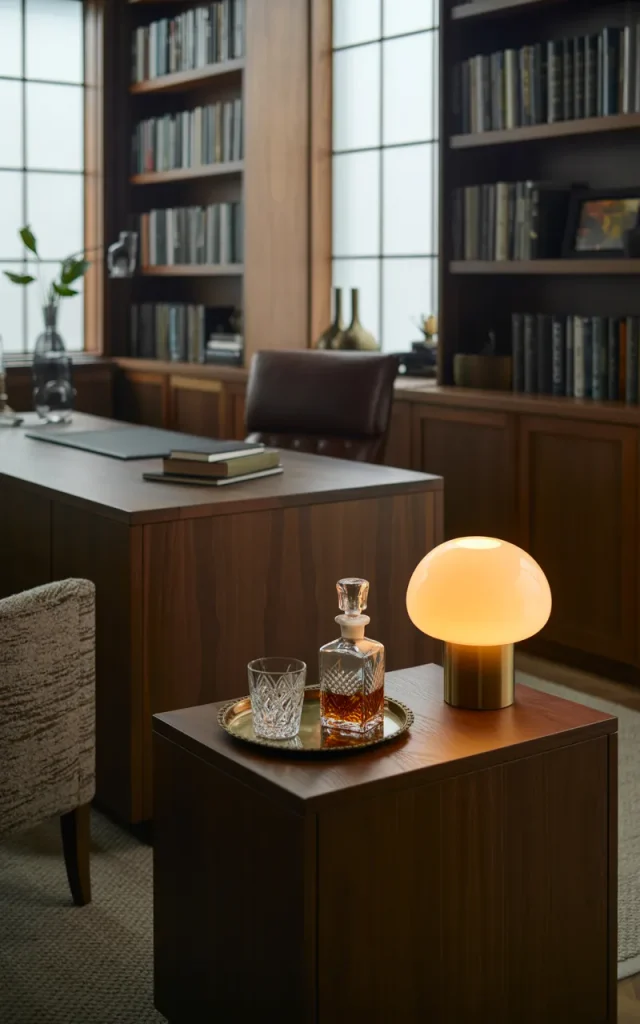
If your office is large enough, introduce a small bar cabinet or drinks station. Keep it subtle rather than turning the room into a lounge.
A walnut cabinet with glassware, a tray, and a few elegant accessories can create a sophisticated hospitality moment.
You could also use the same concept for coffee or tea instead. That may be more practical for an everyday workday.
Works best in: Spacious home offices, studies, executive-style rooms, and multipurpose libraries.
Just keep the station away from electronics and important paperwork. A little planning goes a long way. ☕
Choose a statement ceiling treatment.
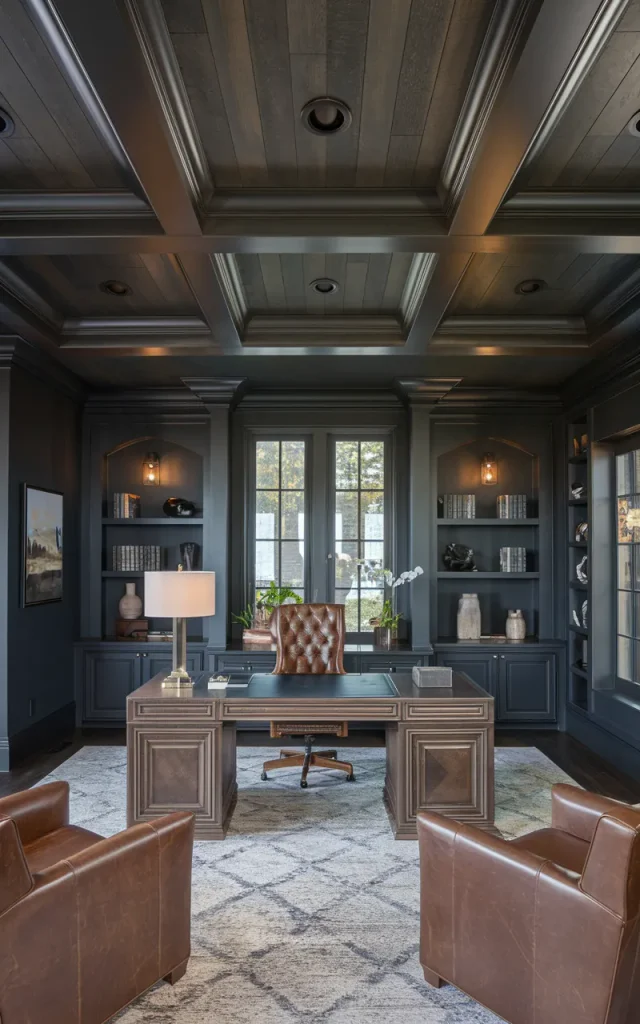
Don’t forget to look up. A painted ceiling, wood-look paneling, subtle wallpaper, or exposed architectural detail can give a masculine office unexpected character.
If your walls are already dark, a slightly lighter ceiling can prevent the room from feeling enclosed. Conversely, a darker ceiling can make a large office feel intimate.
Trend callout: Tonal rooms are especially effective when you want a sophisticated atmosphere. Instead of using completely different colors, experiment with several shades from the same family.Add a custom-looking credenza.
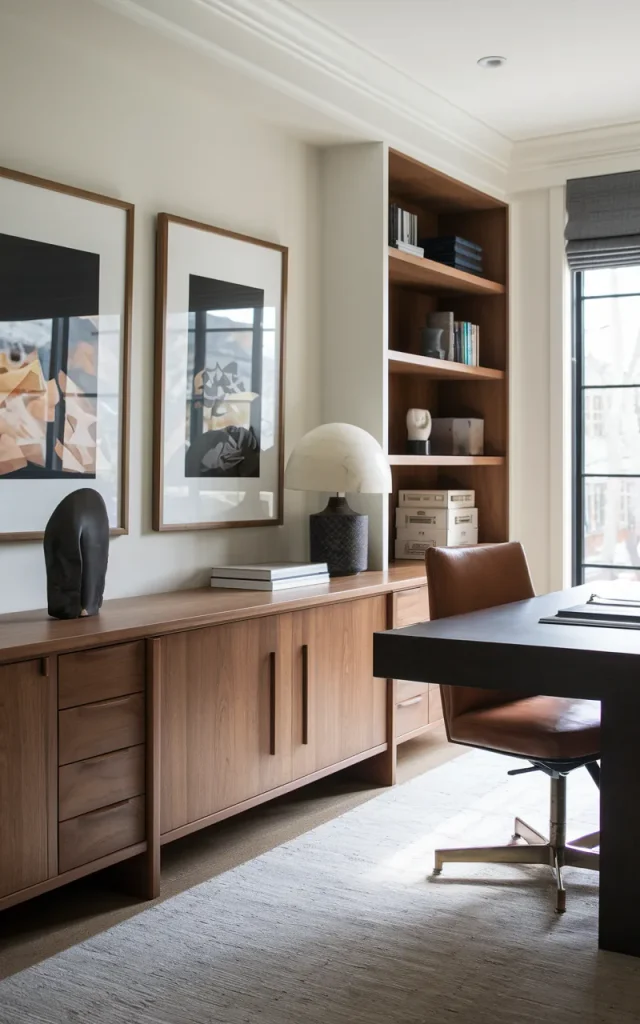
Give your office additional storage with a long, low credenza. It provides a visual counterweight to a desk and creates another surface for artwork, lighting, and accessories.
Look for clean lines and generous proportions. A walnut credenza with minimal hardware can look incredibly polished, while a black version feels more contemporary.
Use the inside for printers, files, cables, and supplies you don’t want sitting out.
Upgrade for under $500: If custom cabinetry isn’t realistic, look for a well-proportioned secondhand sideboard and replace dated hardware. A fresh finish and new pulls can make an inexpensive piece look surprisingly elevated.
Add a substantial floor lamp.
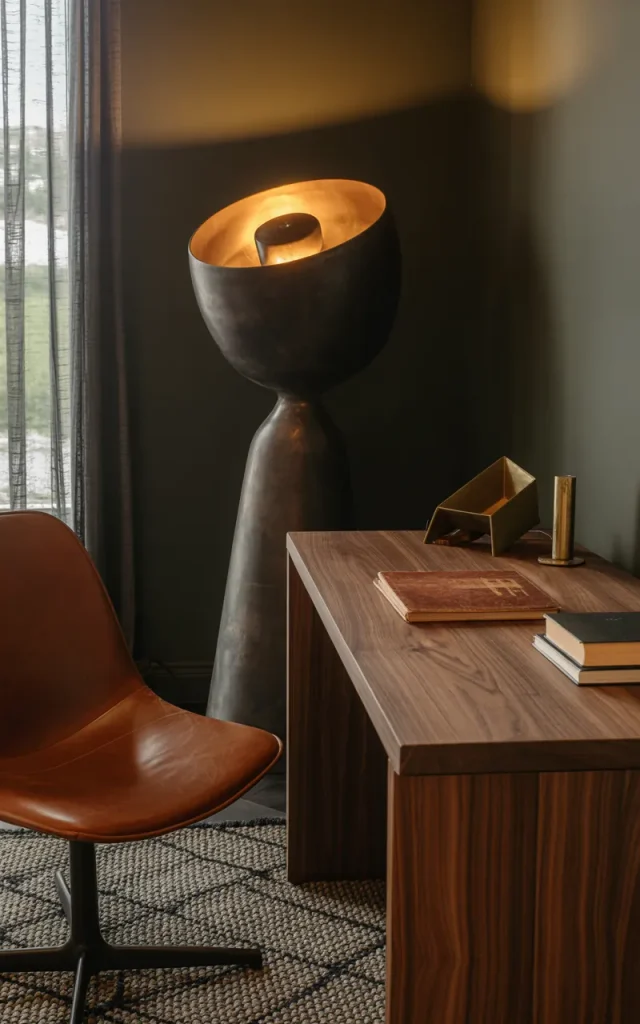
Bring in another layer of lighting with a tall floor lamp beside the desk, lounge chair, or reading corner.
Choose an arched silhouette, tripod base, sculptural metal design, or simple linen shade depending on your overall style.
I like using floor lamps to illuminate darker corners that ceiling lights can’t reach. It creates pools of warm light instead of making the entire room equally bright.
Quick hack: Use three lighting levels whenever possible: overhead light, task lighting, and ambient lighting. The room will feel much more comfortable after dark. 💡Choose a deep neutral color palette.
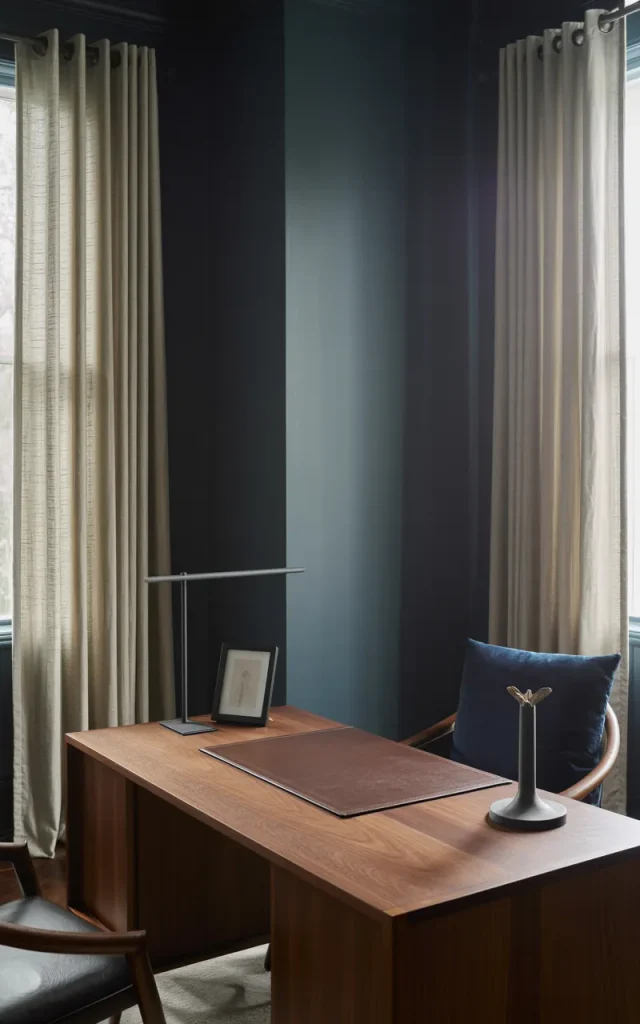
Start with a strong foundation by choosing colors such as charcoal, warm gray, taupe, espresso brown, navy, or soft black. These shades instantly give a home office a more grounded appearance without making it feel overly dramatic.
I like pairing one deep shade with a warmer neutral so the room still feels inviting. For example, charcoal walls can work beautifully with a walnut desk and cream-colored curtains.
Why it works?

Deep neutrals create visual weight. They make even a simple desk and chair combination feel more sophisticated.
Add a substantial wooden desk.
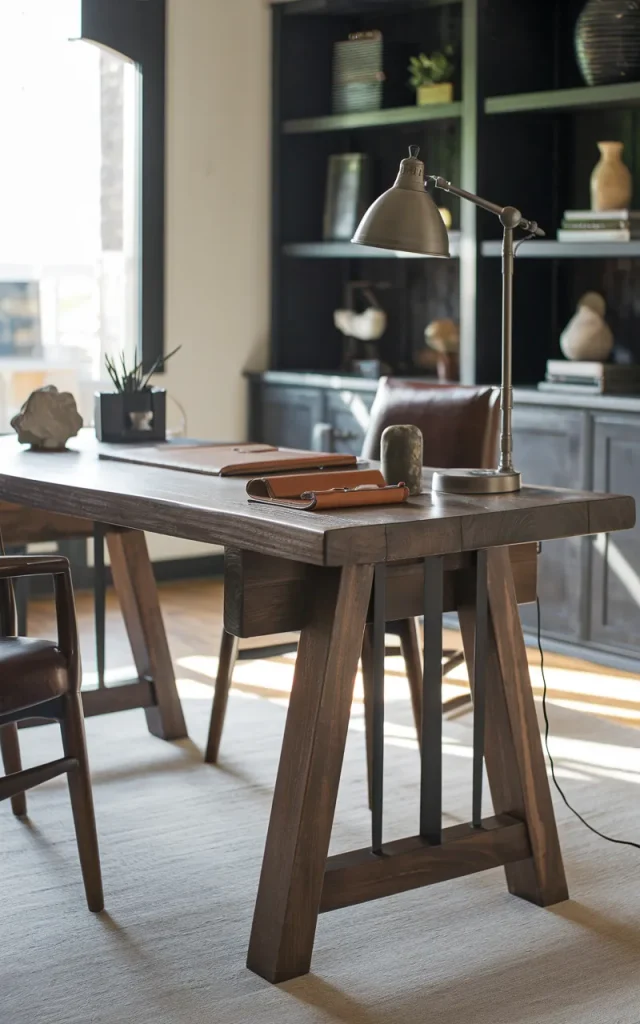
Choose a desk with enough visual weight to anchor the room. A walnut, oak, smoked wood, or dark-stained desk can immediately establish a masculine character.
I especially love desks with simple silhouettes. Skip unnecessary decorative details and look for clean edges, sturdy legs, and enough surface area for your everyday work.
A substantial wooden desk also gives you plenty of opportunities to introduce contrast. Place a metal desk lamp, leather accessories, or a stone paperweight on top, and suddenly the setup feels layered rather than basic.
A Micro-tip:
Let the wood grain remain visible. Natural texture keeps darker offices from feeling flat.
Hang oversized artwork behind the desk.
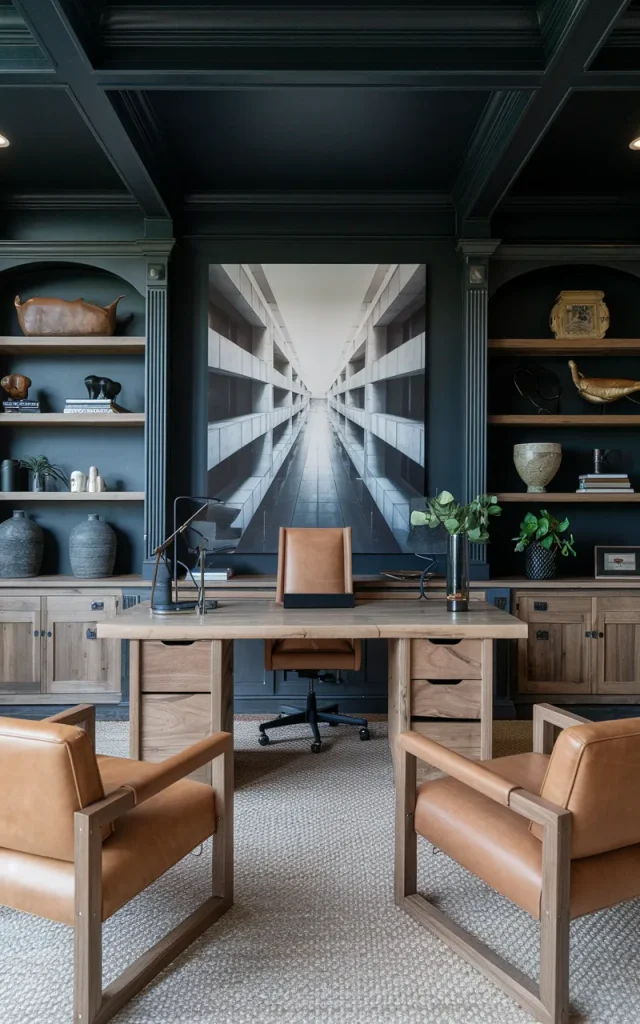
Make a statement with one large piece of artwork instead of covering the wall with lots of small frames. A dramatic black-and-white photograph, abstract painting, vintage map, or architectural print can work beautifully.
I often recommend placing the artwork directly behind the desk because it creates an instant focal point. It also gives video calls a much more finished background.
Choose something with colors already present in your office. If you’ve used charcoal, walnut, and tan, for instance, look for artwork that quietly repeats those tones.
Quick Tip
Go bigger than you think. One oversized piece usually looks more intentional than several undersized prints.
Add a large area rug under the workspace.
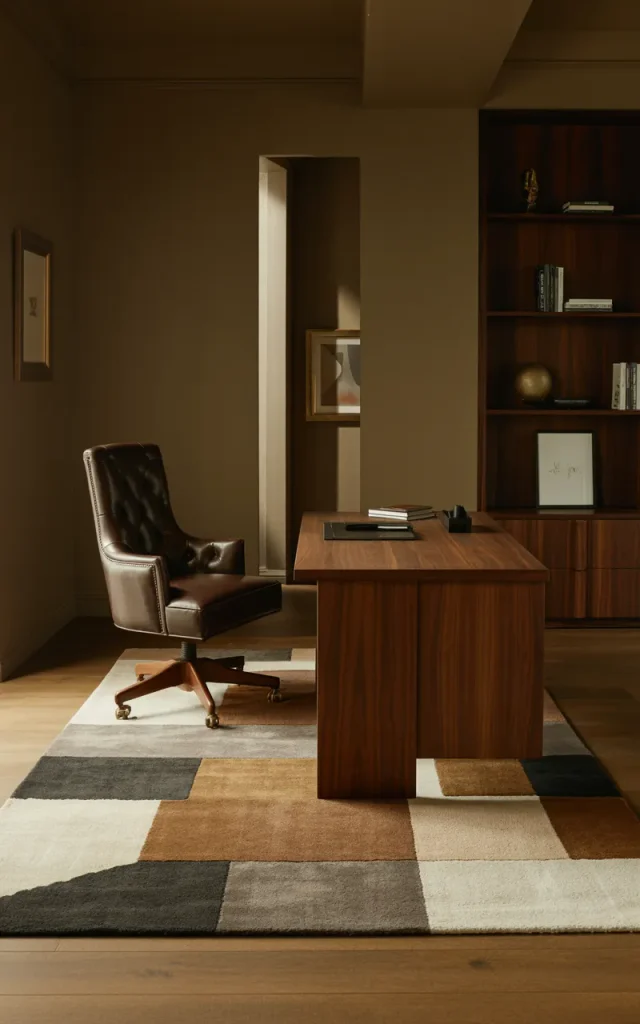
Soften the room with an area rug that extends beneath the desk and chair. This is especially helpful when your office has hardwood, tile, or another hard flooring surface.
For masculine spaces, I like subtle geometric patterns, vintage-inspired designs, Persian-style rugs in muted tones, or simple textured rugs.
Don’t be afraid of pattern. A restrained pattern can actually make a dark office more interesting without taking attention away from the furniture.
Small Space Hack:

If a full-size rug won't work, place a compact rug underneath the desk and chair instead. It still creates a defined work zone.
Create a sophisticated gallery wall.
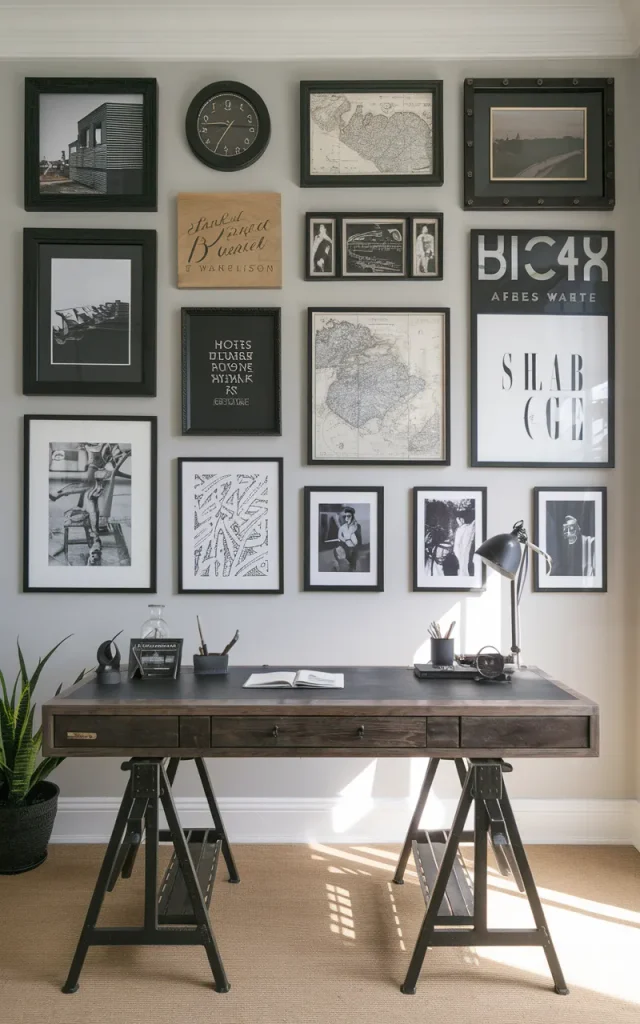
Build a gallery wall using artwork that feels collected rather than perfectly coordinated. Mix photography, drawings, maps, typography, and personal images.
For a masculine look, keep the frames relatively consistent. Black, dark wood, and aged metal are easy choices.
I recommend laying everything out on the floor before putting holes in the wall. Play with spacing until the arrangement feels balanced.
Vibe check:
- Clean, not sterile.
- Collected, not cluttered.
- Personal, not overly decorative.
- Sophisticated, not overly formal.
That balance is what makes a gallery wall work so well. 🖼️
Install wall-to-wall cabinetry.
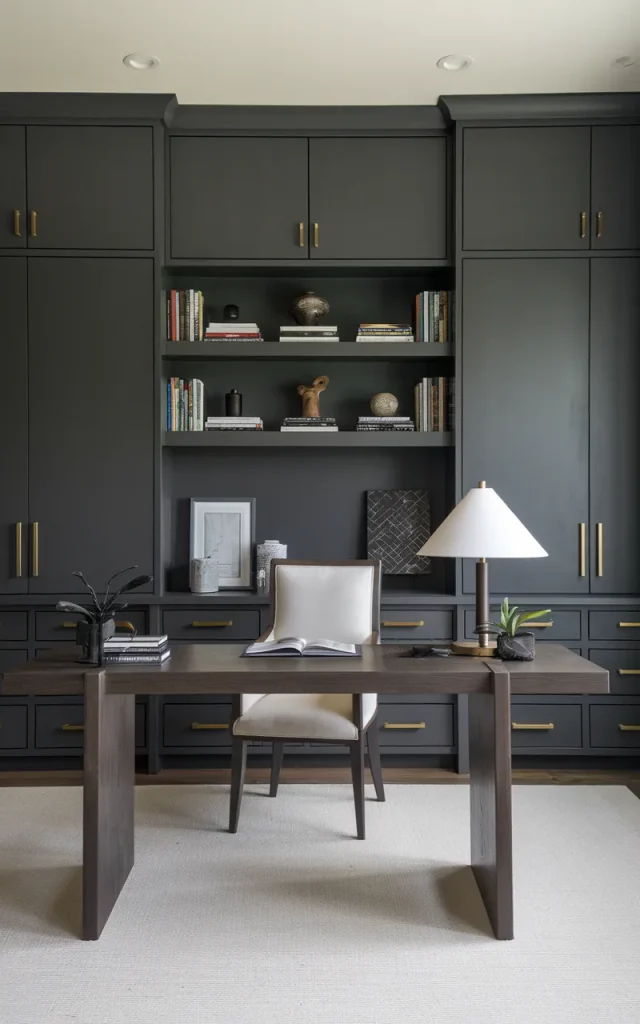
Maximize both storage and style by installing cabinetry across an entire wall. This works especially well if you need to hide printers, paperwork, electronics, and office supplies.
Use closed cabinets for the less attractive necessities and leave a few open shelves for books and decorative objects.
I prefer simple slab-front doors in dark wood, warm white, charcoal, or greige. Add discreet hardware for an especially streamlined look.
What most people get wrong
They focus only on how much storage they can fit in. I always recommend planning the visual rhythm of the cabinets too. Equal proportions make a huge difference.
Create a monochromatic charcoal office.
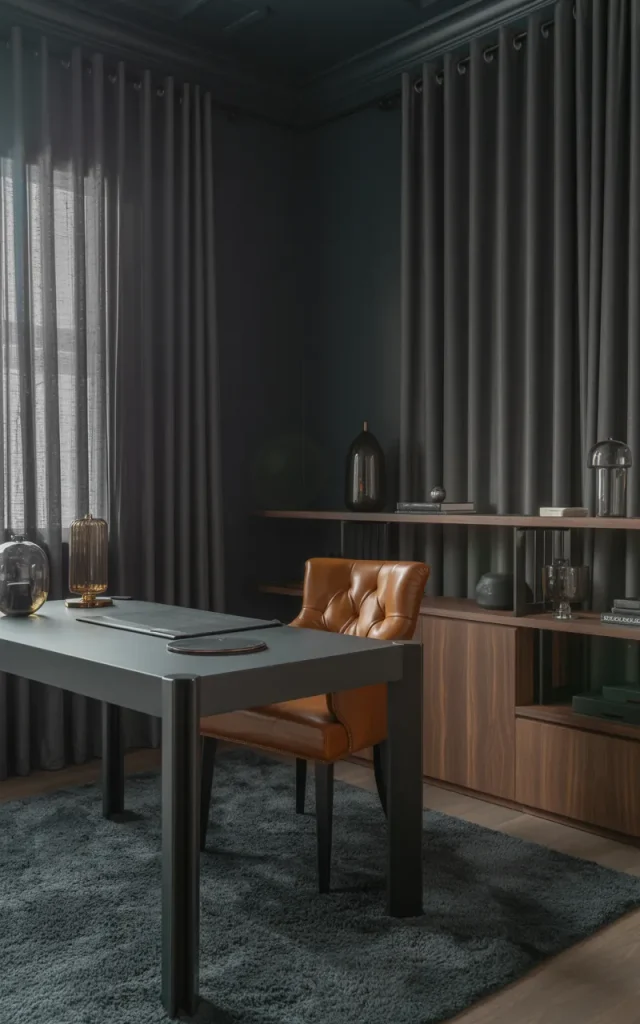
Go all-in on charcoal for a dramatic, sophisticated workspace. Use slightly different shades across the walls, desk, rug, curtains, and accessories so the room feels layered rather than flat.
The secret is texture. Combine painted walls with wood grain, woven fabric, leather, metal, and glass.
I wouldn’t make every single surface the exact same shade. Instead, let subtle tonal changes create depth.
The psychology behind it:

Dark, cohesive colors can make a room feel enclosed and focused. That's particularly appealing in an office where you want a clear separation between work time and the rest of the home.
Create a hidden charging station.
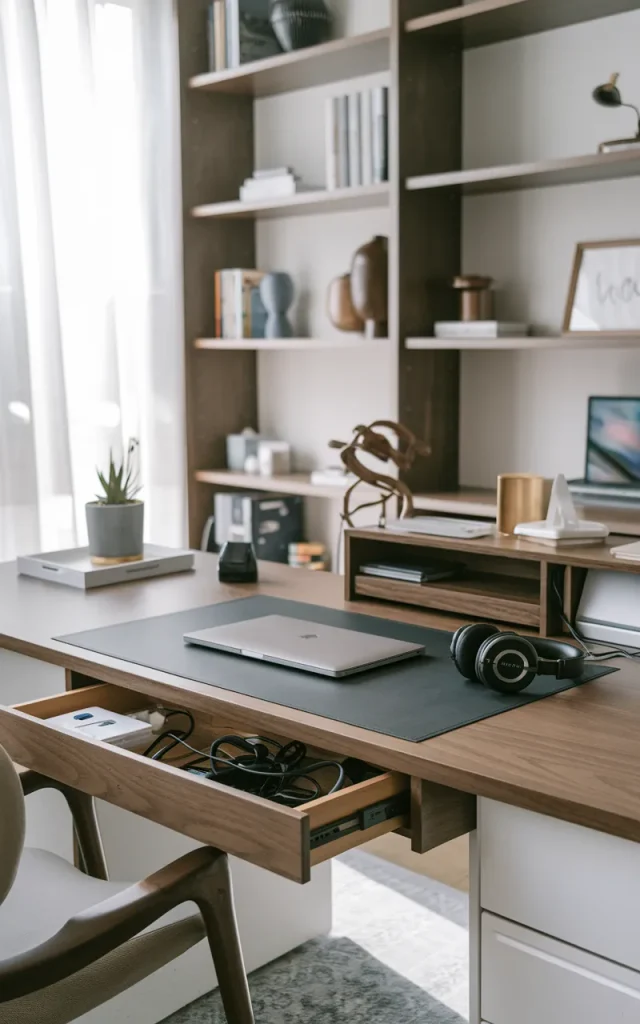
Keep technology under control by creating one dedicated place for charging phones, tablets, headphones, and other devices.
A drawer with a power strip, a cable-management box, or a concealed shelf can keep the desktop dramatically cleaner.
This is one of those small changes that doesn’t necessarily photograph as dramatically as artwork or furniture, but you’ll appreciate it every single day.
Common Mistakes to Avoid:
- Letting charging cables cross the desk.
- Using too many visible adapters.
- Hiding cords without allowing ventilation.
- Creating a charging station far from where devices are actually used.
A masculine office should look clean, but it also needs to work in real life.
Define the workspace with a dramatic rug.
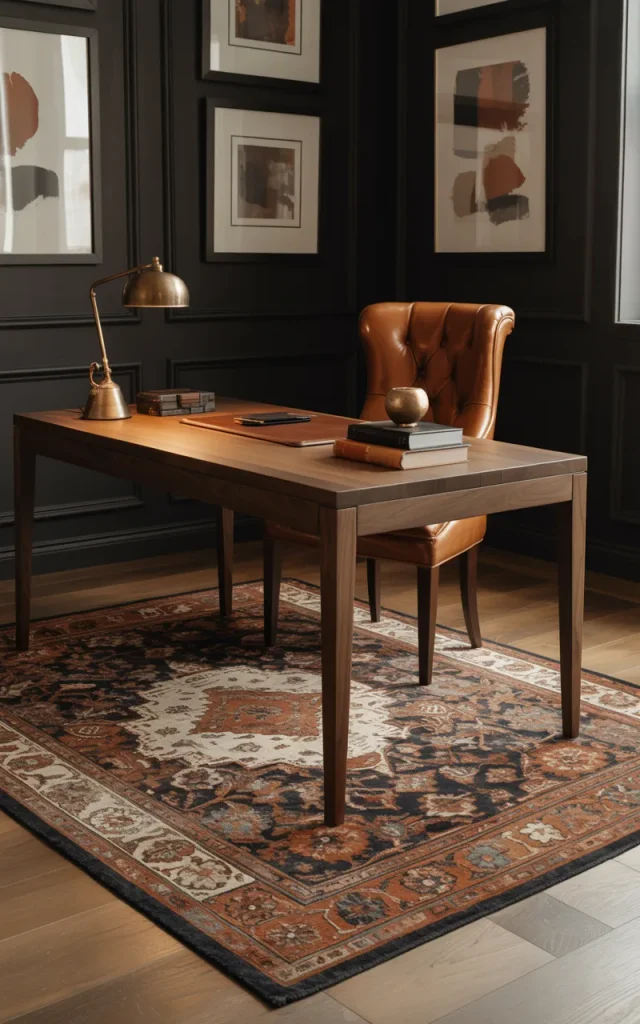
Make the desk area feel like a distinct destination by using a rug with a stronger pattern or richer color. Persian-inspired designs, faded geometrics, tribal patterns, and subtle stripes can all work beautifully.
If your furniture is very simple, this is your opportunity to add some visual energy.
I recommend choosing one or two colors from the rug and repeating them elsewhere in the room. Maybe the rust in the rug appears in a leather chair, or its charcoal detail connects with the walls.
How to steal this look:
- Start with a neutral room.
- Add one richly patterned rug.
- Repeat two rug colors elsewhere.
- Keep large furniture relatively simple.
- Finish with warm lighting.
That formula gives you personality without visual chaos.
Finish the office with layered personal details.
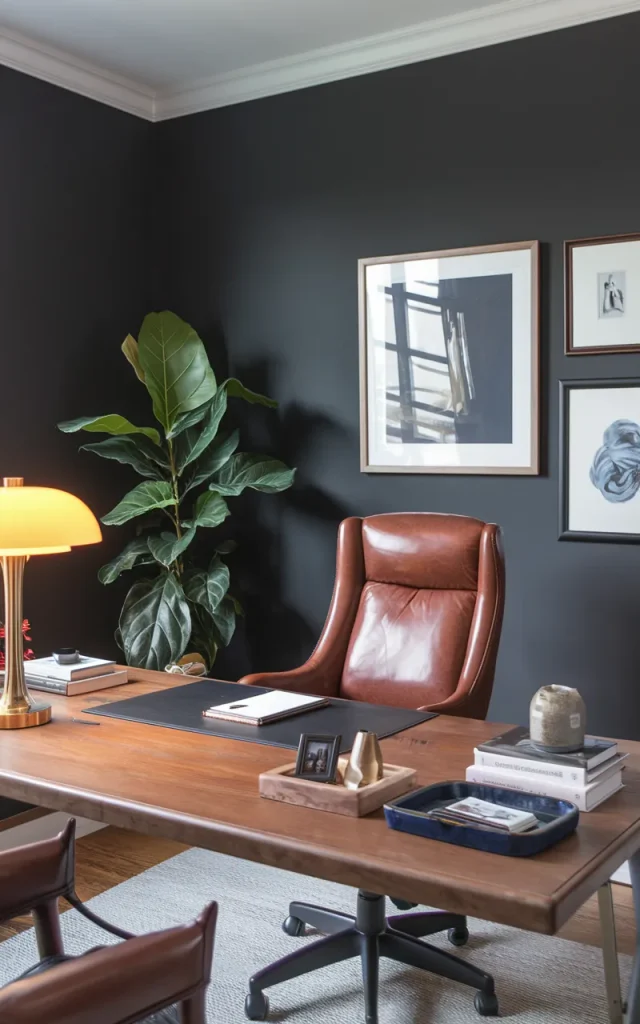
Bring everything together by adding the smaller details that make the office feel lived-in. A quality notebook, attractive pen holder, framed photograph, ceramic tray, small plant, favorite books, and one or two decorative objects can completely change the atmosphere.
I always recommend doing this last. Once the big pieces are in place, walk around the room and notice where something feels empty or overly busy.
Don’t feel pressure to finish everything in one afternoon. A truly personal office often evolves slowly.
Decision Fatigue? Start with just five finishing pieces:
- One piece of artwork.
- One plant.
- One useful desk accessory.
- One personal object.
- One source of warm ambient light.
Then live with the room for a while. You’ll quickly discover what it actually needs.
And that’s usually when the best decorating decisions happen. ✨
Final thoughts
Creating a masculine home office doesn’t mean filling the room with dark colors or heavy furniture. It’s really about combining strong materials, refined details, comfortable pieces, and warm touches to create a workspace that feels confident without sacrificing comfort.
You don’t need to transform everything at once, either. Start with the change that will have the biggest impact—perhaps upgrading your desk, adding a richer wall color, introducing better lighting, or investing in a chair you actually enjoy sitting in.
From there, layer in the details that make the space feel personal. After all, your office should look polished and put-together, but it should also feel welcoming enough that you genuinely want to spend time there. 🏡