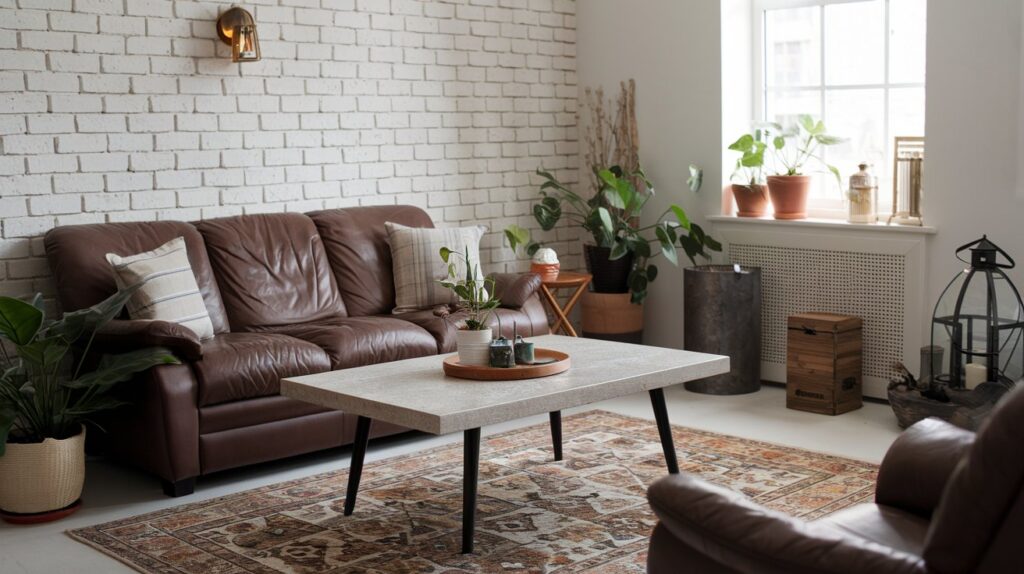
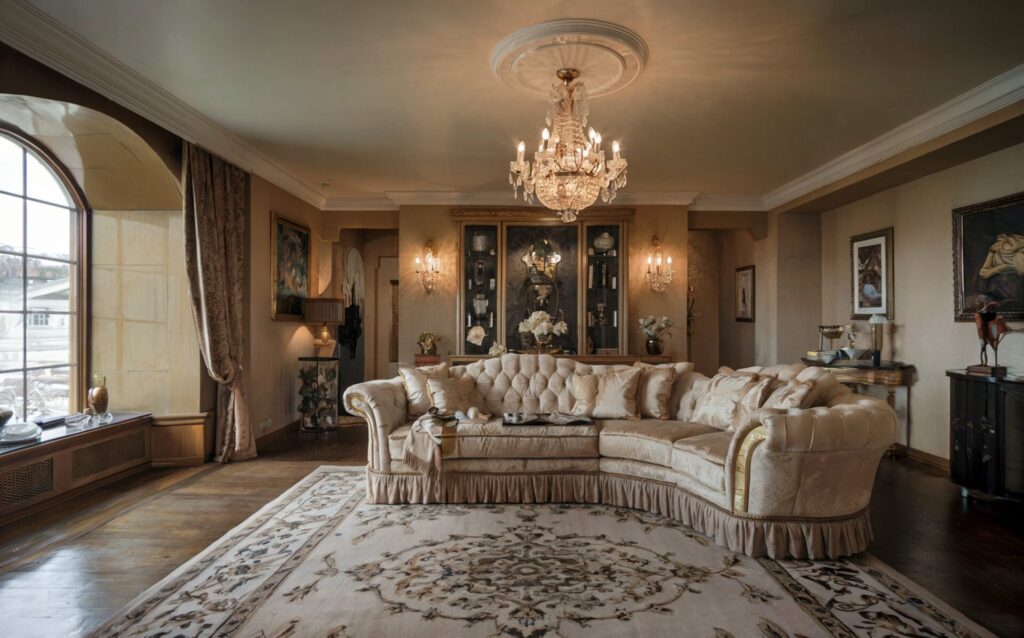
A cozy living room doesn’t need to resemble a rustic cabin, disappear beneath a mountain of throw pillows, or come in fifty shades of beige. In fact, some of the warmest and most inviting spaces are wonderfully simple.
To me, coziness is less about how a room looks and more about how it makes you feel. Think soft, glowing lighting, a sofa you can happily sink into, layers of textures that add warmth, and a cozy blanket within easy reach. Add a favorite drink on the coffee table, and suddenly the room feels like the perfect place to slow down. ☕
If you’re searching for 11 cozy living room designs, you’re in the right place. From spacious family rooms and compact apartments to rental-friendly spaces, minimalist interiors, and colorful decorating ideas, there’s inspiration here for almost every style. Whether you want a complete makeover or simply want your living room to feel a little more inviting, these ideas can help you create a space you’ll genuinely enjoy coming home to..
Layer a warm neutral palette
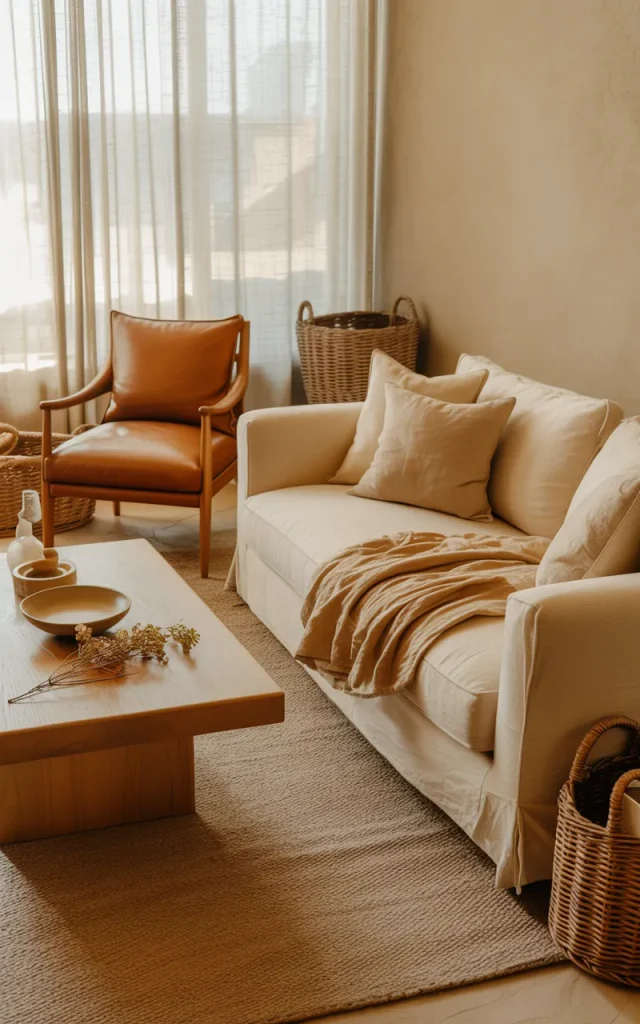
Start with warm neutrals if you want a living room that feels calm almost immediately. I love combinations of creamy white, oatmeal, camel, taupe, warm gray, and soft brown because they create depth without making the room feel busy.
The trick is not to use one beige shade everywhere. Mix several tones instead. A cream sofa can sit beside a caramel leather chair, while a taupe rug grounds everything underneath.
Then add natural textures—linen curtains, a chunky throw, woven baskets, or a wooden coffee table. Suddenly, the neutral room has personality.
A Micro-tip: Keep your largest pieces fairly neutral and use smaller accessories to introduce contrast. It makes seasonal decorating much easier. 🤎Hang soft curtains from ceiling to floor
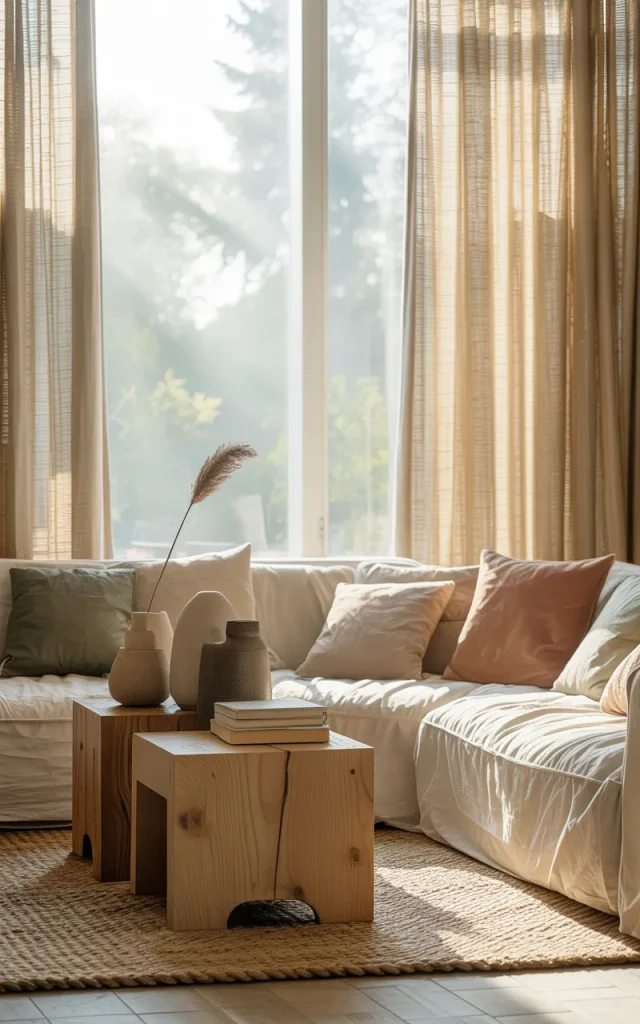
Window treatments can completely change the atmosphere of a living room. I prefer curtains hung close to the ceiling and allowed to fall all the way to the floor.
This simple trick makes windows appear taller and gives the room a softer frame. Choose linen, cotton, or another fabric with a little movement rather than stiff, shiny material.
For a particularly cozy effect, let the curtains slightly overlap the wall on either side of the window. You’ll get that relaxed, enveloping feeling without making the room dark.
Quick Tip: Warm ivory or oatmeal curtains are usually more forgiving than stark white ones if your goal is softness.
Bring in a generously sized area rug
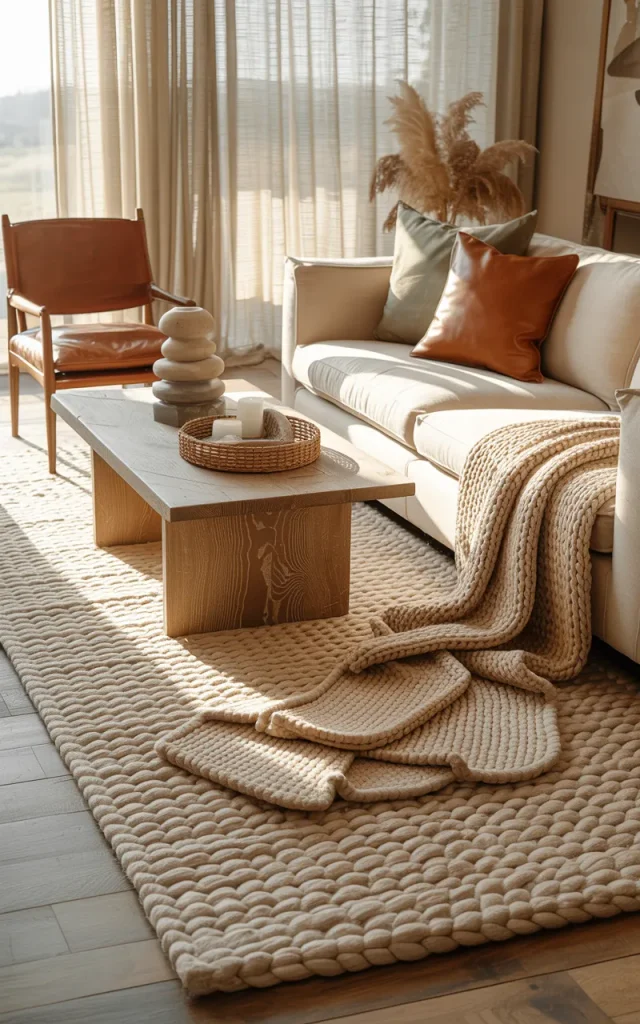
A rug can make furniture feel connected rather than scattered around the room. For coziness, I generally prefer a rug large enough for at least the front legs of the major seating pieces to sit on it.
Look for wool, cotton, jute, or a soft synthetic option depending on your lifestyle. A slightly textured rug is especially lovely because it adds another tactile layer.
If your living room already contains several patterns, choose a subtle rug. If the furniture is plain, you can be bolder with the floor.
Thumb Rule: The rug should visually gather the seating area into one conversation zone.
Mix wood tones without overthinking them
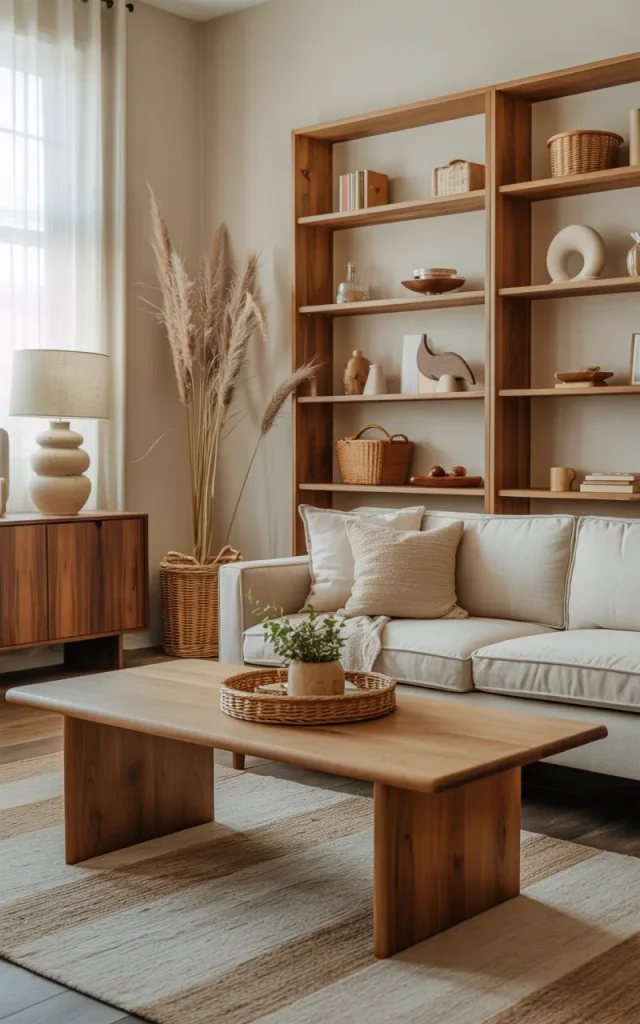
Wood instantly brings warmth into a living room, and I don’t think every wooden piece needs to match perfectly.
A medium-toned coffee table can work beautifully with a darker sideboard and lighter oak shelves. The trick is to repeat each tone at least once so the differences look intentional.
I also like mixing smooth and rustic finishes. A polished wooden table beside a woven basket or rougher timber accent creates visual interest without requiring bright colors.
Pro-tip: If your room feels cold despite having plenty of furniture, look down. Adding a wooden element may give it the warmth it’s missing.Use a deep, moody wall color
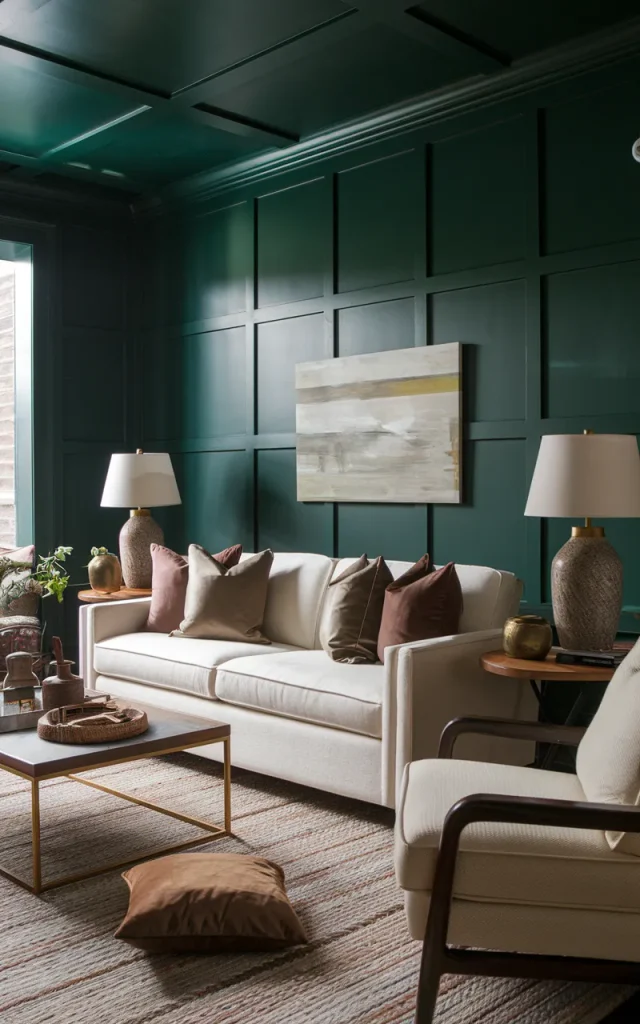
Dark walls can make a living room feel wonderfully cocooning. Charcoal, forest green, chocolate brown, deep navy, and muted plum are all worth considering.
I particularly like painting the trim in the same or a closely related shade. It creates a continuous envelope around the room instead of breaking the wall into separate pieces.
Balance the darkness with warm lighting and lighter upholstery. Wood also works beautifully here because it prevents the space from feeling too flat.
Common Mistakes to Avoid:
- Choosing a dark color without testing it in your actual lighting.
- Using only cool-toned furniture against the walls.
- Filling the room with too many competing dark shades.
- Assuming a small room must always be painted white.
Position furniture around conversation
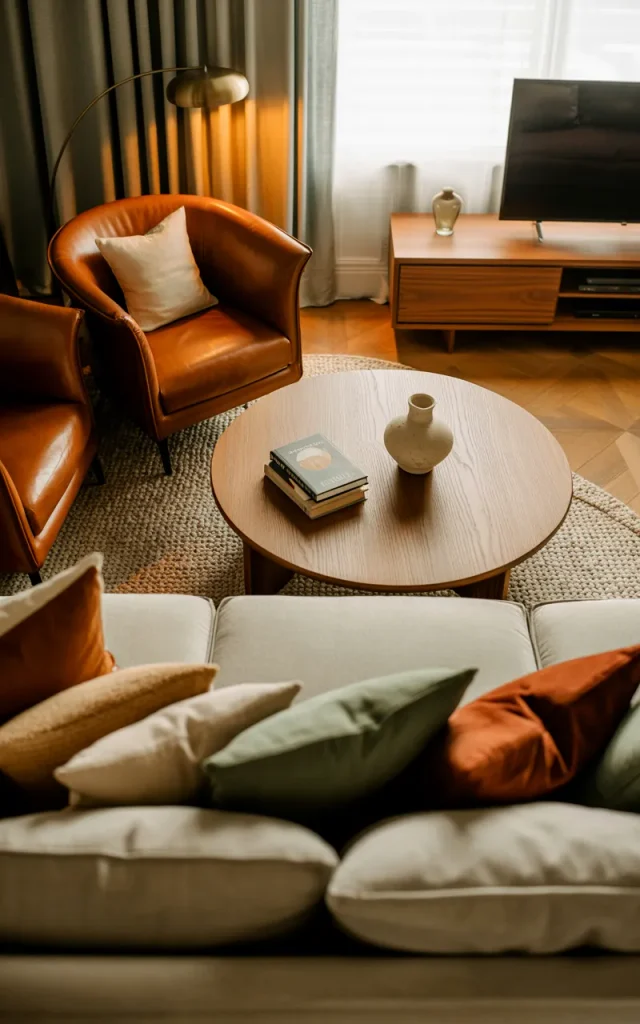
A cozy living room should encourage people to talk. That sounds obvious, but furniture placement often gets dictated by the television alone.
Try turning chairs slightly toward the sofa instead of lining everything up in the same direction. If the room is large, create a central conversation area and place the television slightly off to one side.
You want people to be able to see one another without twisting around.
Why designers do this: Good furniture placement makes a room feel welcoming before you add a single decorative object. The arrangement itself tells people how the space is meant to be used.
Frame the room with greenery
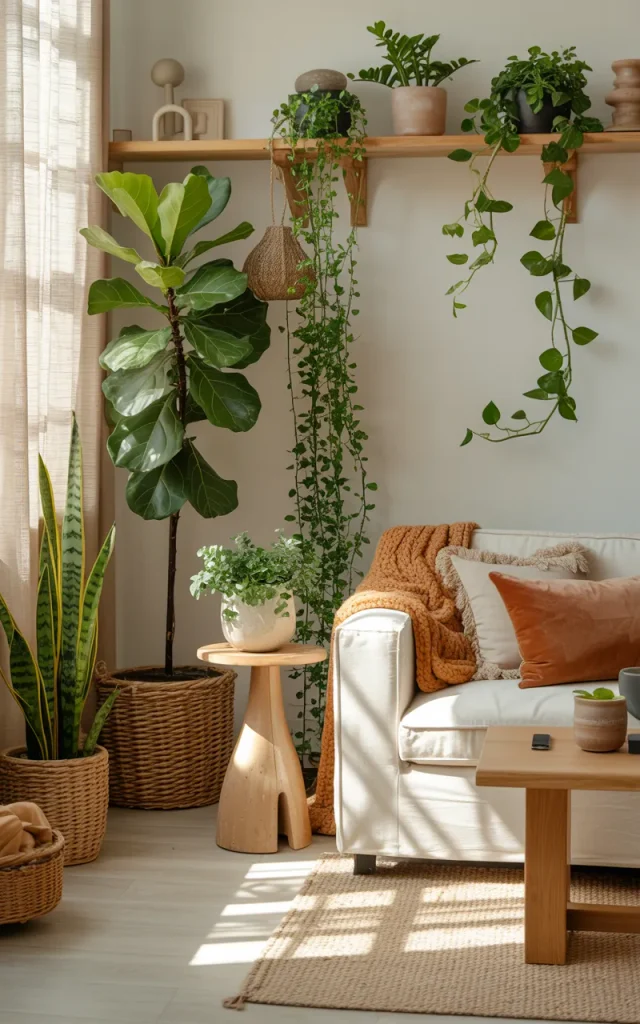
Plants can soften hard architectural lines and make a living room feel more alive. You don’t need a jungle, either.
Try one tall plant in an empty corner, a smaller plant on a side table, and perhaps a trailing variety on a shelf. Vary the heights so everything doesn’t sit at the same visual level.
If keeping plants alive isn’t your strength, choose realistic faux greenery instead. There’s no decorating award for accidentally killing a fiddle-leaf fig.
Budget Alternatives:
- Use cut branches from your garden or local market.
- Repurpose attractive bottles as small vases.
- Group inexpensive small plants together.
- Try dried grasses for a longer-lasting display.
Choose an ottoman instead of a rigid coffee table
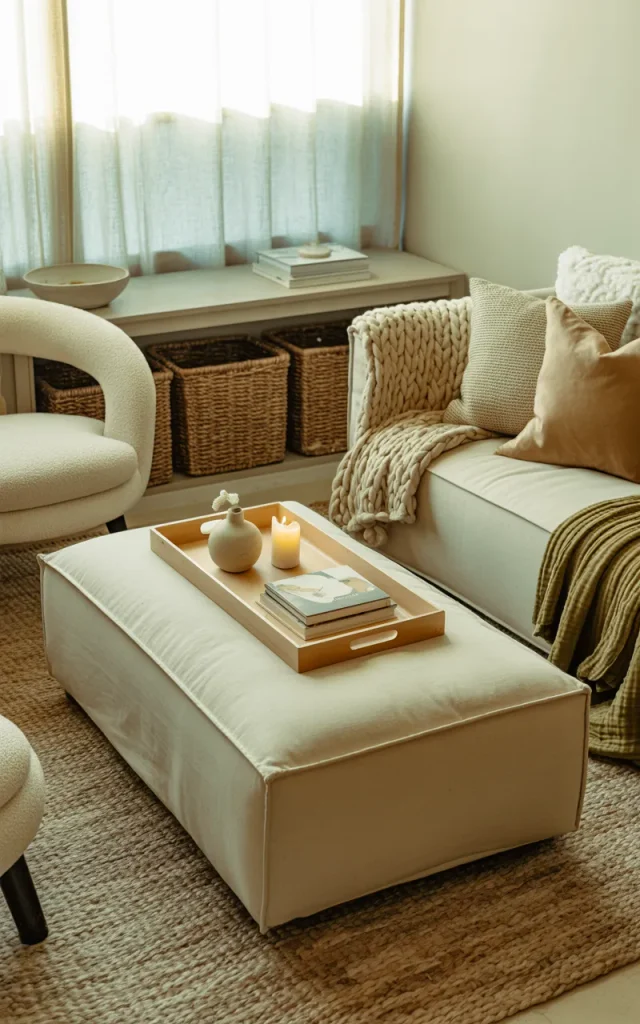
If comfort is your priority, consider replacing a hard coffee table with a large upholstered ottoman.
You get a softer surface, extra seating, and somewhere to put your feet. Add a tray on top and the ottoman can still function as a practical table.
This is particularly useful in family homes where sharp corners and delicate surfaces aren’t always ideal.
Small space hack: Choose an ottoman with hidden storage. Blankets, games, books, and remote controls can disappear inside while the room stays visually calm.
Warm up the space with layered floor lighting
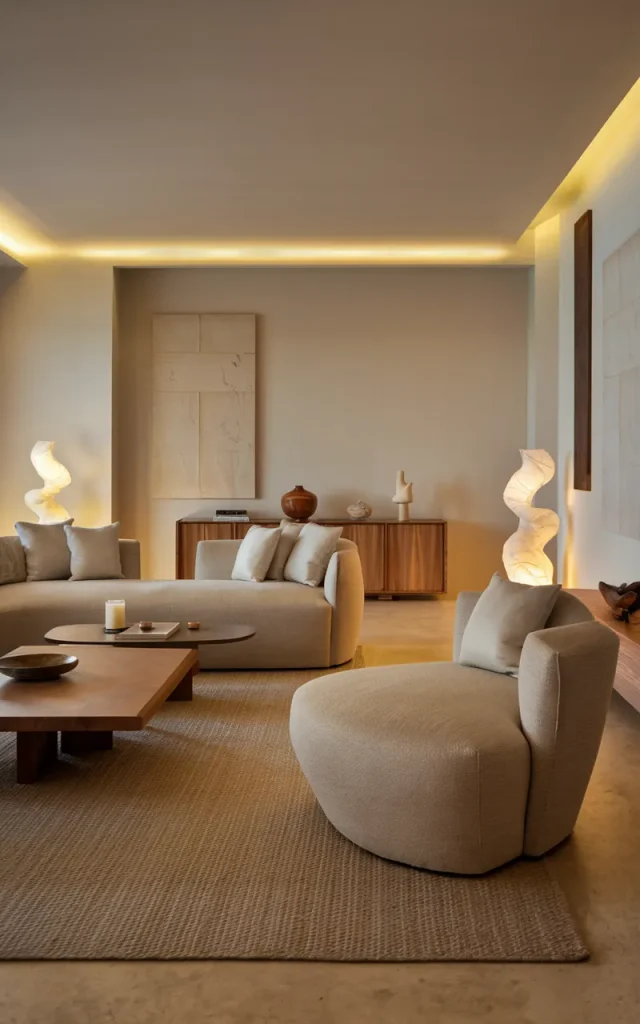
Floor lamps are practical, but they can also act as sculptural décor. Choose one with an interesting silhouette and let it become part of the room rather than hiding it in a corner.
For a large living room, two floor lamps can help distribute light more evenly. One might sit beside the sofa while another highlights a reading chair or artwork.
Time required to implement: About 30–60 minutes if you already have suitable lamps and outlets nearby.
The biggest difference comes at night. Instead of illuminating the entire room evenly, you create little pools of light that make the space feel intimate.
Design a warm minimalist living room
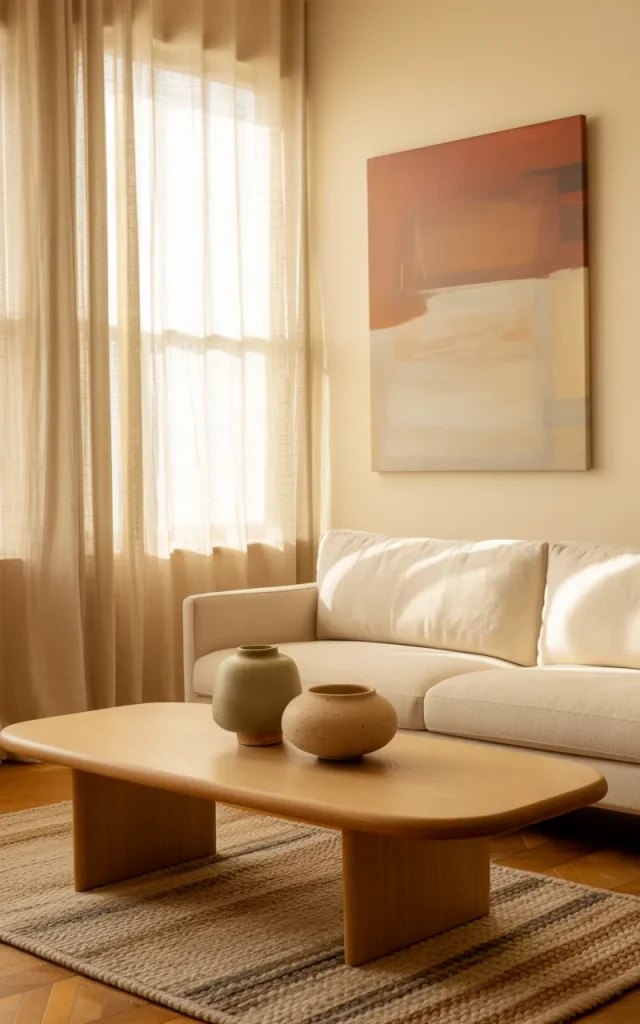
Minimalism can absolutely be cozy. The secret is replacing visual clutter with texture.
Imagine a simple cream sofa, warm timber table, textured rug, linen curtains, one large artwork, and a few carefully selected objects. There isn’t much in the room, but everything earns its place.
I’d use a warm rather than stark white palette and include plenty of tactile surfaces.
The psychology behind it: Fewer competing objects can make a room feel calmer, while soft textures and warm materials stop that simplicity from becoming sterile.
This approach is perfect if you like clean spaces but still want your living room to feel like somewhere you can curl up after a long day.
Bring in earthy accent colors
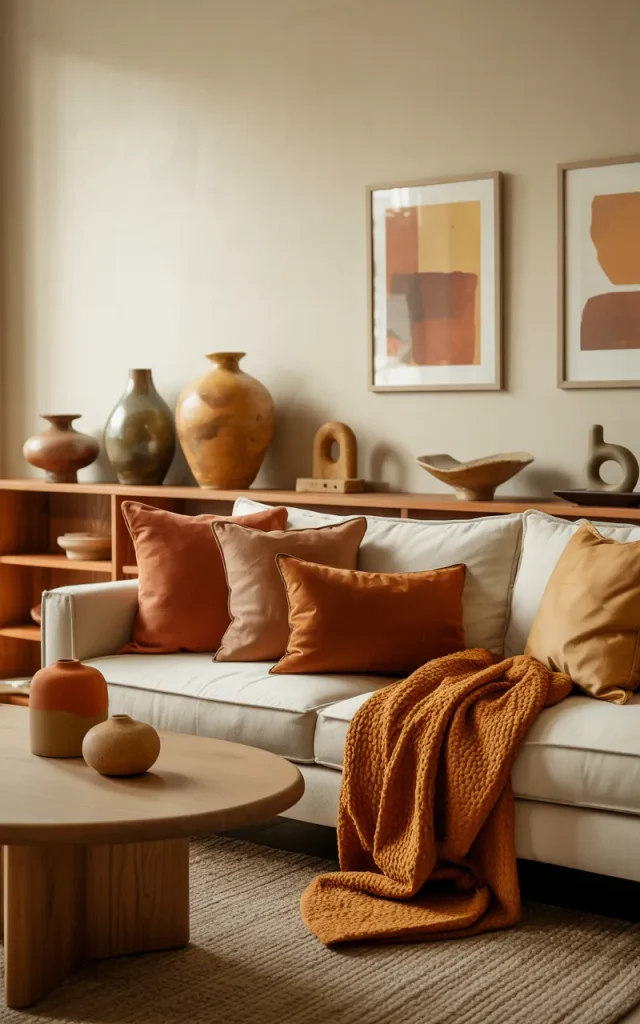
If your living room is mostly neutral, earthy accents can make it feel much warmer without requiring a complete makeover.
Try terracotta, rust, olive, muted mustard, clay, caramel, or dusty rose. You only need small amounts—a cushion, vase, artwork, throw, or ceramic bowl can be enough.
Colour swap suggestion:
| Instead of… | Try… |
| Cool gray | Mushroom taupe |
| Bright white | Warm ivory |
| Icy blue | Dusty blue |
| Cool beige | Caramel |
| Black | Deep brown |
I particularly like repeating an earthy accent three times around the room. It creates cohesion without making the color overwhelming.
Final thoughts
The beauty of cozy living room designs is that there’s no single formula for creating one. A cozy space can be moody and dramatic, light and airy, filled with books and greenery, or beautifully simple with just a few carefully chosen pieces.
At the end of the day, what matters most is how your living room feels when you’re actually using it—not whether it follows every decorating rule.
And you certainly don’t need to transform the entire room overnight. Choose the idea that would make the biggest difference for you right now. Maybe your space needs warmer lighting, a plush rug, softer textures, or simply a sofa that feels more comfortable. Start with one small change and build from there. ✨
Because a truly cozy home doesn’t happen all at once. It comes together gradually, one thoughtful layer at a time—and your everyday living room is the perfect place to start.