Working from home can sound like the perfect setup—until you’re spending hours hunched over a dining table, fighting an uncomfortable chair and a mess of tangled cords.
The good news? Creating a workspace you genuinely enjoy doesn’t mean splurging on an expensive desk or designing a picture-perfect office. The right home office setup is all about finding practical ways to stay comfortable, focused, organized, and inspired throughout the day.
The best spaces blend function with personality. Think smart organization, cozy touches, better lighting, and simple upgrades that make your daily routine feel easier. ✨
If your workspace could use a little love, these 8 home office setup ideas will help you create an office that feels more productive, comfortable, and completely your own.
Position your desk near a window
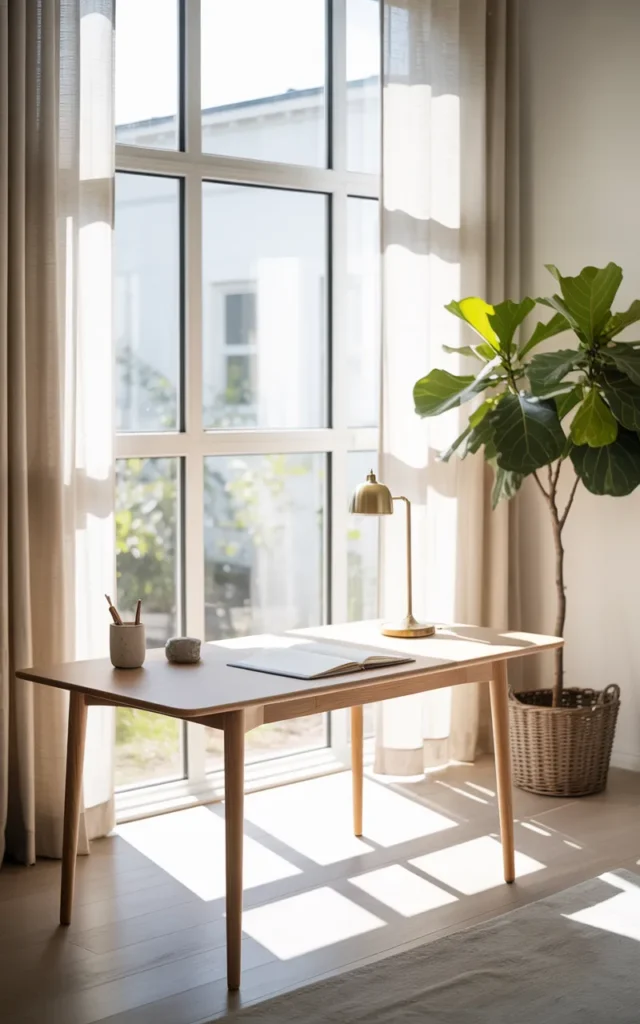
Natural light changes everything.
Whenever possible, I place a desk close to a window because daylight instantly makes a workspace feel brighter and more inviting. It also helps reduce that boxed-in feeling many home offices suffer from.
You don’t need a huge picture window either. Even a modest amount of sunlight can make long workdays feel less draining. 🌿
Why it works?
Natural light can improve focus, reduce eye strain, and make colors appear more accurate throughout the day.
Use a large desk mat to define the space
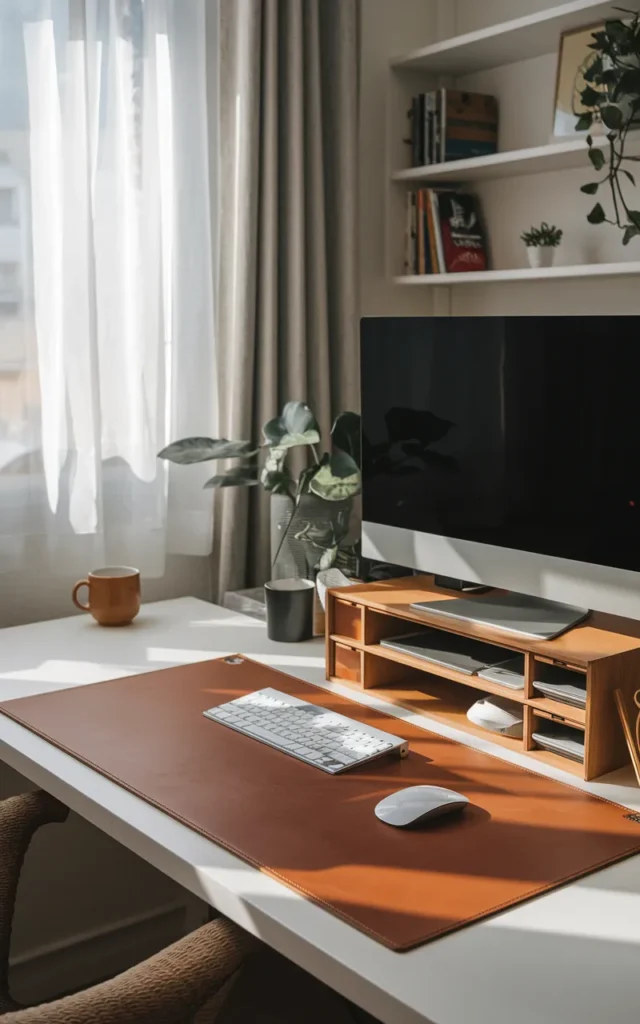
A desk mat may seem like a small detail.
Trust me, it isn’t.
It visually organizes your workspace while protecting the desk surface. It also creates a more intentional look, especially if your desk holds multiple devices.
A leather-style or felt desk mat instantly makes everything feel more polished.
A Micro-tip

Choose a mat large enough to fit both your keyboard and mouse comfortably.
Install wall sconces instead of bulky lamps
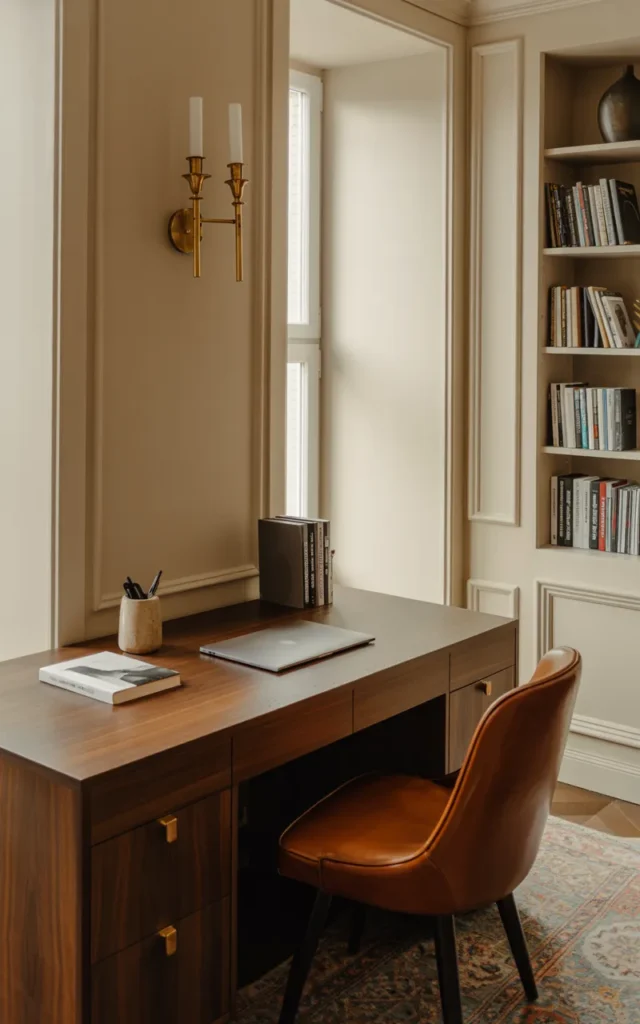
Wall sconces save surface space while adding elegance.
They’re particularly useful if your desk is compact. Rather than sacrificing valuable workspace for lighting, you move the light source onto the wall.
Common Mistakes to Avoid
- Installing fixtures too high
- Using bulbs that are overly bright
- Choosing styles that overwhelm the room
- Ignoring adjustable options
Done correctly, sconces make a home office feel custom-designed.
Frame inspiring artwork around your desk
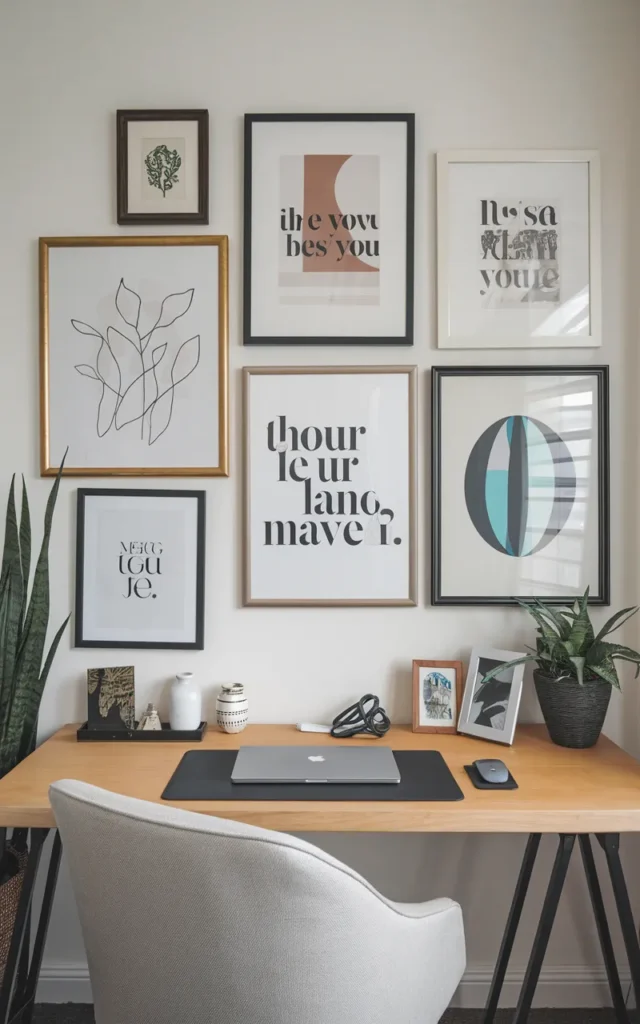
The walls surrounding your desk influence how the room feels every single day.
I always encourage choosing artwork that energizes rather than distracts. Abstract pieces, landscape photography, typography prints, or calming illustrations can all work beautifully depending on your personality.
Remember the focus-friendly paint colors from idea ten? Artwork becomes even more impactful when paired with a thoughtful color palette.
How to Steal This Look
- Select 3–5 coordinating pieces
- Use matching frames
- Keep spacing consistent
- Align artwork with eye level
A carefully curated gallery wall creates instant sophistication while reflecting your personal taste. 🎨
Add a rug that anchors the workspace
Many people think rugs are only decorative.
I disagree.
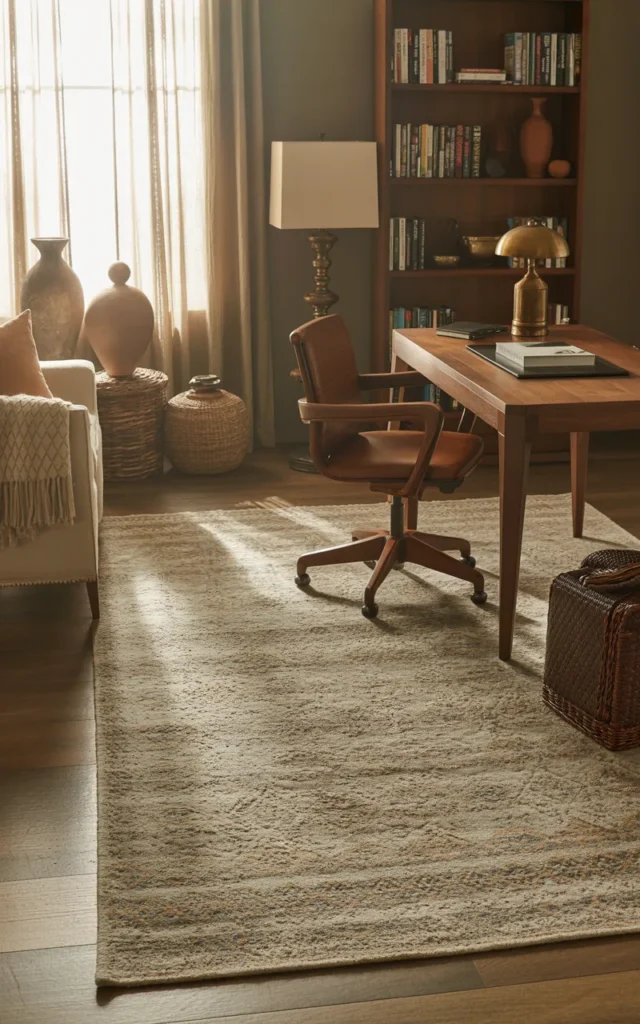
A well-sized rug helps visually define the office zone while adding texture and warmth. It can also improve acoustics, which connects nicely with idea twenty.
The trick is choosing a rug large enough to fit the desk and chair comfortably.
One Rule to Remember
The front furniture legs should sit on the rug whenever possible.
This simple guideline makes the entire setup feel more cohesive and professionally designed.
A rug can quietly transform the atmosphere of the room without demanding attention. 😊
Install floor-to-ceiling curtains for elegance
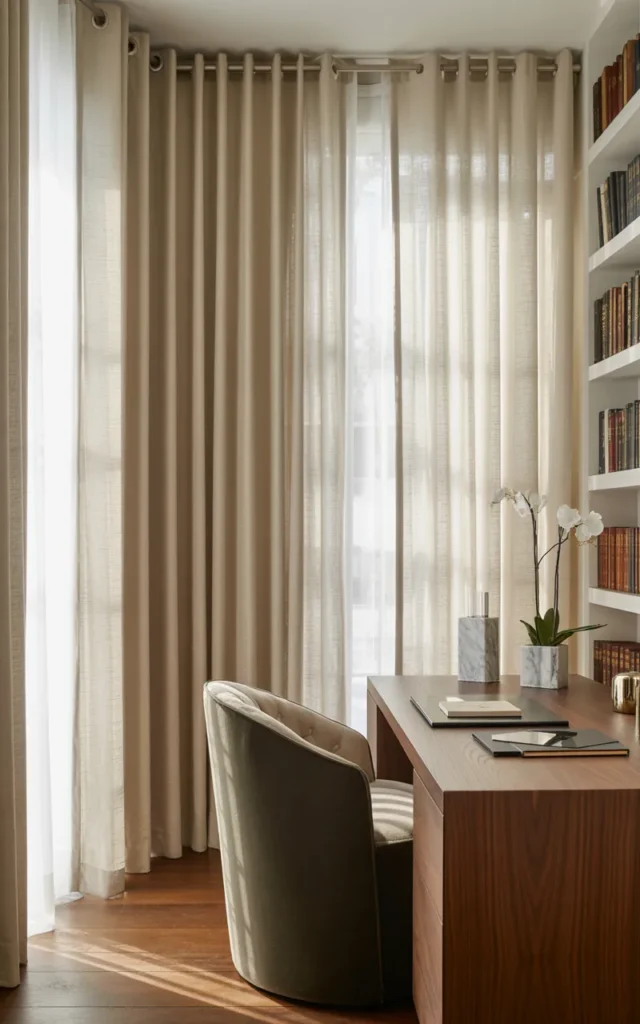
This is one of my favorite visual tricks.
Mount curtain rods close to the ceiling instead of directly above the window. The eye naturally travels upward, making the room feel taller and more spacious.
Even a modest office benefits from this approach.
Surprise Fact


Designers often use curtain placement—not bigger windows—to create the illusion of grander spaces.

Soft linen, textured cotton, or light-filtering fabrics work beautifully here. They diffuse sunlight while maintaining privacy.

 Combined with the natural lighting strategy from idea one, the office feels brighter, taller, and far more expensive than it actually is. ✨
Separate work zones using furniture placement
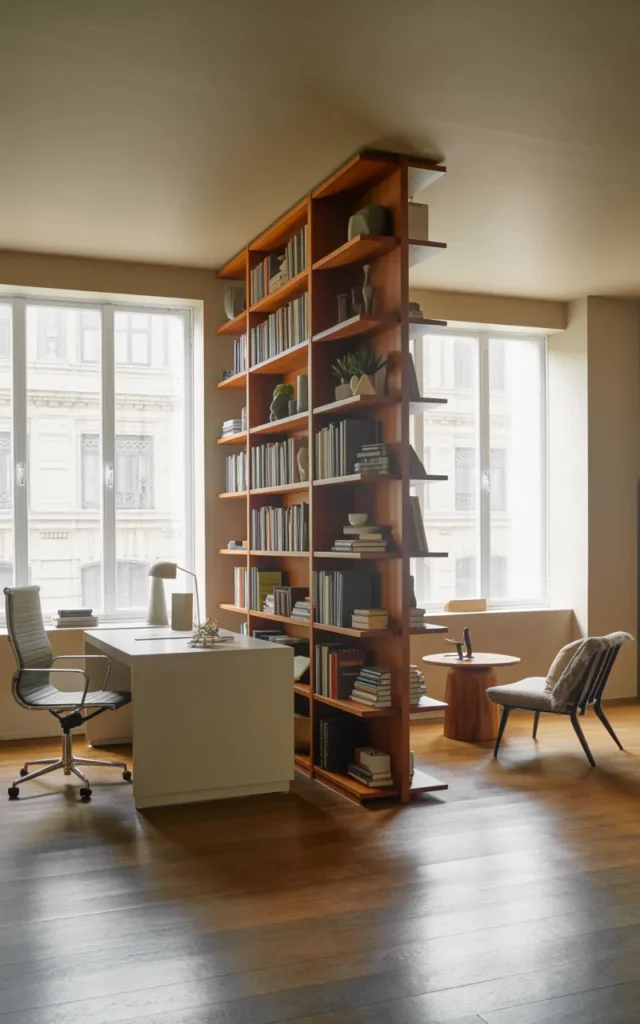
Open-concept homes often make it difficult to mentally switch into work mode.
One of my favorite solutions is using furniture to define boundaries. A bookshelf, console table, storage cabinet, or even a large plant can subtly separate the office from surrounding spaces.
Unlike building walls, this approach maintains openness while still creating structure.
Works Best In
- Studio apartments
- Open-plan homes
- Multifunctional rooms
- Shared family spaces
Creating visual boundaries helps signal to your brain that it’s time to focus. That’s surprisingly powerful. 💼
Finish the room with personal finishing touches
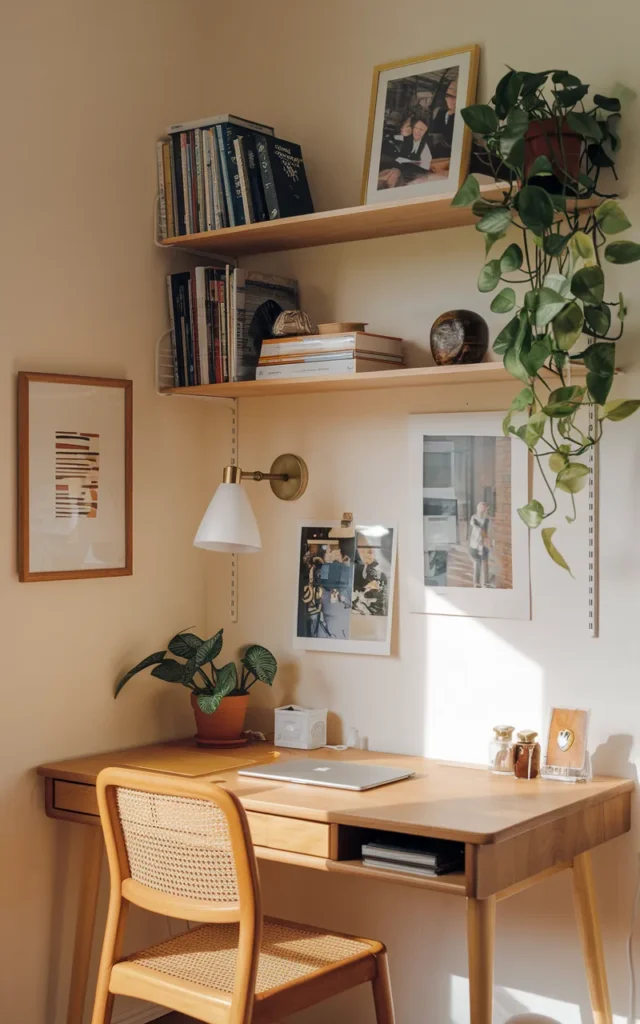
This final idea ties everything together.
You can have the perfect desk, ideal lighting, beautiful storage, and excellent organization. But if the room doesn’t reflect your personality, it may still feel incomplete.
I always encourage adding details that genuinely make you happy. Maybe that’s a favorite candle, meaningful artwork, a treasured book collection, or a framed family photo.
Those personal touches create emotional connection.
The goal isn’t perfection. It’s creating a workspace you actually enjoy spending time in.
When your office feels like an extension of who you are, productivity tends to follow naturally. And honestly, that’s what the best home office setup ideas are all about. ❤️
Final Thoughts
You don’t need a major renovation to create a workspace that works better for you.
Sometimes, the smallest upgrades can make the biggest difference—brightening up the room with better lighting, adding useful storage, bringing in a few plants, or finally getting those unruly cables under control.
Choose one or two ideas that instantly catch your eye and start there. Little improvements can quickly add up, turning your home office into a space that’s organized, comfortable, stylish, and ready to help you tackle each workday with confidence. 🌟